Need Assitance?
Call us at 844-203-6588.
We Accept

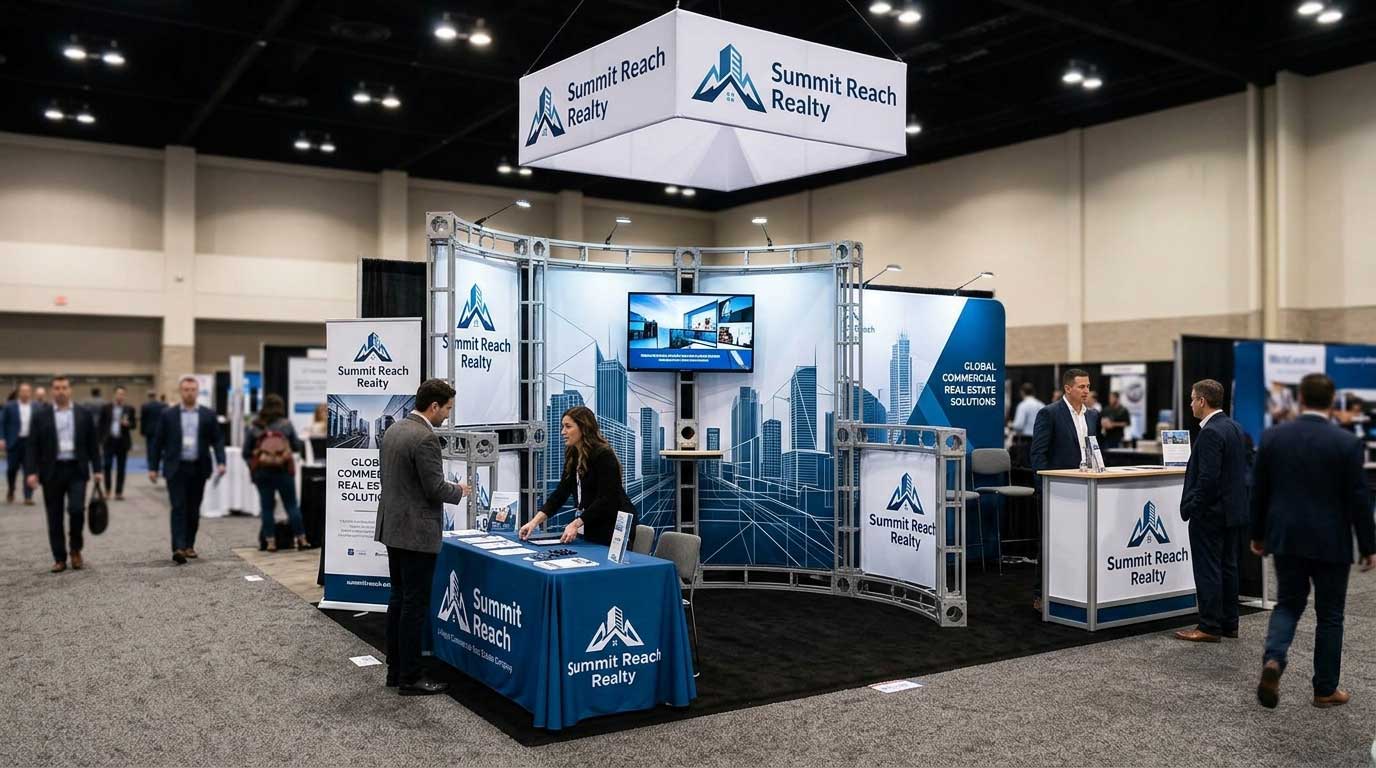
There’s a reason truss displays dominate the skyline at every major trade show — they command attention. Built on the same aluminum framework engineering as professional staging but configured for exhibits, trade show truss systems bring an unmistakable industrial-modern aesthetic to your exhibit space that flat backwalls and simple banner stands simply cannot match. They tower overhead, create dramatic dimensional structures, and tell every attendee on the show floor that your brand means serious business.
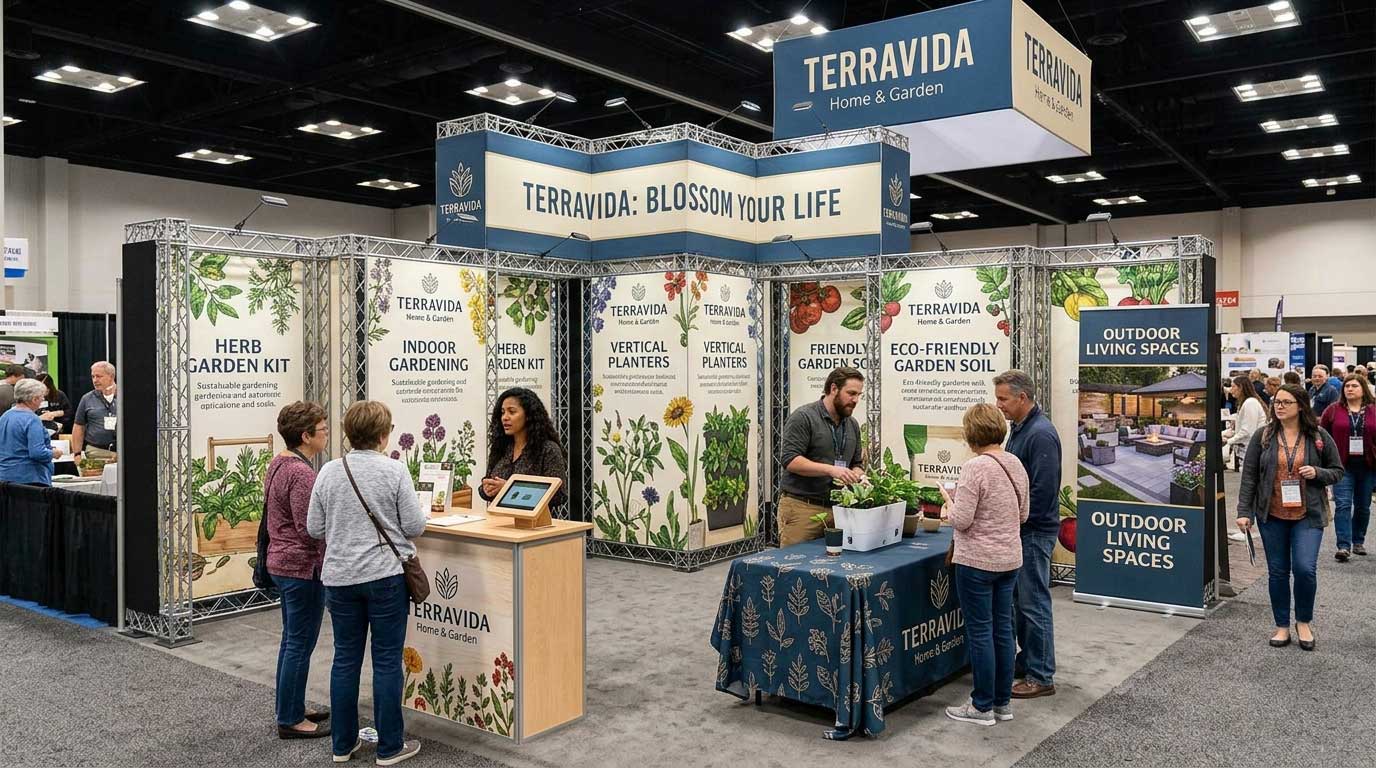
Whether you’re building a 10×10 inline booth or a sprawling 20×40 island exhibit, a custom truss system gives you the structural backbone to hang signage, mount monitors, integrate lighting, and create open, inviting environments — all while remaining surprisingly lightweight and portable.
This trade show truss system guide covers everything you need to know: the types and configurations available, how to choose the right setup for your booth, how truss compares to other display solutions, and what to look for when investing in your first (or next) exhibit truss system. If you’re exploring the full landscape of exhibit hardware, our complete trade show displays buyer’s guide is the best place to start before diving deeper here. When you are ready to compare kits, Showfire’s trade show truss collection is split into two lines: orbital truss (Orbital Express, in 10×10 truss booth, orbital truss 10×20 and orbital truss 20×20 configurations) and origami truss (fold-out SEG truss in inline and island layouts).
—
A truss display is a modular exhibit framework built from aluminum tubes joined in geometric patterns — typically triangular or square cross-sections — that interlock to form towers, arches, walls, and overhead structures. The design borrows directly from architectural and entertainment engineering, where trusses have been used for decades to support heavy lighting rigs and speaker arrays on concert stages.
In the trade show world, truss serves a slightly different purpose. Instead of holding thousands of pounds of stage gear, exhibit truss systems support:
The result is a three-dimensional, open-framework booth that looks high-end, feels spacious, and draws eyes from across the convention hall. Because most truss components are hollow aluminum extrusions, the entire structure can be remarkably light — often lighter than comparable custom-built hard-wall exhibits.
—

Not every truss booth looks the same. The beauty of a truss system is its modularity — the same basic components can be assembled into wildly different configurations depending on your booth size, layout, and marketing objectives. Here are the most common types, followed by how the Showfire truss kits are organized.
| Line | What It Is | Configurations | Kits |
|---|---|---|---|
| Orbital truss | Orbital Express modular aluminum truss: towers, crossbars, graphic panels and monitor mounts that reconfigure between shows | 10×10 truss booth, orbital truss 10×20, orbital truss 20×20 | 31 named configurations (Atlantis, Polaris, Vesta…) |
| Origami truss | Pre-assembled folding truss frames with silicone-edge fabric graphics: the fastest truss setup available, no tools | Inline 10×10 and 20×10, island 20×20 and 30×20 | 9 layouts (Inline A-B, G-I; Island C-F) |
Both lines ship as complete kits with hardware, printed graphics and cases.
A truss tower is a single vertical column, typically ranging from 8 to 16 feet tall, used as a standalone branding element or as a structural support for crossbars and headers. Towers are the fundamental building block of any truss system — almost every configuration starts with two or more towers connected by horizontal spans.
Common uses for truss towers include:
If you’re interested in other vertical branding elements that don’t use truss construction, our tower display guide explores fabric and rigid pillar displays that serve a similar visual purpose in a more compact footprint.
Connecting two truss towers with a curved or straight crossbar overhead creates an archway — one of the most dramatic and recognizable truss configurations at any trade show. Archways are commonly placed at the front of inline booths (10×10 or 10×20) to frame the entrance, or used within island booths to define pathways and separate functional zones.
Curved archways add a softer, more modern look, while straight-beam gateways project strength and precision. Either style supports hanging graphics, monitor mounts, and overhead lighting.
A truss backwall replaces a traditional fabric or rigid display wall with an open-framework aluminum structure. Graphics panels or tension-fabric prints attach directly to the truss members, creating a layered, dimensional appearance that flat backwalls can’t achieve.
Truss backwalls work especially well in 10×10 and 10×20 inline configurations where you need rear branding but want to project a more premium image than a standard fabric pop up display.
For island booths (20×20 and larger), a full perimeter truss system creates an overhead frame around the entire booth footprint. This configuration is the ultimate attention-grabber — it essentially builds a “room” defined by aluminum framework overhead, visible from every angle on the show floor.
Full perimeter systems are ideal for:
Many exhibitors combine truss elements with other display technologies to create hybrid exhibits. For example, a truss framework might incorporate backlit fabric displays for dramatic illuminated graphics, or integrate modular display systems for reconfigurable wall sections within a fixed truss skeleton.
These hybrid approaches give you the commanding height and structural versatility of truss with the graphic impact and flexibility of other display formats.
—
The cross-sectional profile of your truss determines its strength characteristics, visual weight, and how graphics attach to it. Here’s how the three main profiles compare:
| Feature | Triangular Truss | Square/Box Truss | Flat Truss |
|---|---|---|---|
| Cross-Section Shape | Three tubes in a triangle | Four tubes in a square | Two tubes in a flat plane |
| Load Capacity | Moderate | Highest | Lowest |
| Visual Profile | Sleek, minimal | Bold, industrial | Low-profile, subtle |
| Graphic Attachment | Good on two sides | Good on all four sides | Limited to front/back |
| Weight | Lightest per foot | Moderate | Lightest overall |
| Typical Use | Towers, lightweight spans | Heavy-duty overhead spans, full perimeters | Accent structures, small booths |
| Best For | Exhibitors wanting a modern, refined look | Large island booths needing maximum structure | Budget-conscious builds or secondary elements |
Most truss display packages sold for trade shows use either triangular or square profiles; Showfire’s Orbital Express kits use a square-profile aluminum truss, and Origami kits use a pre-assembled folding aluminum frame sized for silicone-edge graphics. Triangular truss tends to look more elegant and contemporary, while square truss delivers a bolder stage presence and superior load-bearing capacity for heavy monitors or extensive lighting setups.
—
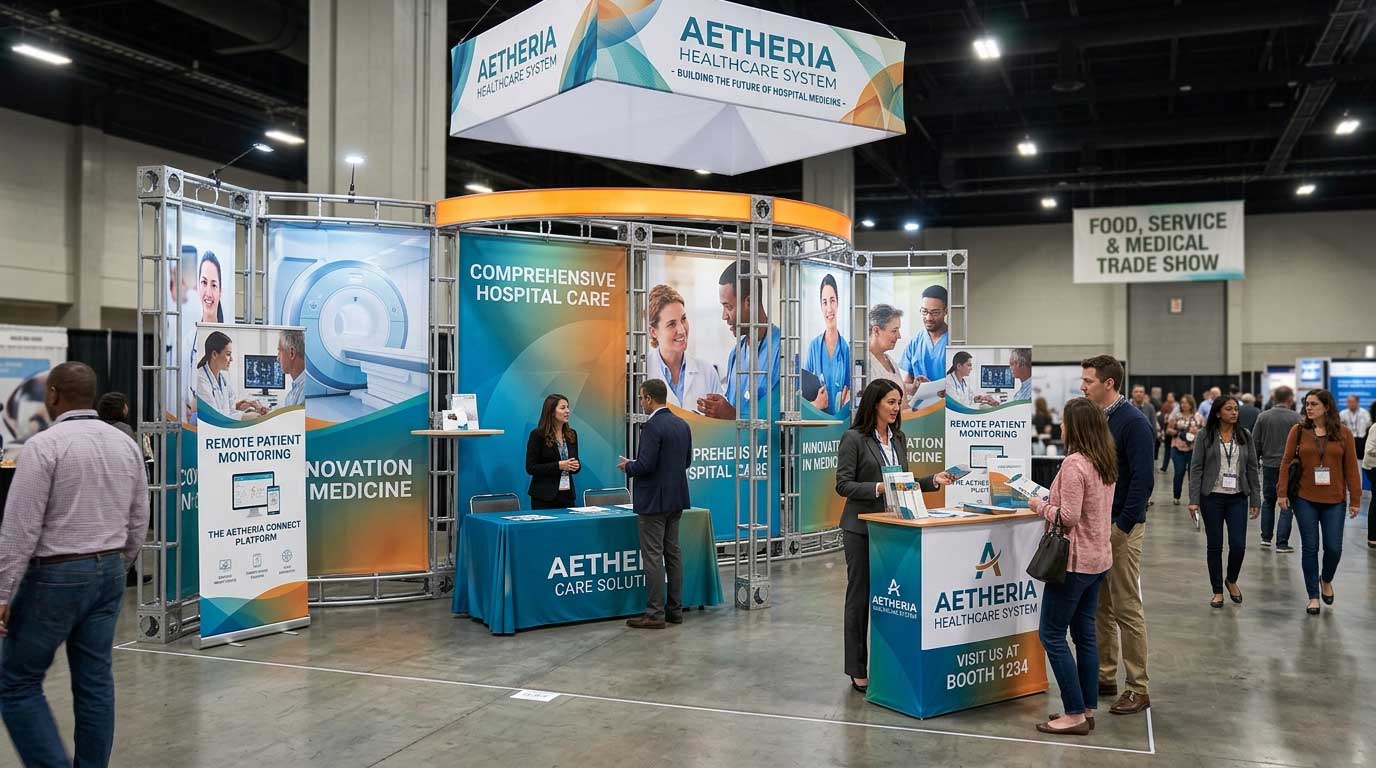
Truss systems scale seamlessly from compact inline booths to massive island exhibits. The chart below maps each booth size to the Showfire line and kits that fit it:
| Booth Size | Showfire Line | Typical Build | Kits and Pricing |
|---|---|---|---|
| 10×10 Inline | 10×10 truss booth (Orbital) or origami truss inline | 2 towers, 1 crossbar, graphic panels; or a one-piece folding frame | 11 Orbital kits from about $4,800, e.g. Atlantis 10×10 orbital truss exhibit; Origami inline from about $1,300 |
| 10×20 Inline | orbital truss 10×20 or Origami 20×10 inline | 3 towers, 2 crossbars, extended graphics | 13 Orbital kits from about $9,100, e.g. Hydrus 10×20 orbital truss exhibit; Origami SEG truss inline A from about $9,600 |
| 20×20 Island | orbital truss 20×20 or Origami 20×20 island | 4-tower perimeter with overhead frame, hanging graphics | 7 Orbital kits from about $14,700, e.g. Vesta 20×20 orbital truss exhibit; Origami SEG truss island C from about $14,900 |
| 30×20 Island | Origami 30×20 island | Folding truss perimeter with internal arch and multiple graphic zones | Origami SEG truss island E and island F, from about $14,900 |
| 20×40+ Island | Orbital, combined kits | Full perimeter plus internal structures, 8+ towers | Built from two 20×20 Orbital kits or a custom quote |
The modular nature of truss means you’re never locked into a single size. Many exhibitors invest in a comprehensive truss system package that can be configured as a 10×20 for smaller regional shows and expanded to a 20×20 or larger for flagship events — protecting your investment across multiple years and venues.
When you’re ready to explore what’s available, browse the full trade show truss collection to see current packages, configurations, and pricing from Showfire Displays.
—
Selecting the ideal custom truss exhibit involves balancing several practical and strategic factors. Here’s a step-by-step decision framework.
Start with the space you have. A 10×10 booth doesn’t need (and most venue regulations won’t allow) a full perimeter overhead truss system. Conversely, a 20×20 island without some overhead structure will feel visually flat compared to neighboring exhibits.
General rules of thumb:
Convention centers impose maximum height limits that vary by booth type:
| Booth Type | Typical Max Height |
|---|---|
| Inline (backwall) | 8 ft |
| Inline (structures set back from the front) | 12 ft |
| Peninsula | 12-16 ft |
| Island | 16-20+ ft |
Check your show’s exhibitor manual for specific height rules. Truss towers come in various heights and can often be adjusted with extension tubes, but you’ll need to plan your configuration around venue restrictions. Taller structures naturally draw more attention from the show floor, so maximizing allowable height is almost always worthwhile.
What does your truss need to do besides look impressive? Be specific:
One of the biggest advantages of aluminum truss is its favorable weight-to-strength ratio. However, larger configurations still require crating and shipping, and setup times vary considerably.
Transport considerations:
Setup considerations:
A truss display investment includes more than just the aluminum framework. Make sure your budget accounts for:
Truss system packages that bundle hardware, graphics, and key accessories together often deliver better value than purchasing components individually. Explore current truss display deals to compare bundled options against a la carte pricing.
—

How does a truss booth stack up against the other major display categories? Understanding the trade-offs helps you make an informed decision.
| Factor | Truss Display | Modular Display | Pop Up Display | Backlit Display |
|---|---|---|---|---|
| Visual Impact | Very High — 3D, industrial-modern | High — clean, professional | Moderate — flat, graphic-focused | High — illuminated, dramatic |
| Height Capability | Up to 20+ ft | Up to 16 ft | Up to 10 ft | Up to 12 ft |
| Weight | Moderate | Moderate to Heavy | Light | Moderate |
| Setup Time | 1-8 hours (size-dependent) | 2-6 hours | 15-45 minutes | 30 min-2 hours |
| Reconfigurability | Excellent | Excellent | Limited | Moderate |
| Graphic Integration | Panels, fabric, banners | Fabric, rigid, SEG | Fabric, magnetic | SEG fabric with LEDs |
| Lighting Integration | Excellent — built for it | Good — accessory-based | Minimal | Built-in LED |
| Best Booth Sizes | 10×10 to 40×40+ | 10×10 to 30×30+ | 10×10 to 10×20 | 10×10 to 20×20 |
| Relative Cost | $$ to $$$$ | $$ to $$$$ | $ to $$ | $$ to $$$ |
Truss excels when you need height, structural capability, and a distinctive industrial-modern aesthetic. If portability and rapid setup are your top priorities, a pop up trade show display or retractable banner stands may be more practical for smaller shows. For exhibitors who want maximum reconfigurability with a softer, more contemporary look, modular trade show displays offer strong versatility without the open-framework truss aesthetic.
Many experienced exhibitors actually combine display types: a truss archway at the entrance, backlit displays for illuminated feature graphics, and banner stands for portable accent messaging. Your display strategy doesn’t have to be all-or-nothing.
—
A truss framework creates the structure. The elements you add within and around it create the experience. Here are the most common complementary display elements exhibitors pair with truss systems.
If your booth space is large enough to qualify for ceiling-suspended signage, combining truss with an overhead hanging banner creates a layered vertical branding strategy that’s visible from hundreds of feet away. The truss structure defines your booth at eye level and above, while the hanging sign captures attention from across the entire convention hall.
Every truss booth needs surfaces for conversations, product demos, or literature distribution. Adding a custom table throw to your demo tables or registration counters extends your brand consistency right down to the tabletop — a small detail that reinforces professionalism.
While most truss displays are designed for indoor convention settings, some exhibitors use truss systems for outdoor events under covered pavilions. If you regularly exhibit outdoors, pairing truss with a branded canopy tent gives you weather protection while maintaining the structural framework benefits of truss for signage and lighting.
—
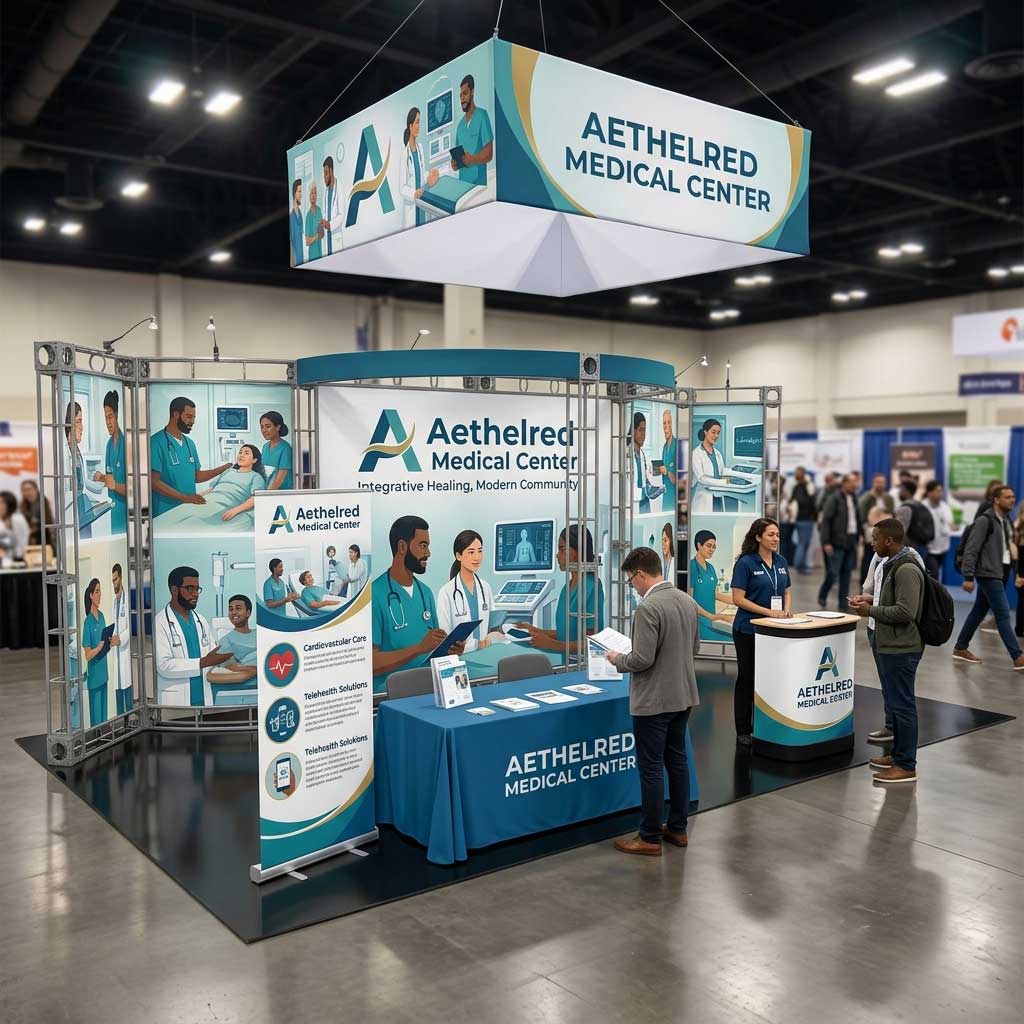
Truss displays span a wide range depending on size and complexity. A basic 10×10 truss archway kit with graphics can start around $2,000-$4,000. Mid-range 10×20 configurations typically fall between $4,000 and $8,000. Full 20×20 perimeter systems with integrated lighting and graphics can range from $8,000 to $20,000+. Custom island configurations for large exhibits can exceed $30,000. For current pricing on specific configurations, check out truss system cost information on our product pages.
Smaller truss kits (10×10 and some 10×20 configurations) are designed for tool-free or minimal-tool assembly by two people. Larger systems — especially those involving overhead spans above 12 feet — typically require professional I&D labor for both safety and efficiency reasons. Most convention centers also require engineering certification for structures above certain height thresholds.
Very durable. Aluminum truss designed for trade shows uses 6061-T6 or similar aerospace-grade alloys that resist corrosion, maintain structural integrity under repeated assembly/disassembly cycles, and can last 10+ years with proper care. The powder-coated or anodized finishes common on exhibit truss also resist scratching and wear.
It depends on the system size. A compact 10×10 truss kit breaks down into sections that can fit in an SUV or minivan. Larger systems require crated shipping via freight carrier. The individual truss sections (typically 2-5 feet long when disassembled) are manageable in size, but the cumulative number of components and cases for larger configurations necessitates professional shipping.
Absolutely — and you should. Bare aluminum truss without graphics looks like backstage scaffolding. Adding custom-printed fabric banners, rigid panels, or tension-fabric skins transforms the structure into a branded exhibit. Most truss display packages include graphics options, and replacement prints can be ordered separately when your messaging or branding changes.
Truss towers use weighted base plates (sometimes with sandbag options) for freestanding stability. On standard convention center floors, these base plates are sufficient. Some venues may require engineering certification or specific anchoring methods for very tall or heavy configurations — your show’s exhibitor manual will specify requirements.
Both offer modularity and reconfigurability, but the aesthetic is very different. Truss delivers an open-framework, industrial-modern look where the aluminum structure itself is part of the design. A modular display system typically hides its framework behind continuous graphic surfaces for a cleaner, more seamless appearance. The choice often comes down to brand personality — tech, entertainment, and industrial brands tend to gravitate toward truss, while healthcare, beauty, and corporate brands often prefer modular.
Yes. Many exhibitors rent truss for one-time events or to test configurations before committing to a purchase. However, if you attend three or more shows per year, purchasing typically becomes more cost-effective within 18-24 months. Truss hardware retains its value well and can be resold or reconfigured as your needs evolve.
—
Investing in an impressive truss booth is only half the equation. The structure attracts attention, but your trade show marketing strategy determines whether that attention converts into leads and sales.
Here are some marketing best practices specifically tailored for truss exhibits:
Maximize vertical branding. Truss gives you height that most competitors don’t have. Use that vertical real estate for large-scale brand messaging and directional graphics that pull attendees toward your booth from distant aisles.
Light it right. Truss was designed to hold lighting, so take full advantage. Strategic lighting highlights products, creates ambiance, and makes your booth feel like a curated experience rather than a rented space.
Create zones. Larger truss configurations naturally divide space. Use archways and crossbars to create distinct zones — a welcome area, a product demo station, a meeting lounge — that guide attendees through a planned journey.
Integrate digital. Mount monitors or tablets on truss columns to display video content, product demonstrations, or interactive presentations. The combination of structural aluminum, vibrant digital screens, and printed graphics creates a multi-sensory experience.
Don’t forget ground-level branding. While your truss commands attention overhead, ensure your ground-level presentation is equally polished. Add custom table covers to your tables and consider branded flooring or carpet to complete the look from top to bottom.
—
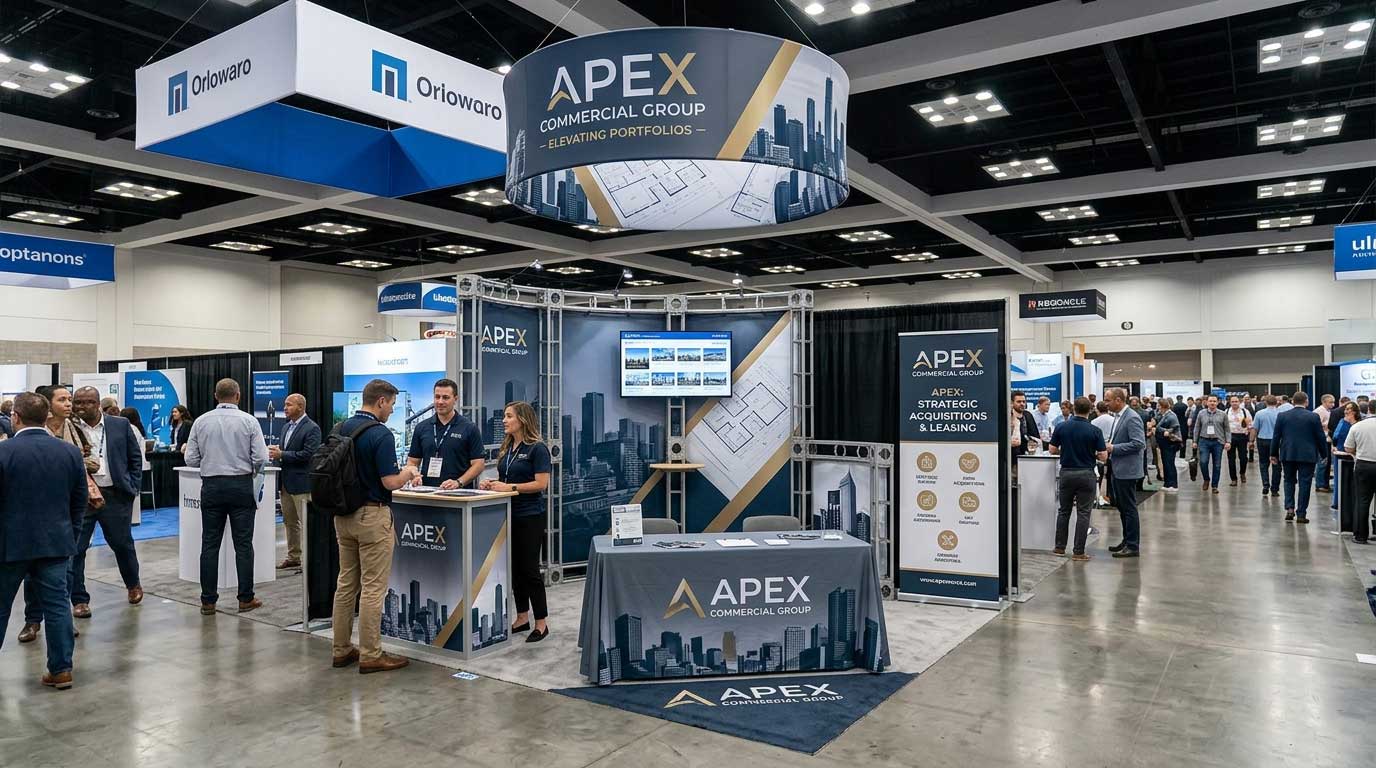
Let’s summarize the core advantages that make truss displays a preferred choice for serious exhibitors:
For a broader comparison of all exhibit types — from trade show display stands and pop ups to custom builds — explore the full buyer’s guide to find the right combination for your program.
—
A truss display is more than a booth — it’s a statement. It tells attendees that your brand is established, innovative, and worth their time. Whether you’re building a compact 10×10 archway for regional shows or engineering a full island exhibit for your industry’s flagship event, aluminum truss systems deliver the height, structure, and versatility to make your brand unforgettable.
Showfire Displays offers complete truss system packages designed for every booth size and budget. Every kit includes the aluminum hardware, custom-printed graphics, and accessories you need to create a show-stopping exhibit — with free shipping, no setup fees on graphics, and expert support from design through delivery.
Explore the orbital truss and origami truss lines, pick a 10×10 truss booth, orbital truss 10×20 or orbital truss 20×20 configuration, request a custom quote, or speak with our exhibit specialists about building the perfect truss booth for your next trade show. Your competitors are already at eye level — it’s time to rise above them.