Need Assitance?
Call us at 844-203-6588.
We Accept

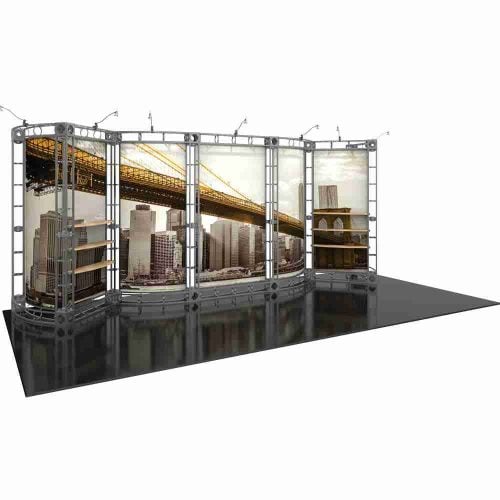
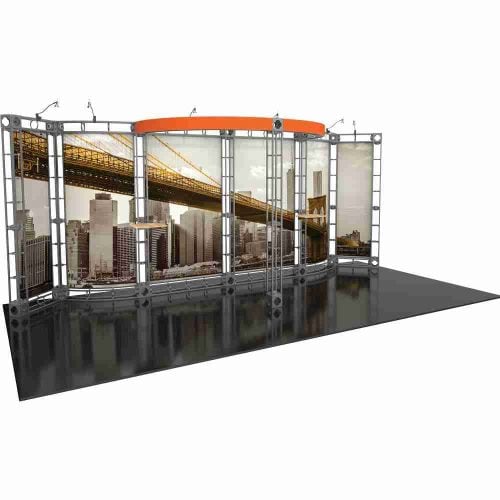
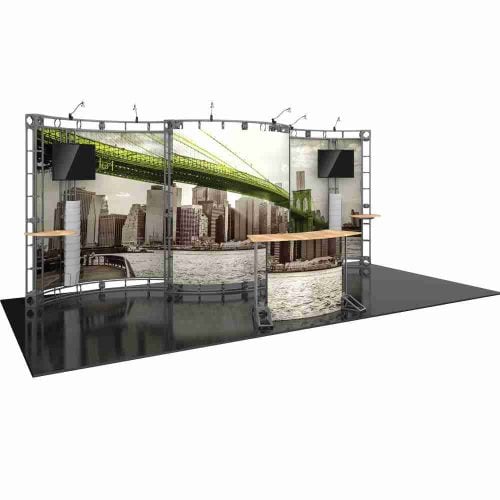
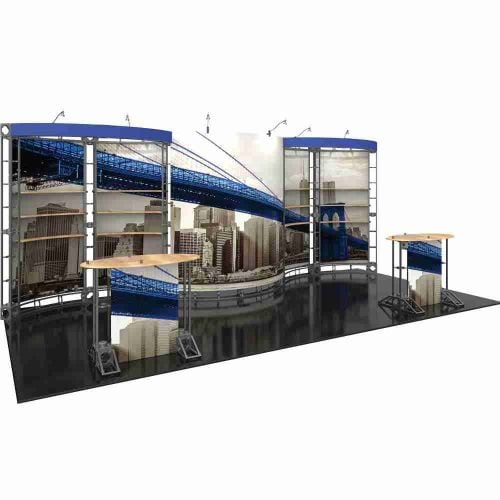
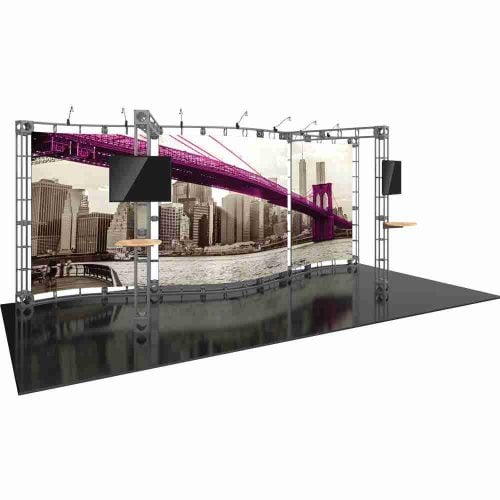
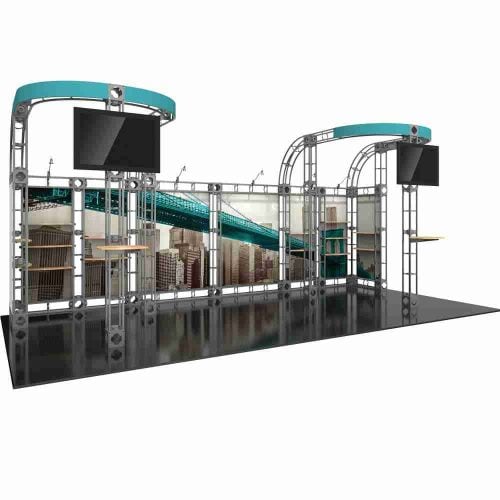
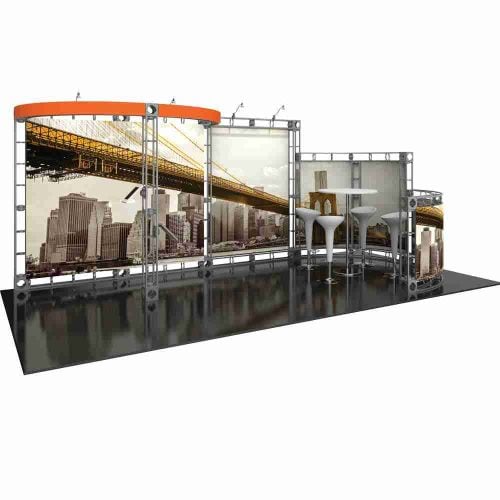
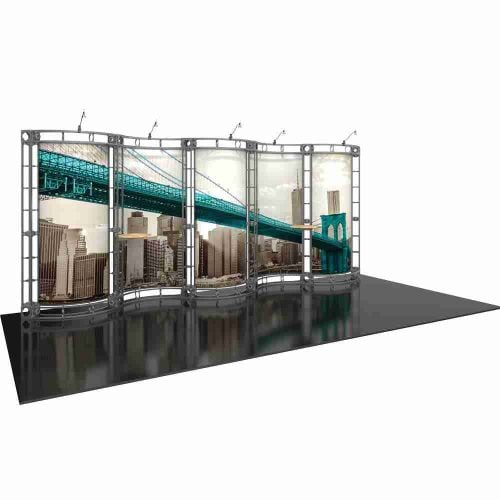
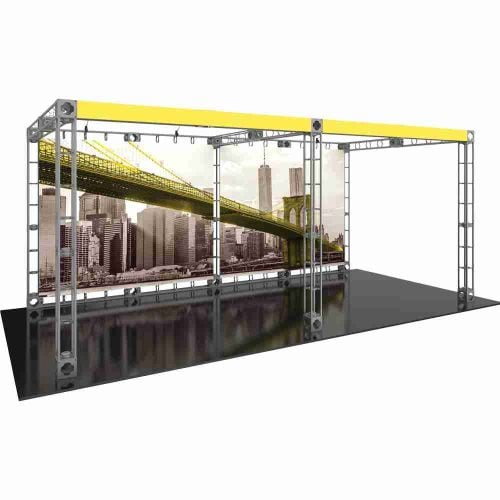
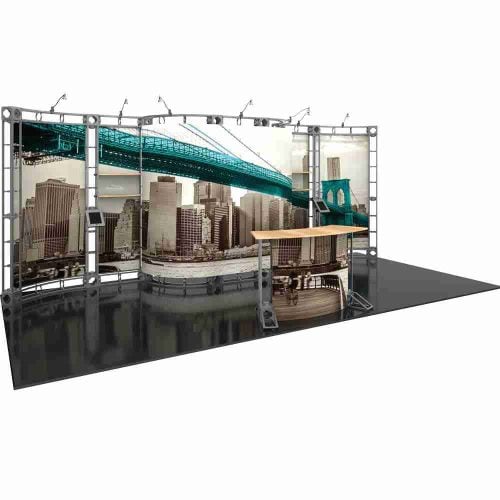
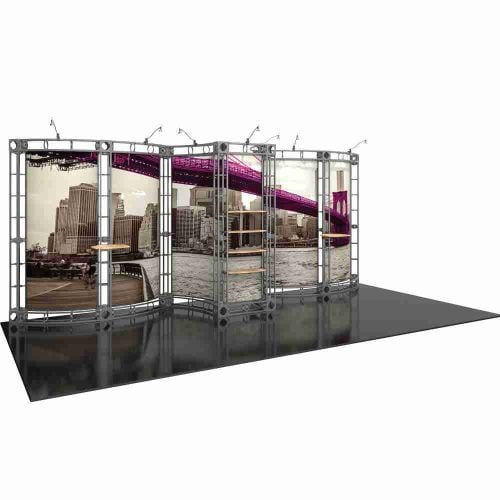
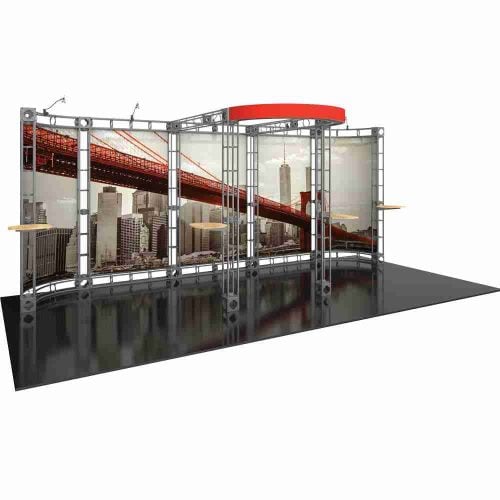
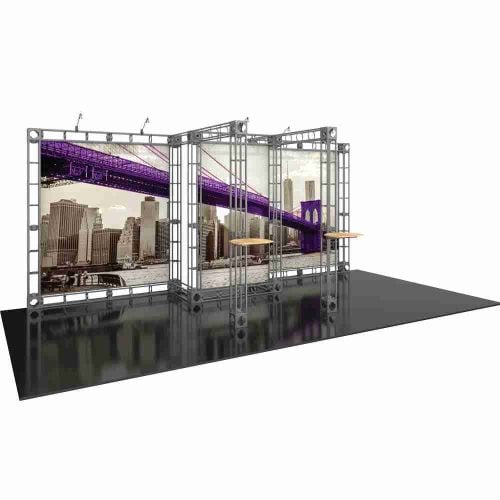
A 20-foot inline booth is a serious commitment -- you're paying for the space, and every square foot needs to work. The orbital truss 10x20 is built for exhibitors who want structural presence without the complexity of a full island build: a rigid aluminum frame, full custom graphic coverage, and a footprint that fills a double-wide inline slot cleanly. If you've been evaluating pop-up displays and fabric backwalls and finding them too lightweight for what you're trying to accomplish, this format is worth a close look. It delivers a more architectural feel, with the kind of overhead structure that lets you add lighting, hang signage, or simply let the frame itself contribute to the visual design.
There's a reason the 10x20 aluminum truss display is one of the most requested configurations in the Orbital lineup. It's the smallest footprint where an aluminum truss structure genuinely reads as a full booth -- not just a backdrop, but an environment. At 20 feet wide, you have enough room to create distinct zones within a single inline space: a product display area on one end, a conversation space on the other, and a branded overhead arc tying it all together.
That spatial flexibility is what separates this format from a 10-foot display. Doubling the width doesn't just give you more wall space -- it changes how attendees interact with your booth. Visitors can enter, move around, and spend time rather than glancing and walking past. For brands that need to demonstrate products, run conversations, or simply slow traffic down, that behavioral difference matters.
The 10x20 truss booth also photographs well for post-show content. The aluminum structure creates natural depth and shadow that flat fabric displays can't replicate, and branded photography from a well-configured truss setup tends to perform better in digital marketing than generic booth shots.
This configuration suits a specific type of exhibitor. You're not a first-timer testing the show circuit with a table and a banner -- you're an established brand with a consistent show schedule and a booth investment that needs to earn its keep across multiple events.
If you're weighing a smaller option first, the 10x10 truss booth covers the single-booth configuration and is worth comparing before you commit to the double-wide format. Alternatively, if your show schedule includes large island spaces, the orbital truss 20x20 scales the same system into a full four-sided island structure.
Shopping a truss display at this size involves more variables than a simple backdrop purchase. Here's how to think through the key decisions before you configure.
The Orbital system uses aluminum alloy construction throughout. Aluminum gives you a strong strength-to-weight ratio that matters at the 10x20 scale -- the frame is substantial enough to feel permanent inside the booth, but light enough that a small team can assemble it without heavy equipment. The connectors use a quick-lock system that doesn't require tools, which keeps setup time predictable even in a busy show hall.
Aluminum also resists the corrosion and flex fatigue that affect cheaper steel alternatives over time. If you're running this display through ten or fifteen shows a year, material durability is a real budget consideration -- replacement parts cost more in the long run than a better frame upfront.
The orbital truss 10x20 supports both fabric graphic panels and hard-panel inserts, and the right choice depends on how you use the booth.
| Graphic Type | Best For | Key Consideration |
|---|---|---|
| Stretch fabric | Frequent updates, multiple events | Lightweight, machine washable, easy to swap |
| Hard panel | Permanent or semi-permanent installs | Crisper edge detail, heavier to ship |
| Backlit fabric | High-visibility environments | Requires compatible lighting kit |
For most trade show applications, stretch fabric is the practical choice -- it ships compressed, installs quickly, and can be updated between shows without replacing the frame. If your brand uses fine-detail photography or dense text in large-format graphics, discuss resolution and panel sizing with the team before finalizing your artwork files.
One of the structural advantages of a custom orbital truss is that the frame itself acts as a lighting rig. LED spotlights, wash bars, and accent lights can be clamped directly to the overhead structure without a separate lighting stand or rigging solution. This keeps your booth footprint tight and makes the overall setup look intentional rather than improvised.
Factor lighting into your initial order rather than adding it later -- the right fixture placement affects how you configure the frame, and retrofitting after the fact sometimes means redoing the assembly sequence.
A 10x20 truss display ships in road cases or carry bags depending on the configuration. Road cases protect the frame on long-haul freight but add weight and handling cost. Carry bags reduce the shipping footprint but require more careful loading. Either way, confirm your show venue's freight handling procedures before your first shipment -- larger venues have specific dock procedures that affect delivery timing.
Storage between shows is simpler than most exhibitors expect. Broken down into its structural sections, the Orbital 10x20 stores compactly enough to fit in a standard storage room or van without a dedicated warehouse.
The Orbital system scales logically from single-booth to large island configurations, and the 10x20 sits in the middle of that range as the most versatile inline option. If you're new to the line, the full orbital truss displays page covers every available configuration and explains how the frame system works across sizes.
For buyers who are still deciding whether truss is the right format at all, the trade show truss system guide provides a thorough comparison of truss against other display types -- fabric pop-ups, modular systems, and custom fabrication -- so you can make an informed decision before spending at this level.
If this is your first time evaluating a booth investment of this scale, the complete trade show displays buyer's guide is a useful starting point -- it covers everything from format selection to ROI frameworks in one place.
The sibling configurations are worth knowing even if you're committed to the 10x20. The orbital truss 10x10 is the logical option for shows where you hold a smaller space, and buying the same system family across sizes means your frame hardware, accessories, and graphic workflow stay consistent. On the other end of the range, the 20x20 truss booth is the right step up when you move into island configurations -- same build quality, larger structural footprint.
The orbital truss 10x20 is a serious display for exhibitors who are serious about their shows. It fills a 20-foot inline space with structure, branding, and function -- and it does it with a setup process and portability profile that holds up across a full show season.
When you're ready to move forward, the configuration process starts with your graphic files and your show schedule. The Showfire Displays team works with you on artwork specs, frame options, lighting placement, and shipping logistics so that what arrives at the show hall matches what you configured -- not a close approximation of it. If you want to buy orbital truss display options customized to your brand and show requirements, this is the place to start.
Review the full lineup, compare sizes, and reach out to the team with your booth dimensions and show dates. A well-configured 10x20 truss exhibit is one of the more durable investments you'll make in your show program -- and the time to configure it is before the show calendar fills up.