Need Assitance?
Call us at 844-203-6588.
We Accept

Choosing the right shape and size for your overhead display is the single biggest decision you will make when shopping for hanging signs. The shape determines how many aisle directions see your branding, the size dictates how far away attendees can read your message, and the style -- flat-bottom, tapered, or sculpted -- controls the visual weight of the entire structure. This category page walks you through every option Showfire Displays offers so you can match the right hanging signs to your booth footprint, your venue's rigging points, and your marketing goals. Before diving into individual shapes, you may want to review our trade show hanging banner guide for a broader look at how suspended signage fits into an overall exhibit strategy.
Walk into a 500,000-square-foot convention center and you will immediately notice that the booths drawing the longest lines are almost always the ones with something big overhead. Hanging signs act as three-dimensional billboards mounted at ceiling height, visible above the sea of pipe-and-drape walls and pop-up displays that fill every aisle. Because they sit 12 to 20 feet above the floor, they bypass line-of-sight obstructions and broadcast your brand in every direction the shape allows.
Beyond raw visibility, ceiling signage gives exhibitors a psychological advantage. Attendees navigating a crowded hall instinctively look up to orient themselves, and a well-lit overhead sign structure becomes a landmark -- people say "meet me at the giant triangle" or "head toward the big circle." That kind of wayfinding shorthand is marketing gold, and it starts with picking the shape that best fits your booth.
If you are still exploring the full landscape of exhibit hardware, our complete trade show displays buyer's guide covers everything from tabletop stands to island booths, giving you context on where hanging signs fall in the bigger picture.
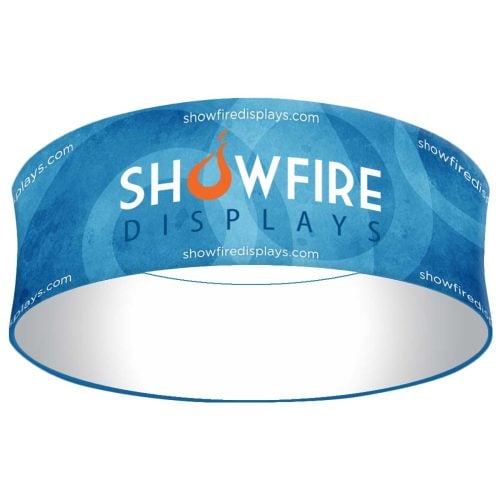
A circle hanging banner is the most popular overhead shape for a reason: its continuous curve displays your graphics in every direction with zero dead zones. Island booths surrounded by traffic on all four sides benefit the most from this format because no matter where an attendee stands, they see an unbroken band of branding.
Round hanging signs range from compact 8-foot-diameter options suited for 10 x 10 inline booths to massive 20-foot versions that crown 30 x 30 islands. If you need a detailed breakdown of sizing, graphic options, and hardware specs, head over to our custom round hanging banner page.
A triangle hanging banner delivers a sharper geometric profile that naturally faces three aisle corridors. Each flat panel acts like an individual billboard, giving you room for three distinct messages -- or three repetitions of your logo sized large enough to read from 100 feet away.
Triangle hanging banners are a strong fit for corner or peninsula booths where traffic flows from three primary directions. They also work well for exhibitors who want a more architectural look, since the angular silhouette contrasts with the softer shapes around it and grabs attention through geometry alone. The rigid corners of the frame lend the structure a sense of precision, which resonates with technology, engineering, and B2B brands.
For full specs and pricing on this three-sided format, visit our triangle hanging sign product page.
If your priority is large, uninterrupted graphic panels, a square hanging banner gives you four flat faces -- each one a clean rectangle that reads like a billboard. The 90-degree corners create natural sight lines that align perfectly with the grid layout of most convention halls, where aisles run at right angles to each other.
Exhibitors with text-heavy messaging -- think product launches with spec lists, pharma companies with clinical data, or SaaS firms showing dashboard screenshots -- benefit from the flat, distortion-free panels. Unlike circle hanging banners, where the curve can warp fine type at the edges, a square hanging sign keeps every character crisp.
You can explore dimensions, single-sided versus double-sided fabric options, and hardware details on the square hanging sign page.
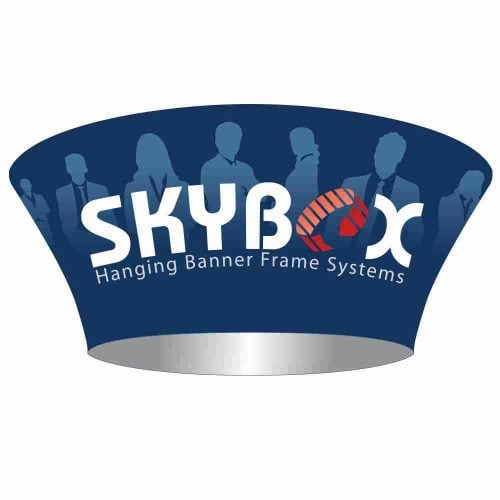
A tapered circle hanging banner starts with a full-diameter ring at the top and narrows toward the bottom, creating a funnel or cone silhouette. This hanging banner sign style adds three-dimensional depth that flat-bottom shapes cannot match, drawing the eye downward toward your booth like a spotlight.
For configuration options and pricing, check out the conical hanging banner page.
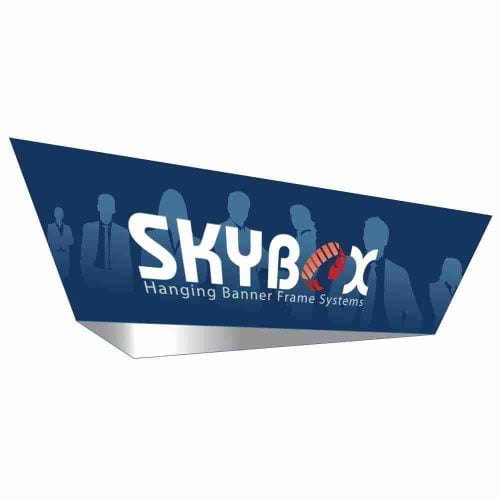
The tapered triangle hanging banner combines the directional advantages of a three-sided shape with the sculptural depth of a tapered frame. The wider top and narrowing bottom give it a futuristic look that pairs well with tech, aerospace, and innovation-focused exhibitors.
Exhibitors who want to project an angular, forward-thinking brand identity will find this overhead sign structure hard to beat. It covers three aisle directions like a standard triangle while adding vertical dimension that separates it from every flat-bottom sign in the hall. Conference and corporate event planners also favor this shape for keynote stages, where the tapered geometry frames a speaker backdrop without overwhelming the set.
You can review hardware specs and order details on our tapered triangular hanging sign page.
The tapered square hanging banner is the four-sided answer to the tapered family. It keeps the flat, distortion-free panels that make the square shape the easiest to design for, then narrows toward the bottom so the sign reads as a sculpted object rather than a box hung from the ceiling. Exhibitors who want four clean faces and still want the frame itself to look designed tend to land here.
Four faces means four aisle directions, which makes this the strongest choice of the tapered shapes for a true island booth surrounded by traffic. Because each panel stays flat, logos, product photography, and dense type reproduce exactly as laid out -- no curve warp to compensate for in artwork, and only slight taper distortion near the lower edge. That combination suits exhibitors with detailed graphics or strict brand guidelines who still want dimensional presence overhead.
Hardware specs, size options, and ordering details are on our tapered square ceiling sign page.
---
The table below summarizes how each shape stacks up across the factors that matter most at purchase time. Use it as a quick-reference shortcut, then read the prose sections above for deeper detail on any shape that catches your eye.
| Feature | Circle | Triangle | Square | Tapered Circle | Tapered Triangle | Tapered Square |
|---|---|---|---|---|---|---|
| Aisle directions covered | 360 degrees | 3 directions | 4 directions | 360 degrees | 3 directions | 4 directions |
| 3D sculpted profile | No | No | No | Yes | Yes | Yes |
| Best booth type | Island | Corner / peninsula | Inline / island | Island / inline | Corner / peninsula | Island |
| Graphic distortion risk | Slight curve warp | None (flat panels) | None (flat panels) | Moderate taper warp | Slight taper warp | Slight taper warp |
| Low-ceiling friendly | Moderate | Moderate | Moderate | High | High | High |
| Visual weight | Medium | Medium | Medium-high | Medium | Medium | Medium-high |
| Setup complexity | Standard | Standard | Standard | Slightly higher | Slightly higher | Slightly higher |
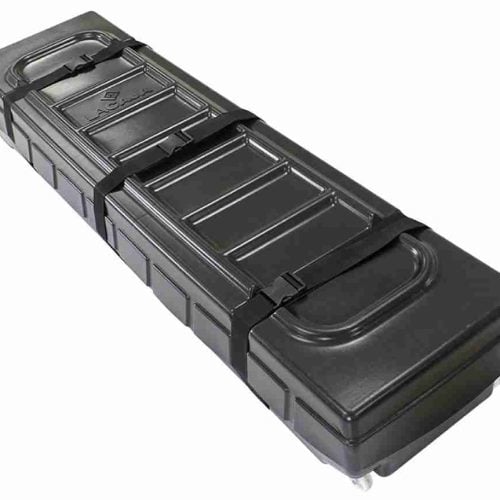
Every hanging sign on this page ships as a complete kit -- frame, printed fabric, rigging hardware and a padded case. Here is what you are ordering.
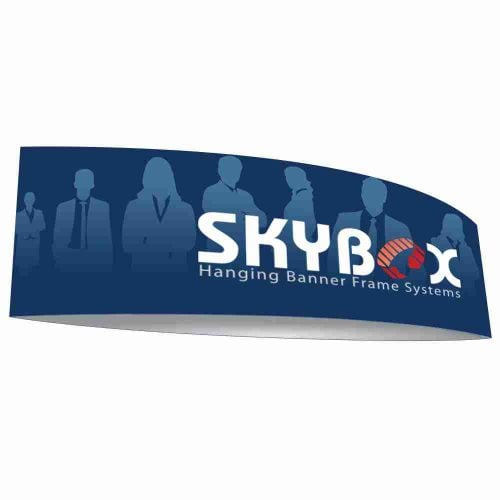
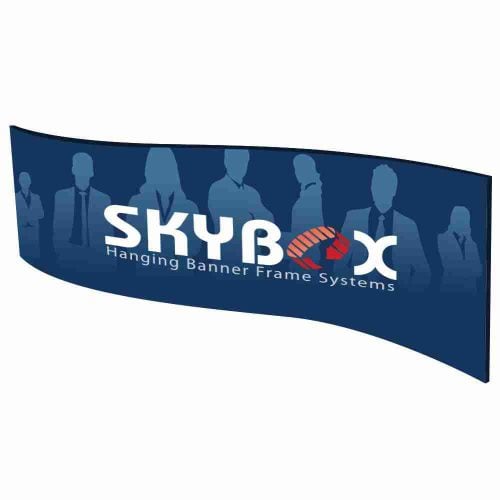
Sizes. Circle, square and triangle hanging banners are stocked in 5ft, 8ft, 10ft, 12ft, 15ft and 20ft widths, each available in drop heights from 24 in. up to 72 in. Tapered circle, tapered triangle, tapered square, football and wave shapes are built to the same width range with drop options suited to each profile. Use the shape comparison table above to narrow the format, then open that shape's page for the exact size and drop combinations in stock.
Frames. Extruded aluminum tubing keeps weight low and rigidity high. Joints snap or bolt together without tools, and the disassembled frame packs into a padded shipping case that fits airline or freight carrier size limits. Complete kits -- frame, fabric and hardware -- weigh between 30 and 80 pounds.
Graphics. All fabric is printed by dye-sublimation, which infuses ink directly into the polyester fibers for vibrant, scratch-resistant color that will not crack, peel or fade under show lighting. Order single-sided for budget-conscious campaigns or double-sided for visibility from every direction. Inside-and-outside graphic packages are available on most shapes.
Hardware. Steel cables, carabiners, swivels and ring clamps are included with every sign, so there is nothing to source separately. Frame-only and replacement-graphic options are available when you already own the hardware.
---
Production. Standard production runs 5 to 10 business days from artwork approval, plus transit. If your show is less than two weeks out, contact the team before ordering and we will confirm whether a rush slot is available.
Artwork. Supply vector files or high-resolution raster art at the template dimensions for your chosen shape and drop. Each product page carries the template for that size. Keep logos and critical type inside the safe zone -- curved and tapered profiles lose a little edge area to the frame.
Rigging orders. Venues normally want a rigging order 30 to 60 days before the show, listing the sign's weight, dimensions and hang height. Order early enough to have those figures in hand; every product page lists shipped weight and assembled dimensions.
Reordering. Frames are built for multi-show use. Most exhibitors keep one frame and rotate two or three fabric sets, ordering replacement graphics season by season rather than replacing the whole kit.
---
If you are still deciding between formats -- or you are not yet sure what your venue allows -- that ground is covered in depth in our trade show hanging banner guide. It walks through matching shape to booth footprint, working within ceiling-height limits, suspension-point counts by shape, venue approval timelines and install labor, and it compares overhead signage against tower displays, truss systems and backlit formats.
If you already know the shape and size you want, everything you need is on this page and the product pages linked from it.
---
Standard production is 5 to 10 business days from artwork approval, plus transit time to your venue or office. Rush production is sometimes available -- contact the team before ordering if your show is inside two weeks.
Yes. Steel cables, carabiners, swivels and ring clamps ship with every sign. Frame-only listings are available separately if you already own a kit and want a spare frame.
Yes, and most exhibitors do. The frame is built for multi-show use and replacement graphics can be ordered on their own. Keeping two or three fabric sets and rotating messaging by event is the cheapest way to look new at every show.
Vector files, or high-resolution raster art built to the template for your chosen shape and drop height. Each product page links the correct template. Keep logos and critical type inside the safe zone, since curved and tapered profiles lose a little edge area to the frame.
Yes. Single-sided printing is the budget option and works well when one aisle carries most of your traffic. Double-sided is worth it on island booths where visitors approach from every direction.
You now have a clear picture of every hanging sign shape Showfire Displays offers -- from the 360-degree coverage of a circular hanging banner to the angular precision of a custom tapered triangle hanging banner. Each option is engineered for fast assembly, vivid graphics, and reliable reuse across multiple show seasons.
Browse the individual product pages linked throughout this guide to compare sizes, review pricing, and configure the exact hanging signs your booth needs. And if you want broader context on how overhead displays fit alongside backwalls, counters, and flooring, our trade show exhibits resource covers the full exhibit ecosystem. Ready to go? Pick your shape, upload your artwork, and let the ceiling do the selling.