Need Assitance?
Call us at 844-203-6588.
We Accept
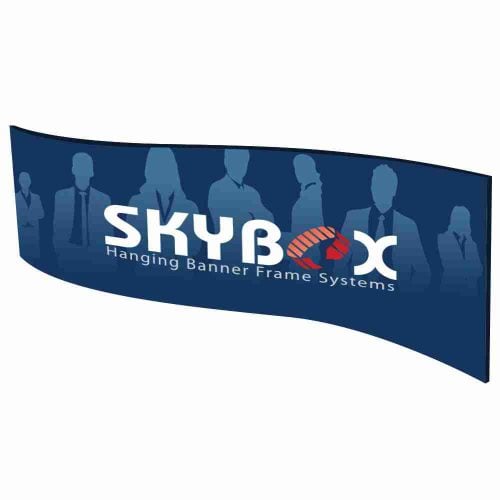
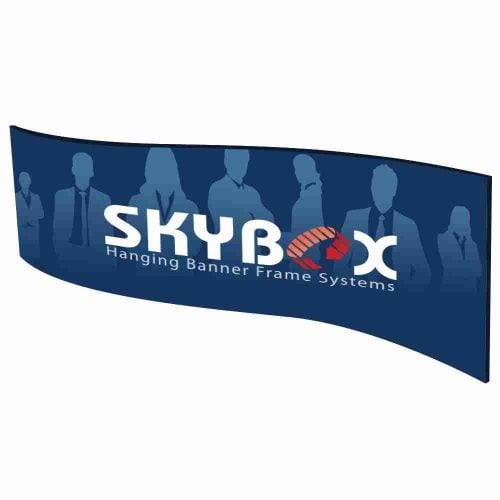
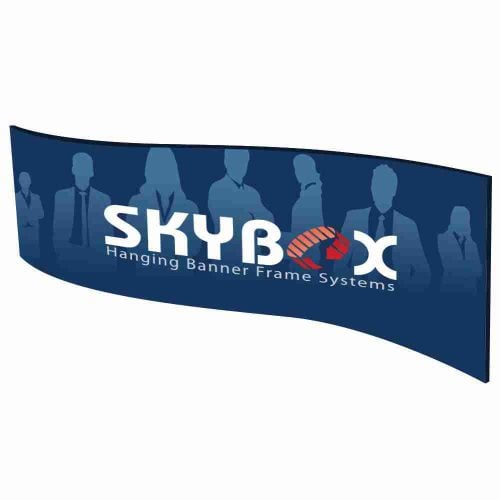
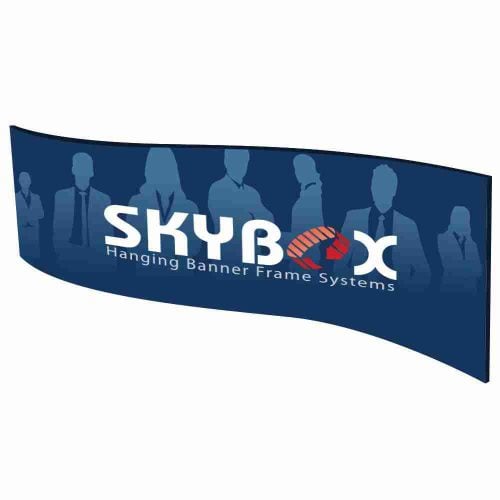
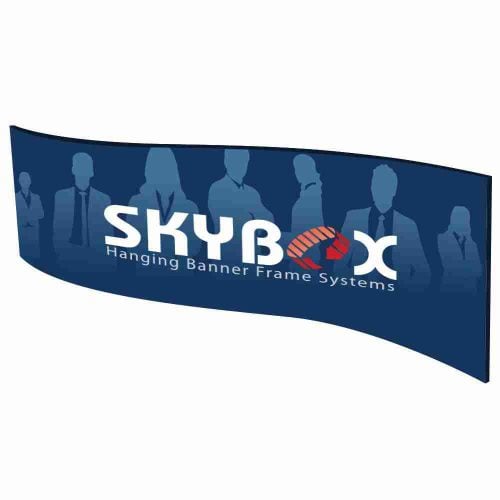
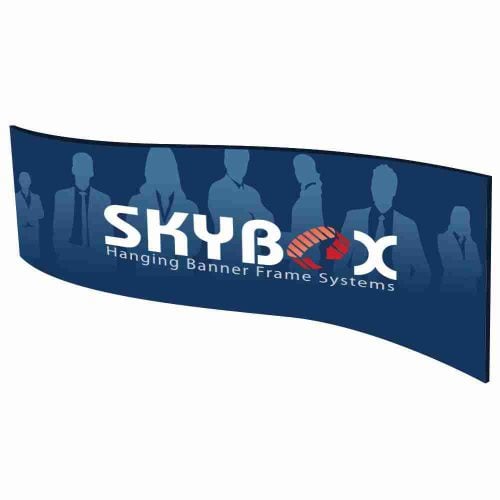
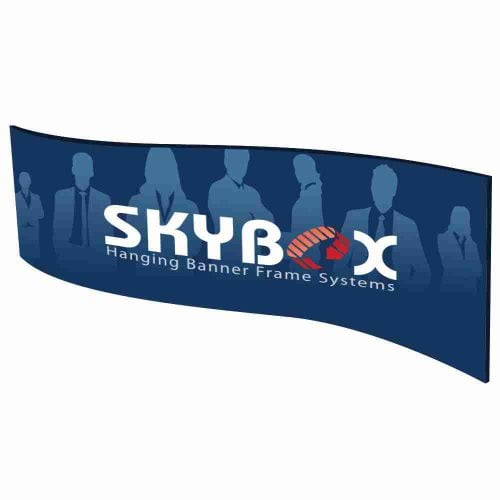
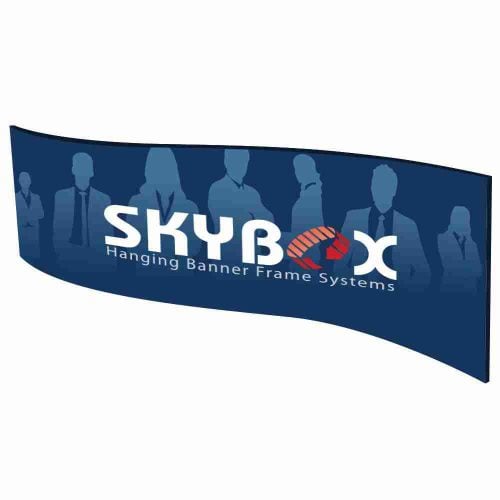
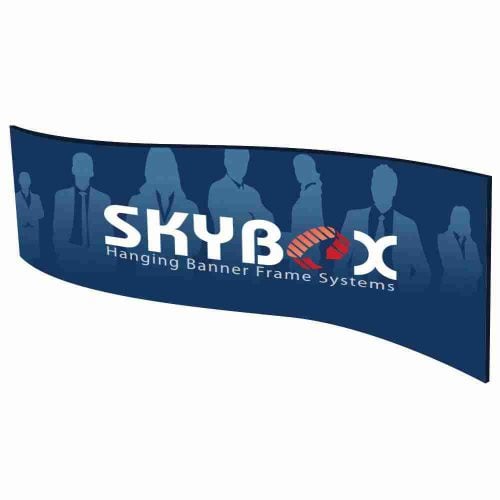
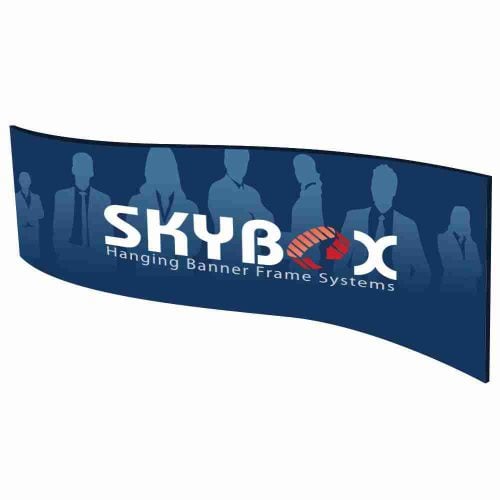
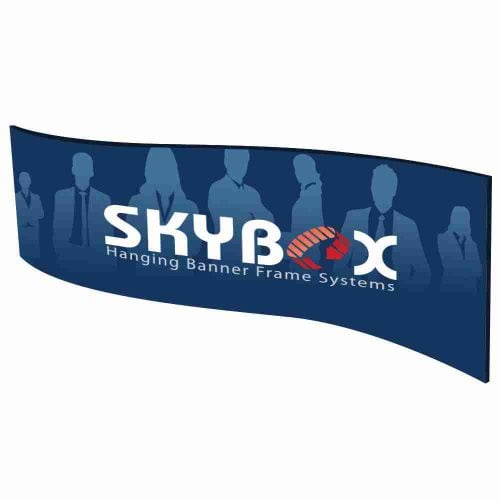
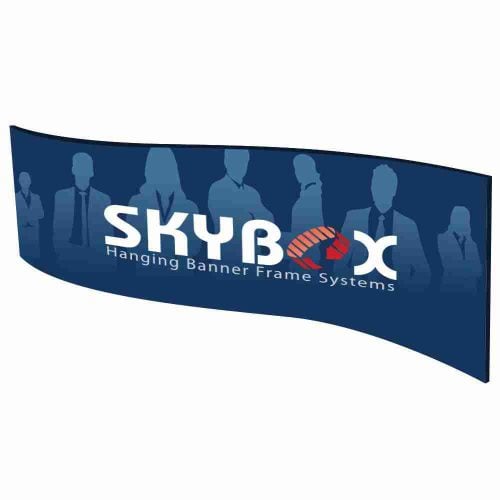
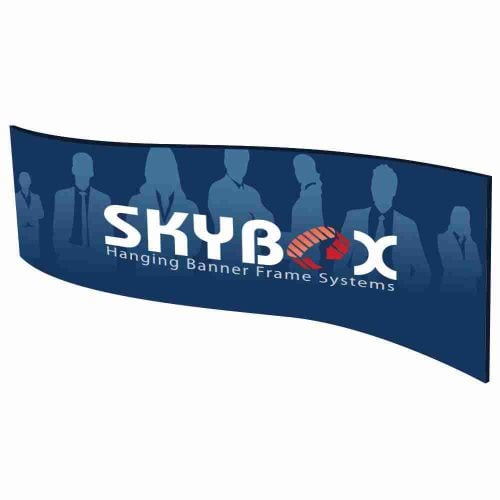
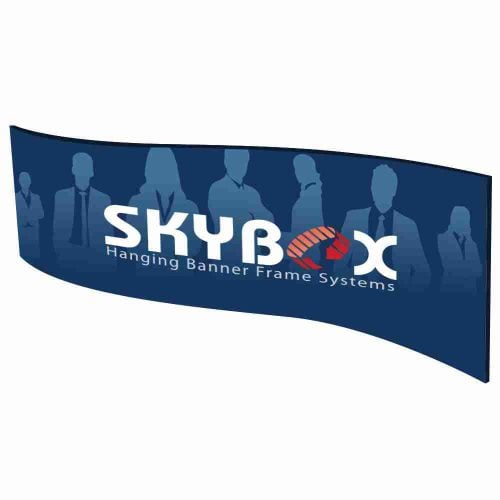
There is something distinctly different about a wave hanging banner the moment it goes up -- while every other overhead sign at the show is a flat plane or a rigid geometric shape, the wave profile moves. Its fluid, S-curve silhouette creates a sense of motion that is hard to ignore from across a busy convention floor. That visual energy is exactly why exhibitors and event designers choose this shape when they want their overhead presence to feel dynamic rather than static. This page covers the full picture: what makes the wave shape work, who gets the most from it, and what to think through before you order.
Most overhead hanging signs rely on height and size alone to attract attention. A wave shaped hanging banner does something additional -- it introduces rhythm and depth into the silhouette itself. The undulating edge creates a visual cue that registers from the side just as strongly as from directly below, which is useful in crowded halls where attendees approach from unpredictable angles.
The shape is also forgiving for graphic designers. Because the banner curves in a gentle S-pattern rather than presenting a perfectly flat face, small imperfections in alignment or centering tend to disappear. Designers working with bold color blocks, sweeping gradients, or large-format photography often find the wave format gives their artwork a more polished look than a flat rectangular banner would.
From a brand-recognition standpoint, the wave ceiling banner functions as a landmark. Attendees who visit your booth on day one can locate it again on day two by looking for the distinctive overhead silhouette, even before they read your logo.
The wave overhead hanging sign is not a universal fit, and knowing who it serves best helps you decide before you spend the budget.
Brands with fluid, movement-oriented identities. Technology, fitness, automotive, entertainment, and lifestyle brands tend to communicate speed and energy as part of their visual language. The S-curve profile reinforces those values without a single word of copy.
Exhibitors in medium-to-large booth footprints. The wave format typically looks its best with adequate horizontal span to let the curve develop fully. In a small footprint the curvature can feel cramped; in a 20 x 20 or larger space it fills the overhead zone in a way that feels intentional rather than oversized.
Event designers staging experiential environments. Corporate events, brand activations, product launches, and pop-up retail installations all benefit from ceiling-level design that feels architectural. A serpentine hanging banner reads less like a sign and more like a design feature, which helps environments feel curated rather than thrown together.
Recurring exhibitors who travel frequently. Because the hardware breaks down into a carry case and the fabric graphic packs flat, the wave format is portable enough to travel without dedicated freight -- an important consideration if you exhibit at multiple shows per year.
If you are still mapping out your overall display strategy, the complete trade show displays buyer's guide covers booth planning from the ground up and helps you see where overhead signage fits relative to tabletop, backwall, and floor-level assets.
The wave shape has more visual mass than a flat horizontal banner of the same stated width, because the curvature adds perceived depth. Before finalizing a size, think about how the banner will relate to the booth below it -- too small and the curve reads as timid; too large and it can feel like it swallows the space. A useful rule is to choose a span that mirrors the footprint of your booth's broadest horizontal element.
| Booth Footprint | Suggested Banner Span | Notes |
|---|---|---|
| 10 x 10 | Smaller wave sizes | Curve is subtle but readable |
| 10 x 20 | Mid-range wave sizes | Full S-curve develops well |
| 20 x 20 and up | Larger wave sizes | Maximum visual impact overhead |
A custom wave hanging banner can be printed on one face or both. Single-sided print is the right choice when the banner will be positioned against a wall or backdrop and viewed primarily from one direction. Double-sided print makes sense for island booths where attendees approach from all sides -- and it effectively doubles your branding surface without adding floor space.
Dye-sublimation printing is the standard process, and it produces sharp, vivid imagery that holds up through repeated handling and storage. The ink bonds with the fabric fibers rather than sitting on top, which means colors resist fading and the graphic feels soft rather than stiff.
Because the banner curves in three dimensions, your artwork should be designed to read well across the full width without relying on perfectly centered registration. Logos and key text are best placed toward the center of each lobe of the wave, where they will sit at the most visible angle from the floor below. Avoid placing critical information close to the edges where the curvature rolls away from the viewer's sightline.
The wave shape ships with a lightweight aluminum frame that assembles without tools beyond what ships in the kit. The frame is designed to create the S-curve profile, so the fabric graphic attaches under tension and holds its shape throughout the event. Rigging attachment points are built into the frame, and most venues require a rigging certificate from their in-house rigging crew to hoist any suspended overhead structure -- budget for that cost in addition to the banner itself.
For a full breakdown of rigging logistics, ceiling clearance considerations, and venue approval requirements, the trade show hanging banner guide is the best resource to read before submitting your booth order.
Production turnarounds vary by supplier, but custom-printed wave banners typically ship within standard production windows after artwork approval. Treat the artwork approval step as part of your lead time -- submitting print-ready files on day one of your order shortens the process considerably. The banner and hardware pack into a carry bag or hard case depending on the size ordered.
The wave is one profile in a broader range of overhead options. Understanding where it sits relative to its siblings helps you confirm it is the right call -- or points you toward a better fit.
The circle hanging banner is the most symmetrical option in the lineup and works well when a brand wants a clean, approachable presence. It reads consistently from every direction, which makes it popular for service-oriented exhibitors. The wave, by contrast, is directional and movement-oriented -- a different visual language entirely.
The square hanging banner maximizes graphic real estate for exhibitors who want large-format imagery or bold text that fills every corner of the frame. If print coverage is the primary priority, the square delivers more usable surface area per dollar than the wave.
For exhibitors who want something that tapers toward the top for a more sculptural look, the tapered circle hanging banner and the tapered square hanging banner both introduce dimension without the S-curve motion of the wave. The tapered triangle hanging banner takes that idea further with sharp geometry.
If you prefer flat geometric silhouettes, the triangle hanging banner offers a strong directional point that draws the eye upward, while the football hanging banner presents a lens-shaped profile that reads softly from below -- useful when a brand wants overhead presence without sharp angles.
The full hanging signs collection includes every shape and size, so you can compare options side by side and choose based on your booth footprint, venue ceiling height, and brand personality.
For a side-by-side view of how the wave compares to all shape families on practical criteria, the overhead hanging banner pillar guide walks through each option with guidance on ceiling clearance, rigging, and graphic configuration -- worth reading before you finalize any overhead purchase.
The s curve hanging banner is one of the more versatile and visually distinctive options in the overhead display category -- fluid enough to suit lifestyle and entertainment brands, bold enough to anchor a large booth, and practical enough for exhibitors who travel regularly. If the wave shape fits your brand and booth footprint, it rewards the investment with overhead visibility that geometric shapes simply do not replicate.
Browse the full range, get your graphic files ready, and order hanging banner online today. Our team is here to help with file specifications, sizing guidance, and production questions so your wave hanging banner arrives ready to perform from the first day of the show.