Need Assitance?
Call us at 844-203-6588.
We Accept

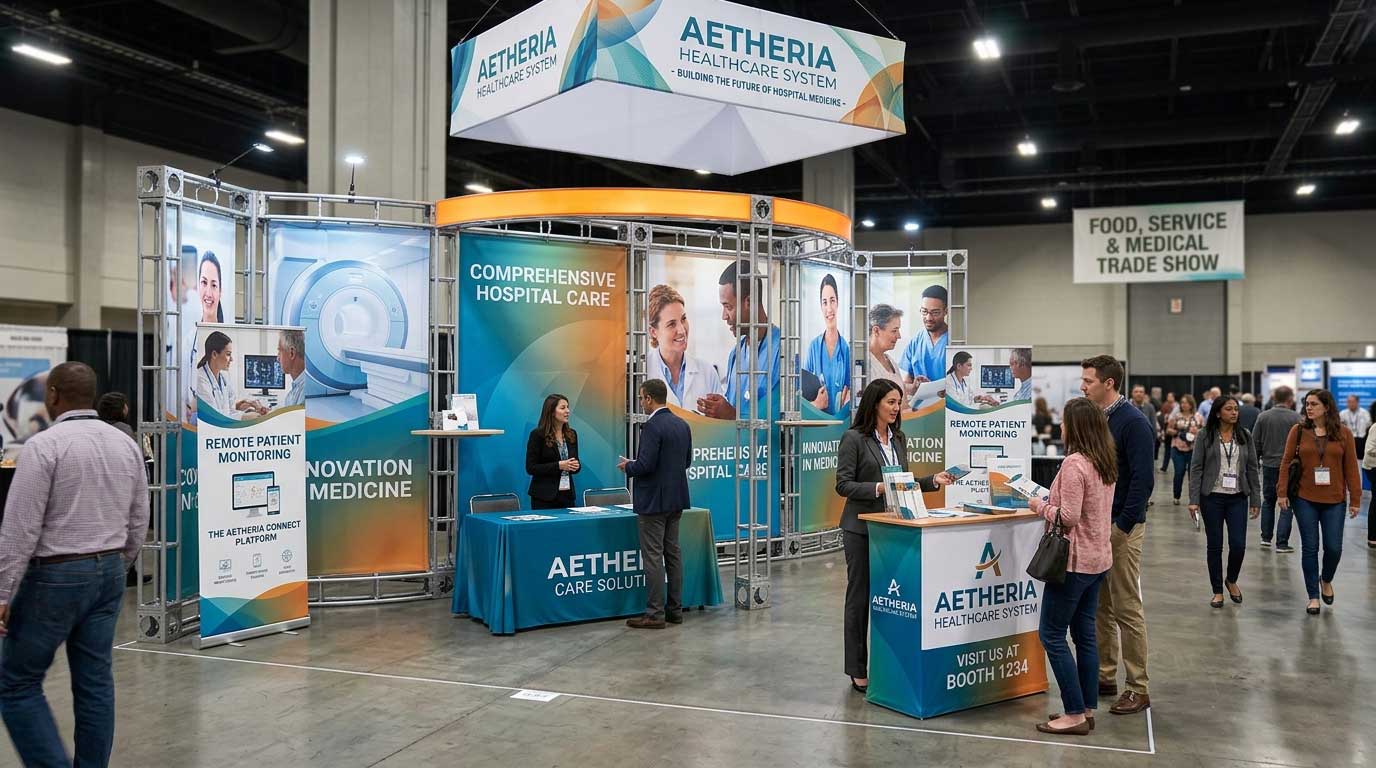
When thousands of attendees flood a trade show floor, booths at eye level blend together into a sea of color and noise. The single most effective way to rise above that crowd — literally — is with a trade show hanging banner suspended high above your exhibit space.
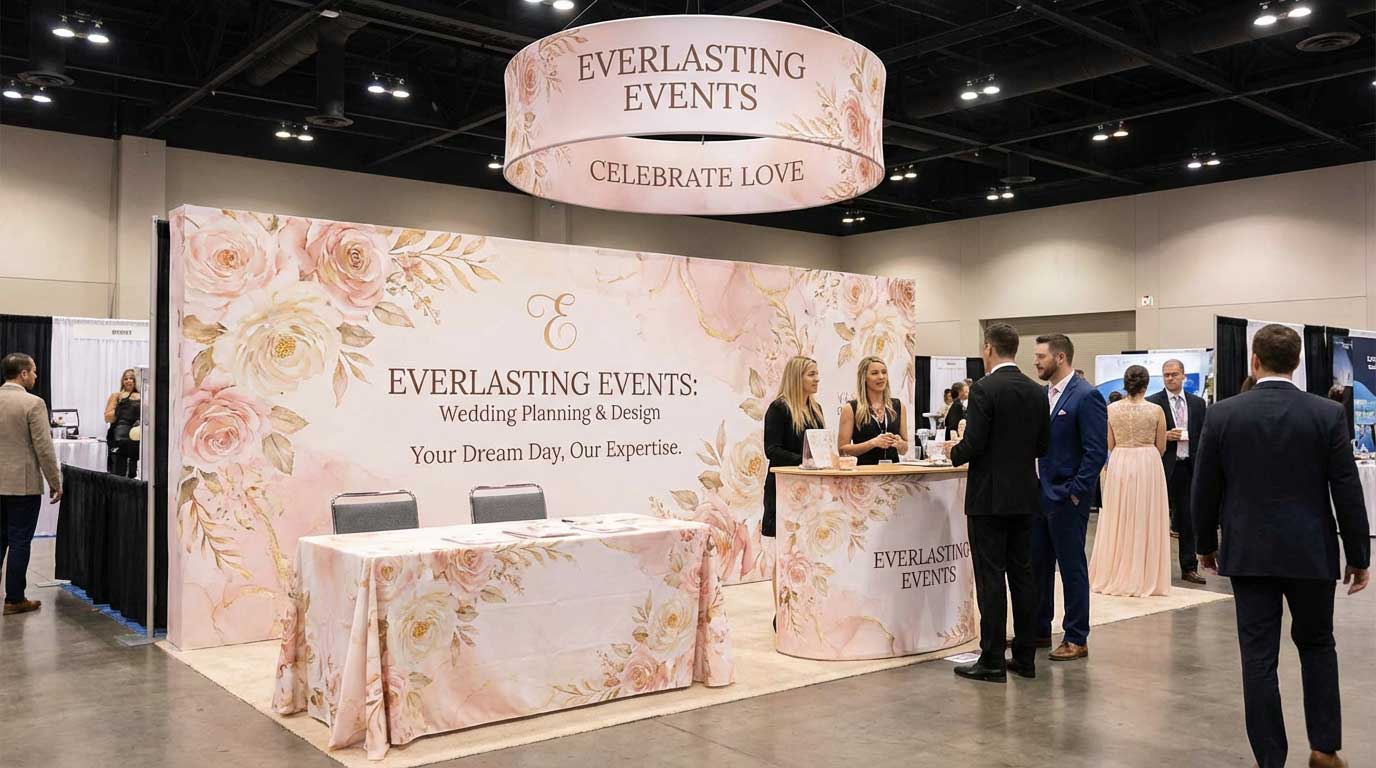
Hanging banners transform underutilized ceiling space into prime advertising real estate. Visible from hundreds of feet away across a busy convention hall, these overhead signs act as beacons that guide prospects directly to your booth. Whether you’re a first-time exhibitor or a seasoned trade show veteran looking to maximize visibility, this guide covers everything you need to know about hanging displays — from shapes and sizes to materials, installation, and choosing the perfect configuration for your brand.
If you’re building out a complete exhibit program, our complete trade show displays buyer’s guide walks you through every display category available. For now, let’s look skyward.
A trade show hanging banner — also called a ceiling banner, suspended ceiling sign, or overhead sign — is a large-format branded display that hangs from the ceiling structure of a convention center or exhibition hall. These hanging displays are typically constructed with a lightweight aluminum or composite frame covered in high-resolution, dye-sublimation printed fabric.
Unlike ground-level signage, ceiling suspended signage occupies the airspace above your booth, making your brand visible from virtually every corner of the show floor. Most convention centers designate hanging points on a pre-set rigging grid, and exhibitors can request specific attachment locations when they submit their booth plans.
The advantages of ceiling banners go far beyond simple visibility:
These benefits are why hanging banners have become a staple in the toolkit of serious exhibitors — right alongside essentials like retractable banner stands and fabric pop up displays at the booth level.
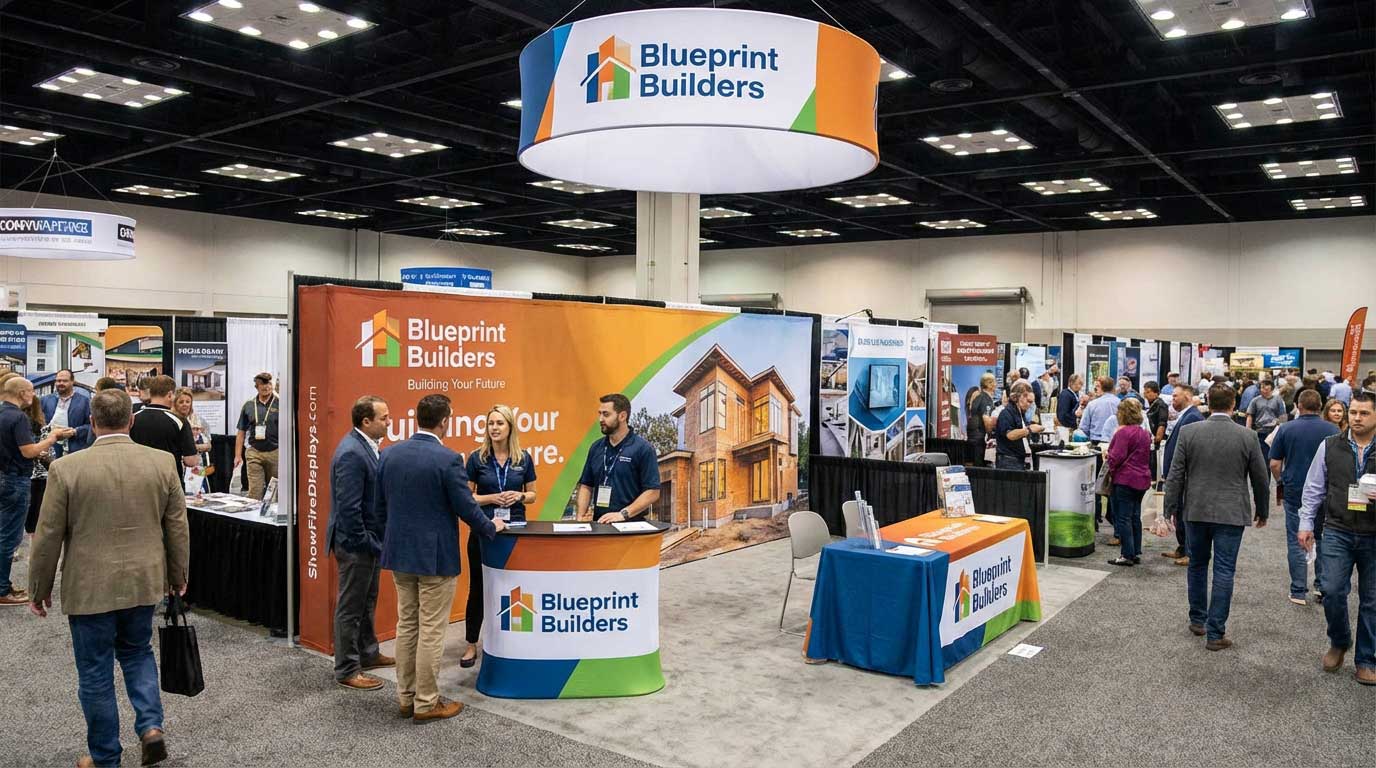
One of the first decisions you’ll make when selecting a ceiling banner is its shape. Each silhouette creates a distinct visual impression and serves different branding objectives. Here’s a breakdown of the most popular configurations.
Round hanging banners are the most popular shape on the trade show floor, and for good reason. Their symmetrical profile looks identical from every angle, providing true 360-degree visibility. Circle ceiling banners come in tapered, funnel, and straight-wall variations.
Square and rectangular hanging displays present clean, geometric lines and tend to complement modern booth designs. These shapes offer flat graphic panels on four sides, which is ideal when you want to display different messages, product images, or calls to action on each face.
Triangular overhead signs feature three graphic faces angled outward, creating a bold, architectural look. They work well for exhibitors who want angular, contemporary aesthetics. Each face can carry a unique message or a coordinated campaign across all three panels.
For brands that want organic, flowing shapes, curved and wave-style hanging banners deliver dramatic visual impact. S-curves, pinwheel configurations, and undulating wave shapes break free from geometric conventions and create truly memorable ceiling suspended signage.
Not every hanging display needs a three-dimensional frame. Flat hanging banners — essentially large, suspended fabric panels — are the most budget-friendly option. They’re perfect for directional signage, department identification, or smaller booth spaces that don’t have the rigging capacity for a full 3D structure.
| Shape | Visibility Range | Graphic Faces | Best For |
|---|---|---|---|
| Round (Circle) | 360° | Continuous wrap | Maximum omnidirectional visibility |
| Square / Rectangle | 360° | 4 flat panels | Multi-message campaigns |
| Triangle | 360° | 3 angled panels | Modern, architectural aesthetics |
| Curved / Wave | 360° | Flowing continuous | High-impact, artistic branding |
| Flat / Header | 2-sided | 1–2 flat panels | Budget-friendly overhead ID |
Hanging banners come in a wide range of dimensions, and selecting the right size depends on your booth footprint, venue ceiling height, and how far away you want your brand to be visible.
For round, square, and triangle shapes, standard sizes typically range from 6 feet to 20 feet in diameter or width. Here are the most common size categories:
| Size Category | Typical Dimensions | Ideal Booth Size | Visibility Distance |
|---|---|---|---|
| Small | 6–8 ft diameter/width | 10×10 to 10×20 | Up to 100 ft |
| Medium | 10–12 ft diameter/width | 20×20 to 20×30 | 100–200 ft |
| Large | 14–16 ft diameter/width | 30×30 and larger | 200–400 ft |
| Extra Large | 18–20 ft+ diameter/width | Island booths 40×40+ | 400+ ft across the hall |
The vertical height of your overhead sign — the “drop” — determines how much graphic real estate you have and how the banner looks in proportion to its width. Standard drops range from 24 inches (2 feet) to 60 inches (5 feet), though custom heights are available.
Keep in mind that most convention centers require a minimum clearance of 8 feet between the bottom of your hanging display and the show floor, and the maximum height is determined by the venue’s rigging grid. Always check venue-specific regulations before ordering.
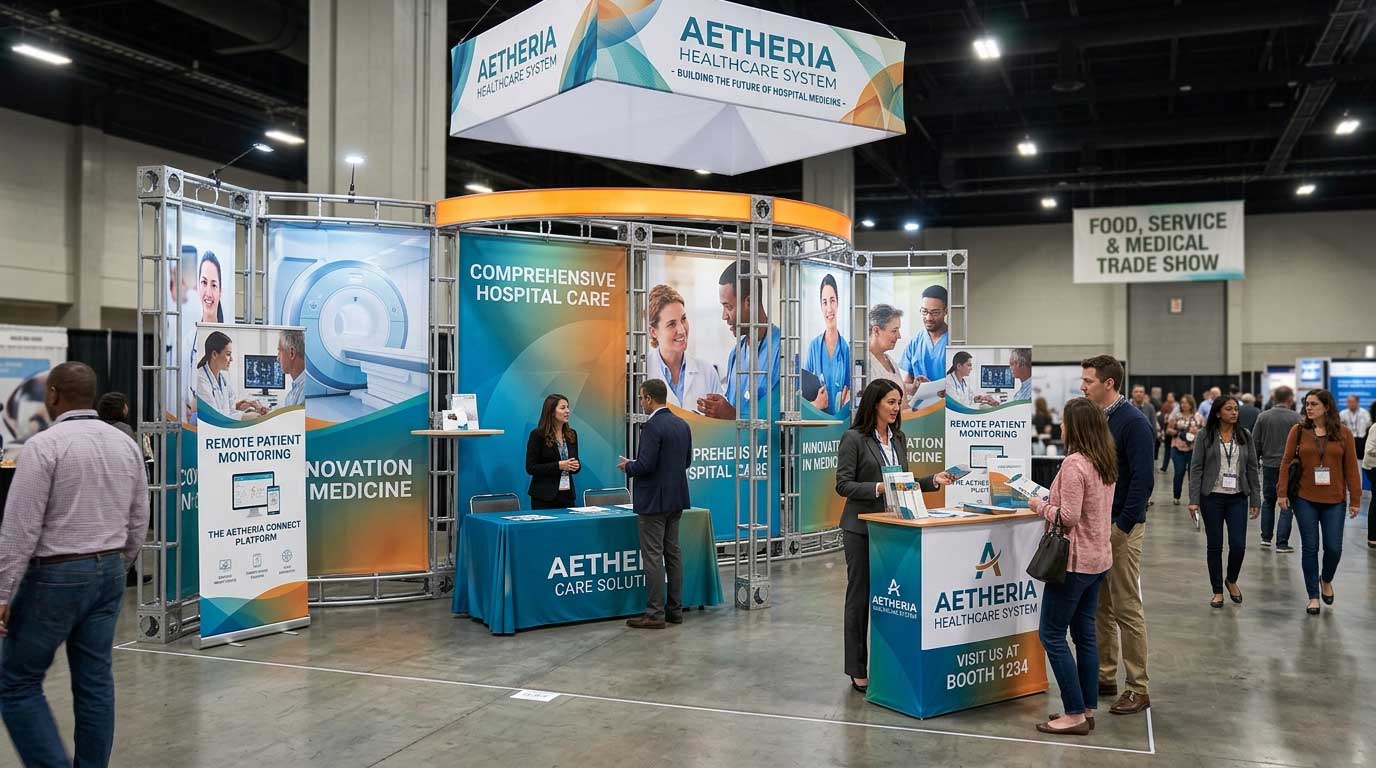
The quality of your fabric hanging banner comes down to two critical components: the frame and the graphic.
Modern hanging banner frames are engineered from lightweight aluminum tubing that assembles without tools. Most systems use a push-button or snap-lock connection system, allowing a single person to assemble the frame in 15–30 minutes.
Key frame features to look for:
The industry standard for hanging signs is dye-sublimation printed stretch fabric — typically a polyester knit material. Dye-sub printing infuses ink directly into the fabric fibers rather than sitting on top like vinyl, resulting in:
The fabric graphic typically attaches to the frame via a zippered sleeve or silicone edge gasket (SEG) perimeter channel. If you’re interested in how SEG technology works in other display formats, our SEG backlit display guide offers a deep dive into this versatile attachment system.
Selecting the perfect ceiling banner involves balancing several factors. Here’s a systematic approach to making the right decision.
Your booth layout determines the maximum size of hanging display you can support. Convention centers typically allow overhead signs only for inline booths of 20×20 feet or larger, and island booth configurations get the most flexibility. A 10×10 booth usually doesn’t qualify for a ceiling banner — in that case, a display tower or tall banner stand display can provide vertical branding within your footprint.
Before you order, contact the venue or your show’s exhibitor services team to determine:
Consider what shape best represents your brand personality and campaign goals:
| Brand Goal | Recommended Shape | Why |
|---|---|---|
| Universal recognition from any angle | Round / Circle | Seamless 360° graphic with no dead angles |
| Multiple messages or product lines | Square / Rectangle | Four distinct panels for varied content |
| Modern, edgy brand identity | Triangle | Angular geometry conveys innovation |
| Artistic, creative differentiation | Curved / Wave | Organic shapes stand out from geometric norms |
| Budget-conscious identification | Flat / Header | Maximum impact per dollar with simpler rigging |
Match your banner size to your booth footprint and the venue’s scale. A general rule: your hanging display’s diameter or width should be roughly 50–75% of your booth’s shortest dimension. A 20×20 booth, for example, typically suits a 10–14 foot hanging banner.
Your overhead sign will be viewed from far away, so design principles differ from booth-level graphics:
The banner itself is only part of the cost. Factor in:
For exhibitors coordinating their overall show strategy — including booth design, staffing, promotional items, and lead capture — our trade show marketing guide covers the full spectrum of planning considerations.

Hanging banners aren’t the only way to boost your booth’s visibility. Here’s how they compare to other vertical and high-impact display options.
Tower displays are freestanding vertical structures that sit on the show floor and extend upward — typically 8 to 16 feet tall. They’re an excellent alternative when your booth doesn’t qualify for overhead rigging or when you want a floor-level structure that doubles as storage or a meeting point.
The key difference: hanging displays occupy airspace without consuming floor space, while a tower display occupies floor space but doesn’t require rigging labor. Many exhibitors use both — a ceiling banner for long-range visibility and a branded tower display for close-range branding at the booth perimeter.
An orbital truss can also provide elevated signage when configured as a tall archway or overhead element within your booth. Truss systems offer a structural, industrial aesthetic and can support monitors, lighting, and other accessories. However, truss structures are heavier, more complex to assemble, and typically more expensive than dedicated hanging banner systems.
Backlit trade show displays use internal LED illumination to make graphics glow, creating stunning visual impact at the booth level. Some hanging banners are also available with internal lighting, combining overhead placement with backlit brilliance. If your show hall has dim lighting, an internally lit hanging banner can be a game-changer.
Fabric pop up booth systems and modular trade show displays provide expansive graphics at booth level but are limited to the sightlines of your immediate aisle. A hanging banner extends your reach across the entire hall while your backwall handles the close-up storytelling once attendees arrive.
Understanding the logistics of hanging displays ensures a smooth show experience.
At most major convention centers, ceiling banner installation follows this process:
One of the advantages of modern fabric hanging banners over older rigid or vinyl alternatives is their compact shipping profile. A fabric graphic and aluminum frame for a 12-foot round hanging banner typically ships in one or two cases, each weighing between 20 and 50 pounds. Compare that to the crating and freight required for rigid signs, and the cost savings in shipping alone can be significant.
Between shows, store your fabric graphic clean and loosely folded (not tightly compressed) in a climate-controlled environment. Aluminum frames should be stored in their padded carrying cases to prevent dents and scratches.
A well-made hanging banner system is designed for years of use. The aluminum frame is virtually indestructible under normal conditions, and dye-sublimated fabric graphics maintain their vibrancy through dozens of setups and teardowns. When your branding or messaging changes, simply order a replacement graphic — no need to buy a new frame.
A hanging banner gets people to your booth. What they find when they arrive determines whether they stay. Pair your overhead sign with a cohesive ground-level display strategy:
The most successful exhibitors create a visual hierarchy — the hanging banner draws from afar, the backwall and towers engage from mid-range, and tabletop displays and banner stands communicate up close. For a comprehensive look at how all these elements work together, explore the trade show displays guide.

Prices for hanging banners vary based on size, shape, and complexity. A small flat header banner might start around $300–$500, while a large 3D custom hanging banner with a 16-foot diameter could range from $1,500 to $3,500 or more. Don’t forget to budget for venue rigging labor, which is a separate cost. To explore current pricing, shop hanging banners and compare options with hardware included.
Most trade shows restrict ceiling-suspended signage to booths of 20×20 feet or larger, and many require an island booth configuration (open on all four sides). Check your show’s exhibitor manual for specific rules. If your booth is too small for a ceiling banner, consider high-visibility alternatives like trade show tower displays or tall retractable banners.
In virtually all major convention centers, yes. Union labor regulations require certified riggers to handle any ceiling-mounted installations. The rigging crew is typically arranged through the show’s general services contractor, and costs are billed directly to the exhibitor.
Absolutely. Dye-sublimation printed polyester fabric is durable and machine washable. Most exhibitors reuse their graphics for two to five years before refreshing. If you need updated messaging, replacement graphics can be ordered separately from the frame.
Focus on simplicity. Large logos, bold company names, and short taglines work best. Avoid paragraphs of text, fine details, or complex imagery. Use high-contrast color combinations and ensure your primary message is legible from at least 200 feet away.
The terms are used interchangeably in the trade show industry. “Hanging sign” and “hanging banner” both refer to overhead displays suspended from the ceiling of an exhibition hall. Three-dimensional structures are sometimes specifically called hanging signs, while flat, two-sided displays may be called hanging banners, but there’s no strict distinction.
Plan to order your ceiling banner at least four to six weeks before your event. This allows time for design proofs, production, shipping, and submitting your rigging order to the venue. Rush production is available from many suppliers but comes at a premium.
A strategically chosen hanging banner does what no other display can — it lifts your brand above the noise and draws attendees to your booth from across the entire show floor. Whether you need a sleek 8-foot round overhead sign for a mid-size booth or a dramatic 20-foot custom hanging banner for a flagship island exhibit, the right ceiling banner transforms your trade show presence.
Browse our full collection of hanging signs to find the perfect shape, size, and style for your next event. Every system includes the aluminum frame, dye-sublimation printed fabric graphic, rigging hardware, and a protective carrying case — everything you need to command attention from above.
Need help choosing the right configuration or have questions about venue-specific requirements? Our team at Showfire Displays is ready to help you design a hanging display that delivers maximum visibility and maximum ROI. Explore hanging banner options and pricing today and start planning your most visible trade show presence yet.