Need Assitance?
Call us at 844-203-6588.
We Accept

The cabo modular display is the format you reach for when a back-wall layout simply will not do. Some brands need four-sided visibility, open traffic flow, and a booth that reads as a destination rather than a backdrop -- and that is exactly the problem this system is designed to solve. If you are planning a 20x20 or larger island footprint, the Cabo is one of the few modular formats purpose-built to fill that space without feeling sparse or makeshift. This article walks through who the Cabo is best for, what to look for before buying, and how it fits into the broader landscape of modular exhibit options.
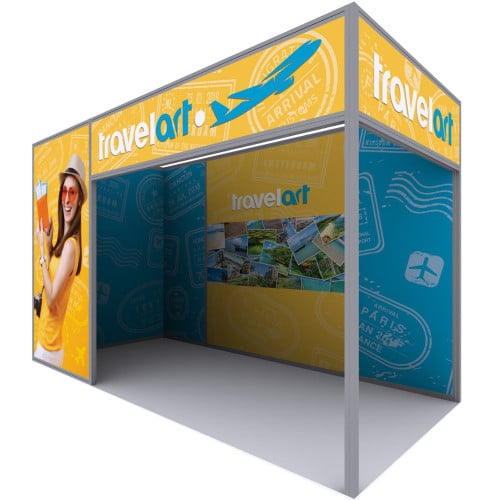
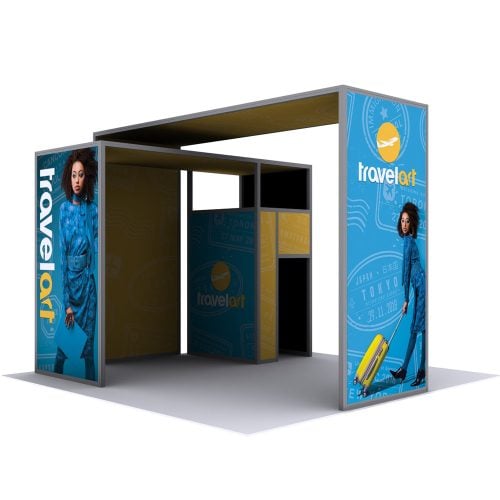
Most modular displays are designed to run along the perimeter of a booth space -- they face forward, anchor a back wall, and direct foot traffic in one direction. The cabo island booth flips that logic entirely. It is engineered for open floor placement, meaning all four sides are finished, branded surfaces that engage visitors from every aisle.
That distinction matters more than it might first appear. At a major trade show, being surrounded by single-faced back-wall booths while your structure reads three-dimensionally from across the floor creates a significant difference in how attendees navigate toward you. The Cabo is not a scaled-up version of a linear display -- it is a different category of exhibit that rewards floor space with proportional brand presence.
The frame architecture is what makes this possible. Unlike tension fabric systems that rely on a rear wall for support, the Cabo uses a self-supporting structural grid that stands independently in an open footprint. Graphics panels wrap the exterior on all exposed sides, and the interior structure can be configured to include storage, meeting areas, or product demonstration zones depending on the brand's needs.
Not every exhibitor needs an island configuration, and the Cabo is designed with a specific buyer profile in mind. The following table maps common exhibitor situations to whether the Cabo is likely a strong fit.
| Exhibitor Situation | Good Cabo Fit? |
|---|---|
| 20x20 or larger island space allocated | Yes -- designed for this footprint |
| Premium industry show with high foot traffic | Yes -- four-sided visibility maximizes engagement |
| First-time exhibitor with a 10x10 corner space | No -- a linear modular format will serve better |
| Brand launching a major product line at a flagship event | Yes -- interior space supports demo and meeting zones |
| Tight budget, single show deployment | No -- smaller modular formats offer better ROI at lower cost |
| Multi-show exhibitor needing reconfigurable infrastructure | Yes -- Cabo panels and hardware reuse across events |
The cabo display for trade show environments works especially well for companies in industries where a premium exhibit signals market leadership -- technology, healthcare, manufacturing, and professional services all fit this profile. If your competitors are running 10x10 pop-ups and you have the budget to occupy a full island, the Cabo creates a visible gap in production value without requiring a fully custom-fabricated booth.
This system also appeals to exhibitors who have outgrown their existing modular setup. If you started with a modular trade show display and now need to double your footprint for a flagship show, the Cabo's panel-based architecture means your graphics investment scales with you rather than starting from scratch.
One of the strongest arguments for the cabo hybrid display format is that it does not lock you into a single layout. The structural system uses discrete frame sections and graphic panels that can be reconfigured between events to reflect a different floorplan, accommodate a new product focus, or simply refresh the visual identity without replacing the entire kit.
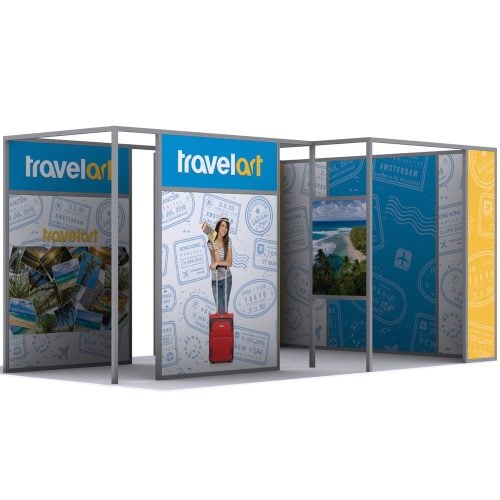
A modular display 20x20 island built on the Cabo platform can be reorganized to feature an open corner entry, a closed meeting room, a monitor wall, or an elevated header -- often using the same core hardware with only panel repositioning and new graphic prints. That reconfigurability is the fundamental case for choosing modular infrastructure over a one-time-use custom build.
For buyers new to island-scale exhibits, the modular display buying guide is a practical starting point for understanding frame systems, graphic attachment methods, and what questions to ask before committing to a configuration. It also covers the trade-offs between fabric-wrapped and hard-panel systems -- a comparison that becomes especially relevant at the 20x20 scale.
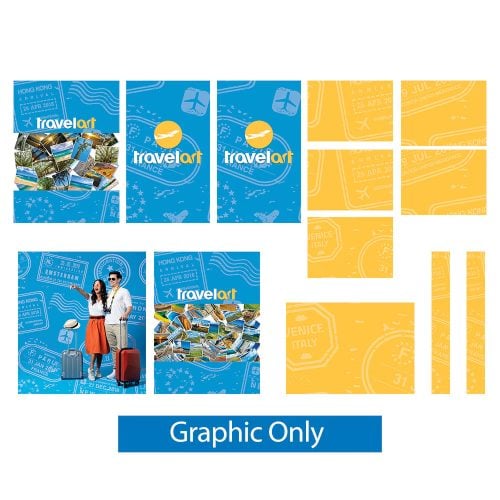
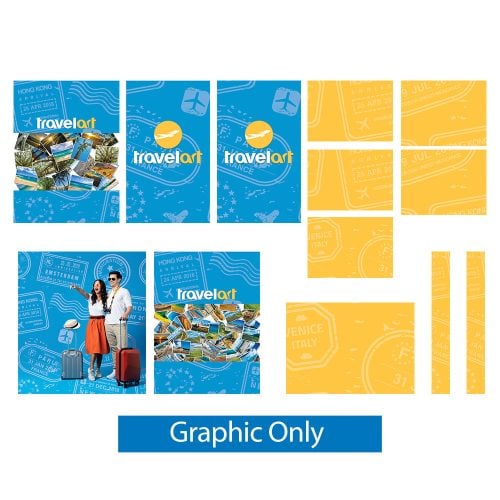
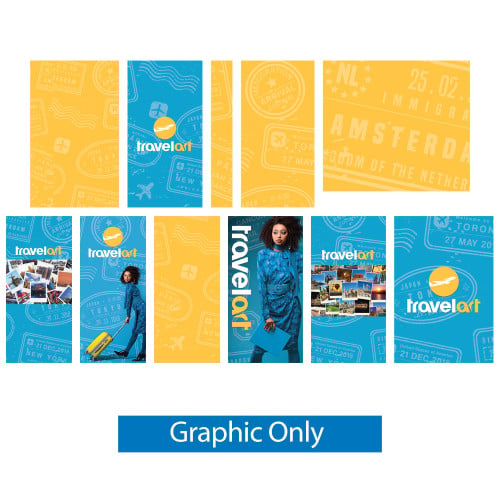
The cabo modular with graphics is where the format's visual impact becomes concrete. At island scale, you are not working with a single 10ft backdrop -- you are managing multiple graphic zones across an exterior perimeter that may span 60 to 80 linear feet of visible surface. That is a significant creative canvas, and the design decisions you make about color blocking, typography scale, and product imagery placement will affect how the booth reads from 30ft away versus 5ft away.
Printed graphics for the Cabo typically use dye-sublimation fabric panels that tension into the frame sections. Fabric is the practical choice at this scale because it ships compactly, installs without tools, and delivers consistent color fidelity across large surface areas. Some configurations also support rigid panel inserts for premium finish sections or backlit graphic zones.
An island exhibit at the 20x20 scale is not a one-person setup. The Cabo's frame sections are manageable in individual pieces, but assembling a full perimeter structure requires two to four people and a clear setup sequence. At most large trade shows, labor is procured through the show's general service contractor -- factor that cost into your total budget alongside the display hardware and graphic printing.
Shipping is also a distinct line item. A full Cabo kit at island scale will ship in multiple cases. If you are exhibiting at multiple shows per year, you may choose to store the hardware with a fulfillment partner rather than shipping round-trip every time.
The cabo modular booth format earns its value over multiple deployments. If you are planning a single event, the per-use cost of a full island system is harder to justify. But if you exhibit at three or more shows per year -- or if you plan to use the same footprint for a multi-year cycle -- the hardware investment amortizes quickly against the alternative of renting pre-owned or generic booth structures.
The trade show displays buyer guide covers total cost of ownership across different display formats, which helps when building a budget case internally or comparing modular ownership to rental programs.
If an island configuration is more than your current show schedule requires, it is worth reviewing the full family of modular options before committing. The Qseg modular display is a strong alternative for linear or perimeter configurations where SEG fabric tension walls are the primary graphic method -- it scales efficiently from 10x10 to 20ft inline layouts. For faster setup or configurations that integrate monitor mounts and accessory hardware cleanly, the EZ Connect modular system is worth a close look. And if your show strategy calls for structured hard-frame construction with defined interior architecture, the Timberline modular display brings a more rigid system to complex multi-component layouts.
The custom cabo display sits at the top of the modular format hierarchy in terms of footprint and visual presence, but it is not the right choice for every situation. The value of reviewing siblings in the line is that you can confirm the Cabo is the appropriate scale for your goals -- or discover that a well-configured 10x20 layout meets your needs at lower cost and complexity.
At island scale, graphic production requires more coordination than a simple back-wall print. Fabric panels for a full Cabo configuration involve multiple files, multiple print runs, and a quality check against the assembled frame before the show. Build in adequate lead time -- typically two to three weeks from approved artwork to delivered hardware -- and plan your first setup as a dry run before show day.
If your next show demands a full island footprint and you want the flexibility to reconfigure the same infrastructure across future events, the cabo modular display is built for that brief. The combination of self-supporting structure, fabric graphic panels, and modular frame sections means you are investing in an exhibit platform that adapts rather than expires.
Review the full range of options in our custom modular display collection, or use the scalable modular exhibit system guide to work through configuration questions before reaching out. When you are ready to move forward, contact the Showfire team for a free quote -- we will help you match the right Cabo configuration to your space, your graphics, and your show calendar.