Need Assitance?
Call us at 844-203-6588.
We Accept

Few overhead display shapes carry the visual weight of a tapered triangle. Where flat-paneled signs blend into a busy convention hall ceiling, the three-dimensional, narrowing geometry of a tapered triangle hanging banner pulls the eye upward and inward simultaneously -- creating depth that a flat graphic simply cannot replicate. If you are shopping among the full range of hanging signs and trying to decide which shape earns floor space above your booth, this page gives you the specifics: what this shape does well, who it serves best, and what to think through before you buy.
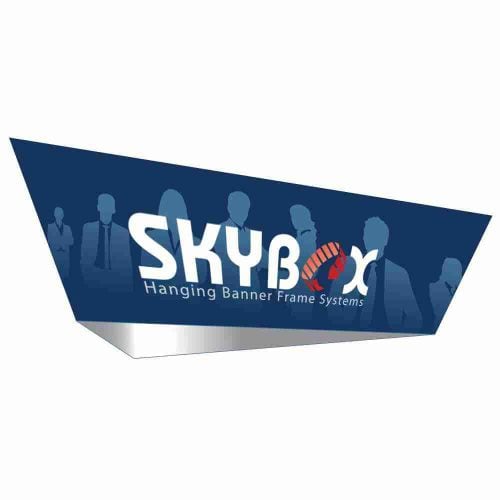
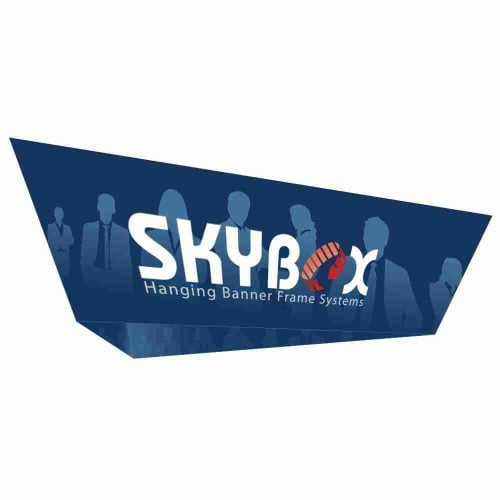
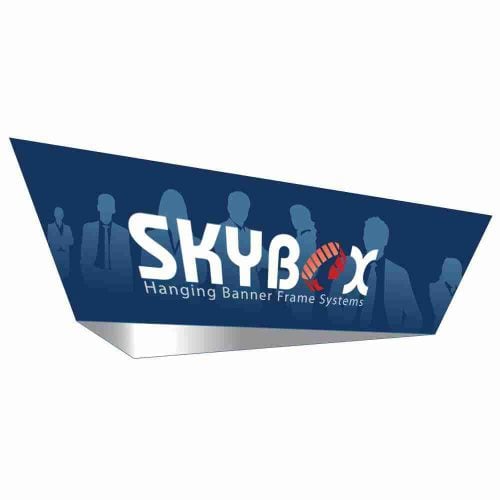
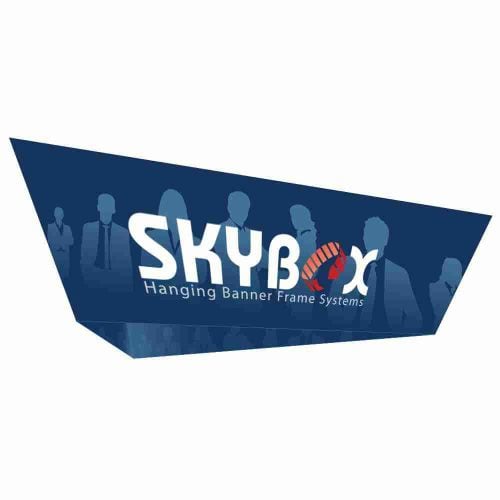
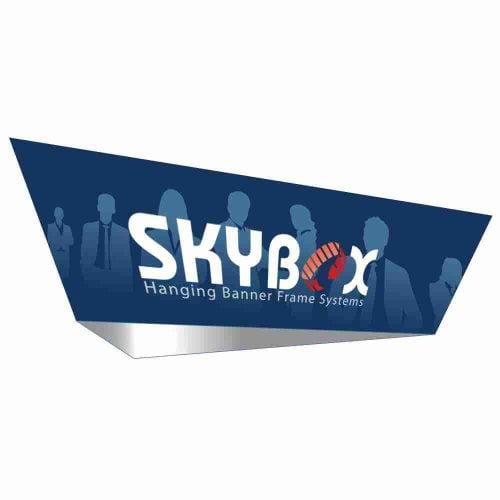
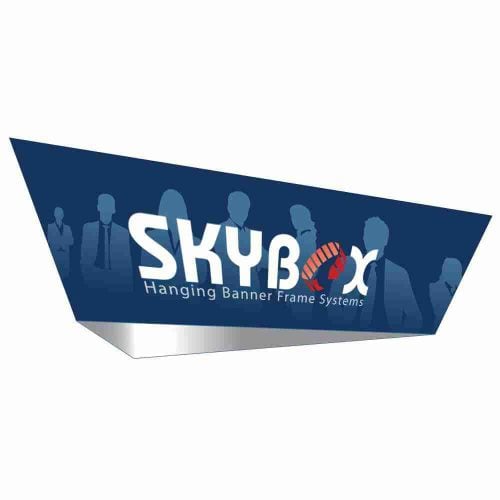
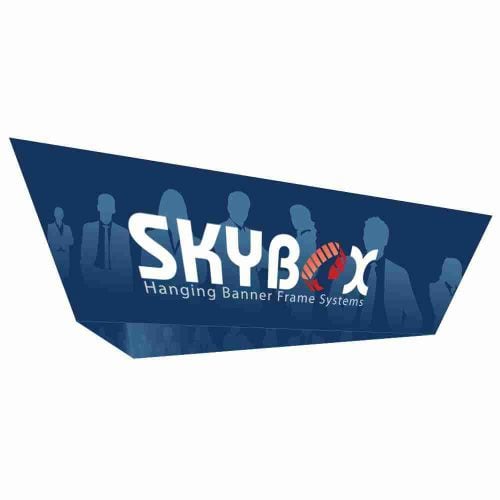
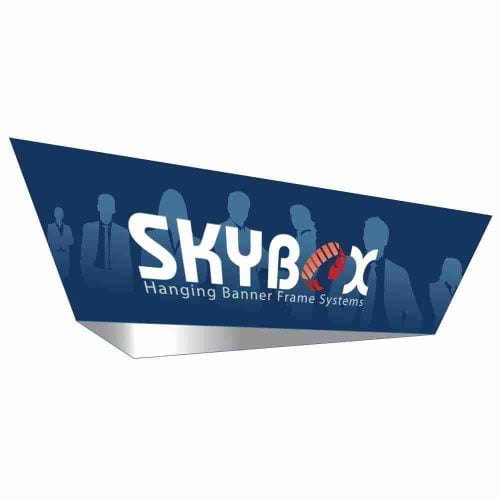
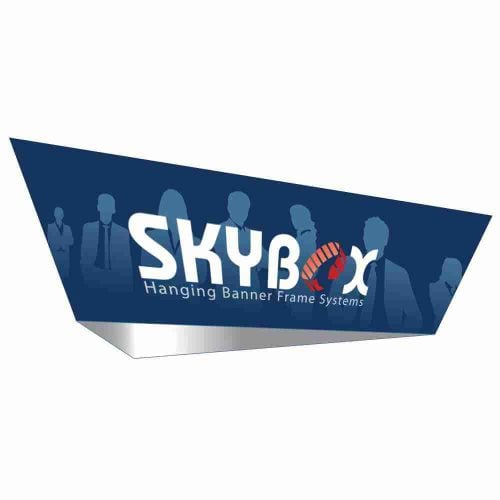
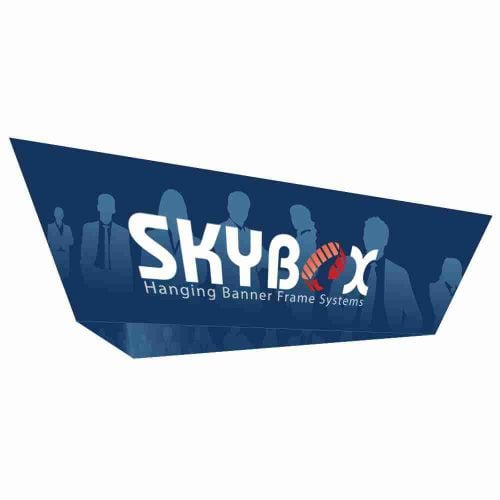
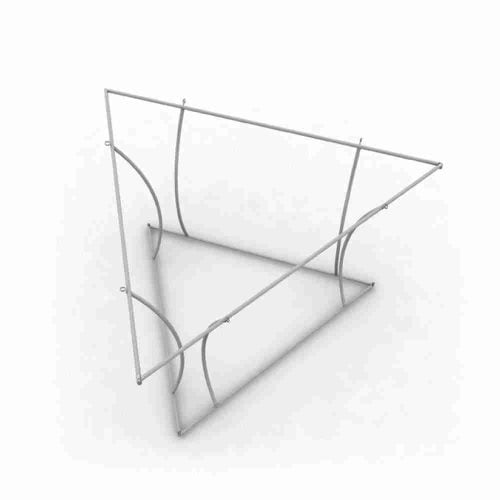
Most hanging display shapes are either flat or uniformly three-dimensional. The tapered triangle hanging banner is neither. It is a three-sided structure that is wider at the base and narrows as it rises to a peak -- essentially a triangular prism that converges toward the top rather than running parallel edges all the way up. That taper is the functional difference.
Because the profile changes with viewing angle, people see something slightly different whether they approach from the front, the side, or an angle. The structure always looks dynamic rather than static. In a crowded exhibit hall filled with trade show ceiling banners competing for attention, that constant visual shift is a genuine advantage.
The shape also has excellent structural integrity. Tensioned fabric pulled over a tapered aluminum frame holds its geometry under typical convention center air handling without rippling or collapsing. The result is a clean, graphic-ready surface on each of the three faces.
The tapered triangle hanging banner is not a universal fit for every exhibit. It is, however, an excellent fit for specific situations:
Technology and innovation brands. The angular geometry reads modern and forward-facing. Brands in software, hardware, aerospace, and engineering consistently choose sharp geometric shapes over organic or rounded forms.
Smaller booths that need vertical presence. A 10 ft x 10 ft booth has limited floor real estate. Hanging the display overhead extends the brand footprint into airspace, which convention centers generally allow within rigging guidelines. A tapered form maximizes that vertical read without requiring an oversized base footprint.
Exhibitors who want 360-degree coverage. Each face of the banner is printable, so attendees approaching from any direction see branded content. Compared to a single-face banner stand on the floor, a three-sided tapered structure delivers three times the visible graphic area from a single rigging point.
Multi-day touring events. The aluminum frame packs down into a carry bag, and the fabric graphic unzips for separate transport and cleaning. Teams traveling booth-to-booth over a season appreciate that compact breakdown.
For broader context on how this shape compares across the full spectrum of overhead options, the trade show hanging banner guide covers shape selection, rigging requirements, and ceiling height considerations in one place.
Understanding where this shape sits among its siblings helps narrow the decision quickly. Here is a practical breakdown:
| Shape | Profile | Faces | Best Visual Effect | Typical Use Case |
|---|---|---|---|---|
| Tapered Triangle | Narrows to peak | 3 | Angular, dynamic | Tech, innovation, modern brands |
| Triangle hanging banner | Uniform prism | 3 | Structured, geometric | Any brand wanting strong geometry |
| Tapered square hanging banner | 4-sided taper to peak | 4 | Bold, symmetrical pyramid | High-visibility brand moments |
| Tapered circle hanging banner | Conical taper | Continuous wrap | Smooth, fluid | Lifestyle, consumer, organic brands |
| Circle hanging banner | Cylinder, no taper | Continuous wrap | Classic, versatile | Broad industry use |
As the table shows, the tapered triangle sits at an intersection of angular drama and three-dimensional depth. If your brand identity is clean and geometric but you want more visual movement than a standard triangle hanging sign provides, the tapered version is the logical step.
For brands whose identity skews softer or more organic, a custom round hanging banner or a tapered ceiling hanging banner in a conical form often fits better. And if four faces feel more practical than three for your layout, the 4 sided tapered hanging banner is worth considering instead.
Tapered triangle hanging banners are available in multiple sizes to suit inline booths, island exhibits, and large-format event environments. Smaller configurations work well for 10 ft x 10 ft and 10 ft x 20 ft booths. Larger sizes are common in island exhibits where the display needs to be readable from a distance of 50 ft or more across the show floor.
A useful rule: the base circumscribed width of your banner should be roughly proportional to the narrowest dimension of your booth footprint. Going much wider than that makes rigging harder and may conflict with neighboring exhibitors. Going much smaller limits readability. When in doubt, size up -- fabric graphics always read better large.
Graphics print on stretch polyester fabric using dye-sublimation, which saturates color into the fiber rather than coating the surface. The result is a vivid, wrinkle-resistant graphic that does not crack, peel, or fade under typical event lighting. Zipper attachment to the frame keeps the fabric taut without visible hardware interrupting the print.
Double-sided printing is available and adds significant impact -- your logo or message is visible from any direction even as attendees move around the structure. For a hanging banner for exhibit booth use specifically, double-sided print is worth the incremental cost at almost every booth size.
The aluminum frame ships pre-assembled into sections that snap or lock together on-site. Most sizes assemble in under 30 minutes without tools. A hanging ring or suspension point at the apex connects to convention-provided rigging cables.
Always confirm ceiling height with your venue before ordering. Most convention centers require a minimum clearance between the bottom of the banner and the floor, and some impose maximum banner heights above the booth footprint. Your event services manual will list the specific requirements. The overhead hanging banner planning guide includes a section on common venue rigging rules worth reviewing before you finalize your size selection.
The frame sections fit into a wheeled carry bag that checks as oversized luggage or ships via freight alongside your other exhibit components. The fabric graphic folds flat -- or rolls, depending on size -- and fits in a separate bag. Keeping graphic and hardware in separate bags protects the print surface from the aluminum frame during transport.
If you are building out a full exhibit program, it is worth reading the complete trade show displays buyer's guide for guidance on coordinating hanging displays with flooring, counters, and backwall systems so everything arrives and sets up on the same timeline.
Not every booth benefits from a triangular overhead structure. Two other shapes come up frequently in the same buying conversation.
The square hanging banner suits exhibitors who need maximum flat graphic area on each face -- its four uniform panels give the most printable surface per square foot of overhead space. Logos with horizontal layouts, product photos, or detailed messaging often read better on a flat square face than on a narrowing triangular panel.
At the other end of the spectrum, the wave overhead hanging sign introduces a flowing, curved silhouette for brands that want movement and energy without hard angles. It is a common choice in lifestyle, fashion, and consumer goods exhibits. The football overhead hanging banner fills a similar niche -- a lens-shaped form that is immediately recognizable from the floor and works well when a brand wants a softer, more approachable silhouette overhead.
If you are still comparing round hanging banners and angular options side by side, the shape comparison section of the hanging signs hub covers all available formats with guidance on which environments each suits best.
The tapered triangle hanging banner is a strong choice for any exhibitor who wants a three-dimensional overhead presence with genuine angular drama. It ships with the full aluminum hardware kit, connects to standard rigging points, and accepts full-color dye-sublimation custom graphics on every face.
Browse the full lineup of sizes and configuration options -- including single- and double-sided print, optional hard cases, and rush production -- in our custom hanging banner with hardware collection. If you want to explore how round hanging banner kit options or other shapes fit your exhibit before committing, our team is ready to help you compare. Contact Showfire Displays for a fast quote, and get your overhead display into the production queue before your next show date.