Need Assitance?
Call us at 844-203-6588.
We Accept

Tradeshow booths come in all shapes and ambitions, and the Qseg Tradeshow format is designed for exhibitors who need more than a basic backwall but aren't ready to commit to a permanent island build. This is a configurable, fabric-tensioned system that scales across standard booth footprints and ships in manageable cases -- not freight crates. Every custom qseg display in the tradeshow line is built around the same SEG silicone-edge graphic system that makes the broader Qseg family so consistent and rebrandable. If your trade show calendar spans multiple venues and booth sizes, or your marketing message changes season to season, the Qseg Tradeshow format was designed specifically with your situation in mind.
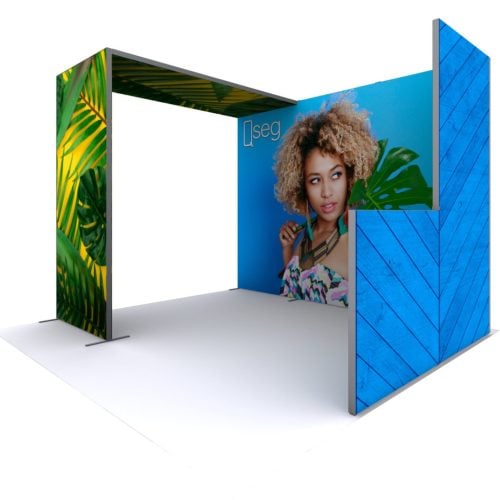
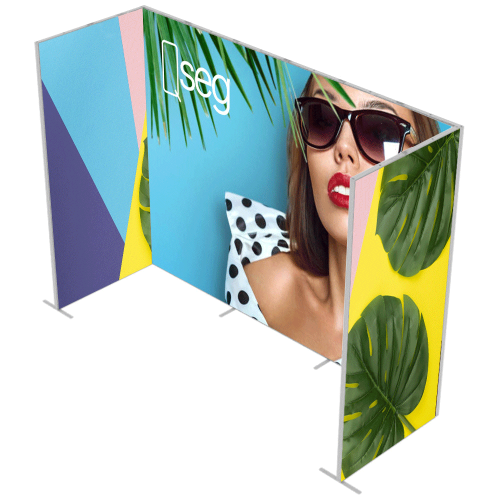
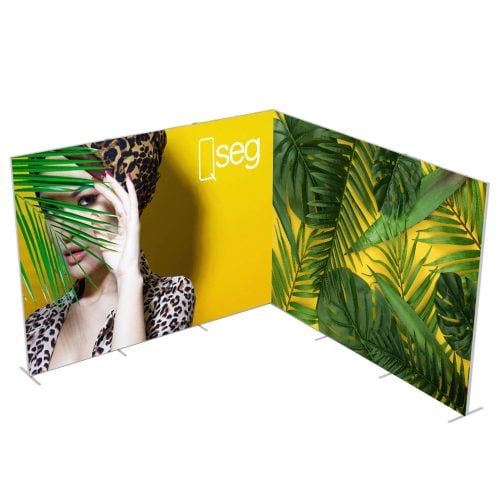
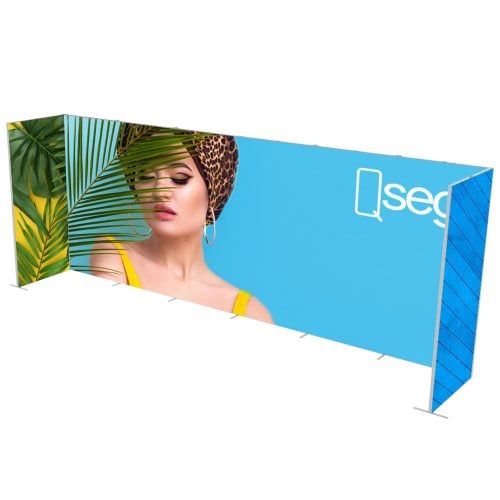
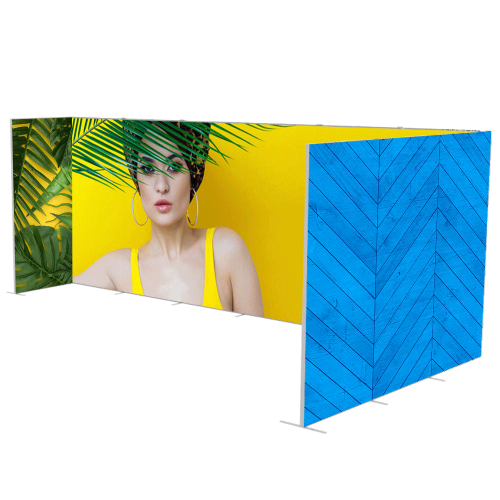
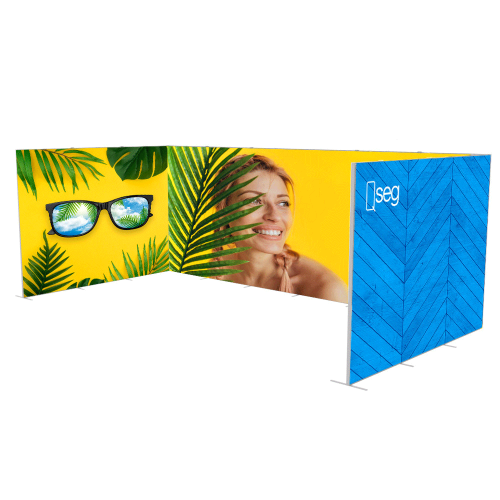
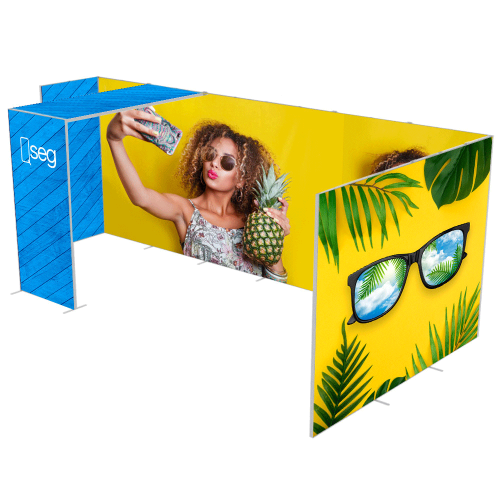
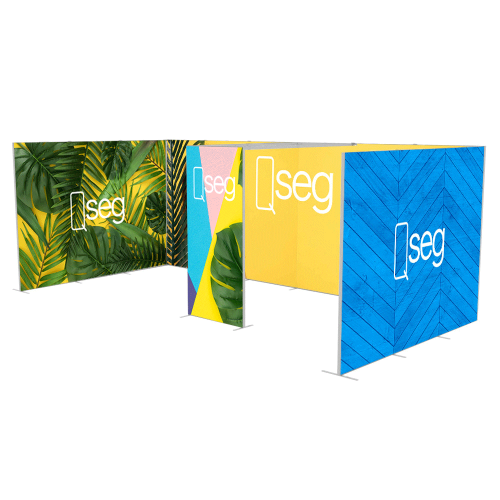
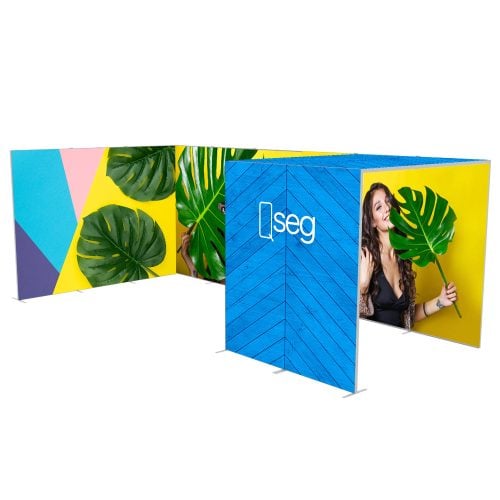
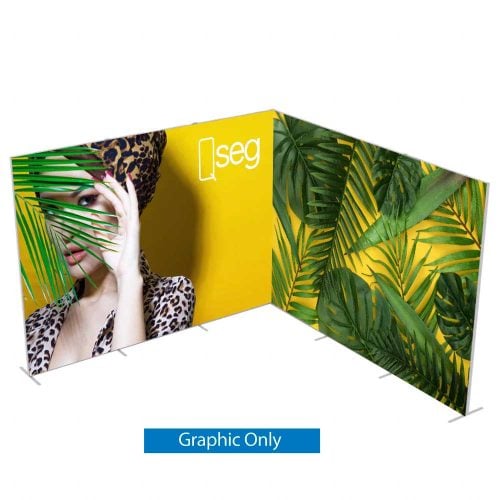
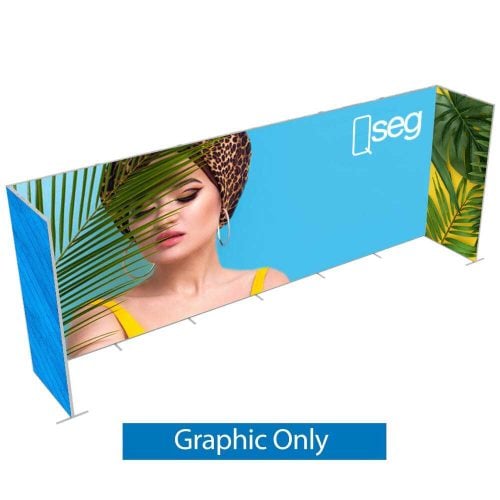
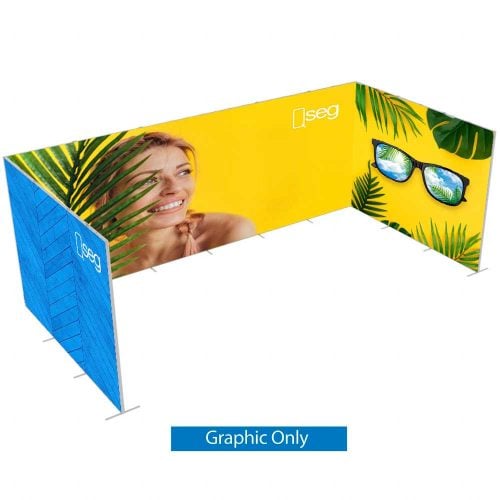
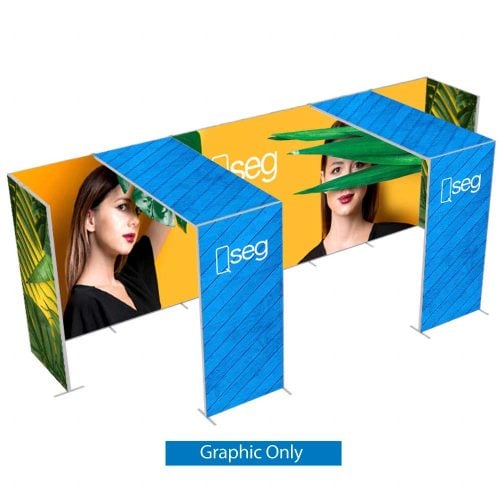
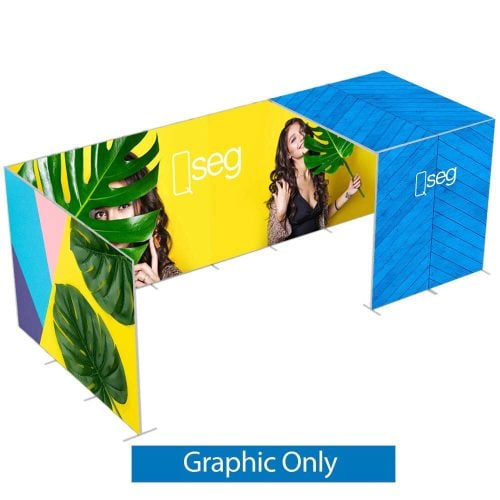
Most fabric display systems offer a single backwall and call it done. The Qseg Tradeshow line covers multi-wall configurations that define a full booth space -- inline layouts, L-shaped arrangements, and wrap-style designs that create the sense of an enclosed exhibit area without requiring a custom-fabricated structure.
The aluminum frame locks together with push-button connectors, and the graphic fabric panels slide into SEG channels along the frame perimeter. The result is a flush, wrinkle-resistant surface that photographs cleanly and reads well from across a show floor. Unlike hard-panel systems, the fabric graphics roll flat for storage, which keeps your shipping footprint small even when your booth footprint is substantial.
For anyone researching modular options across formats and price points, the modular trade show display guide at Showfire Displays covers the full landscape -- from lightweight pop-ups through large-format SEG builds -- and gives buyers a clear framework for narrowing down to the right system before they start configuring.
The Qseg Tradeshow line is well matched to a specific kind of exhibitor. Here is what that typically looks like in practice:
Multi-show exhibitors with varying booth sizes. If you're booking a 10' x 10' inline at one regional show and a 10' x 20' corner at a trade show three months later, the Qseg modular system lets you add panels and connectors to scale. You're not buying a second booth -- you're expanding the first one.
Brands that refresh graphics seasonally. The SEG silicone-edge fabric comes out of the channel in minutes and rolls up for storage. New graphics drop in just as fast. The frame stays the same; only the printed panels change. This matters when campaign artwork updates every quarter and reprinting an entire hard-panel booth would be cost-prohibitive.
Small-to-mid-size companies managing setup in-house. The Qseg Tradeshow system assembles without tools and without a professional installation crew. Two people can work through a full booth configuration in under an hour once they're familiar with the system.
Exhibitors who need a structured look on a modular budget. The SEG fabric finish reads as more polished than a straight banner or pop-up frame, and the multi-panel configuration gives the booth genuine architectural presence, without the lead times and costs of custom fabrication.
If your situation only calls for a single standalone graphic wall rather than a full booth wrap, the Qseg single frame display is a leaner starting point worth reviewing before you configure a larger kit. And for applications beyond the show floor -- office branding, event space dividers, or lobby installations -- the Qseg partitions line uses the same core system in configurations built for that purpose.
The Qseg Tradeshow line ships in defined kit configurations. Understanding what differentiates them saves time and avoids over-buying.
The phrase qseg trade show booth configuration a refers to the baseline multi-wall arrangement -- typically a straight backwall combined with side returns that create a three-sided inline presence. This is the most common starting point for 10' x 10' and 10' x 20' booth spaces. The qseg trade show booth configuration c designation indicates a larger or more complex layout that adds additional panels and may accommodate a wider span or deeper side walls.
The qseg tradeshow kit approach means everything you need -- frame sections, connectors, fabric panels, and carry case -- arrives together and is designed to deploy as a unit. You're not sourcing components separately and hoping they work together. Kits are calibrated so the panel count matches the frame count, and the case dimensions comply with standard shipping carrier rules.
Here is a quick breakdown of how to think about kit selection before you configure:
| Consideration | What to Ask |
|---|---|
| Booth footprint | What are the exact floor dimensions at your next show? |
| Wall coverage needed | Full three-wall wrap or straight backwall with returns? |
| Graphic update frequency | Will panels be swapped seasonally, or set-and-forget? |
| Setup crew size | One person, two, or a professional I&D team? |
| Shipping method | Ground shipping from the venue or checked cargo? |
Qseg with graphics ordering means your fabric panels are custom-printed and included with the hardware -- this is the most common configuration for buyers who want to unbox and set up without sourcing print separately. Hardware-only orders are also available for exhibitors who already own compatible SEG fabric panels or who are scaling an existing kit.
A few decision points will determine which configuration and which options actually fit your situation. Work through these before you add anything to cart.
Frame compatibility and reuse. Every panel in the Qseg system uses the same connector profile, so frames purchased today are compatible with panels purchased in future seasons. This matters if you plan to expand incrementally -- you're not locking yourself into a closed ecosystem.
Graphic resolution and bleed requirements. Fabric SEG panels have specific resolution requirements that differ from rigid substrate printing. At typical viewing distances on a show floor, 150 dpi at full size is generally sufficient, but panels printed for close-up product detail areas should be spec'd higher. Confirm bleed and safe zone specs before submitting files.
Kit sizing relative to your show schedule. A qseg modular tradeshow kit built for a 10' x 20' inline will not collapse cleanly into a 10' x 10' without leaving panels in storage. If your show footprints vary widely, consider buying the smaller kit first and purchasing expansion panels separately, rather than buying the largest kit outright and carrying unused hardware.
Lead time for graphic panels. The aluminum frame ships faster than the custom-printed fabric. If you're working against a tight show deadline, check graphic production lead times before you place an order. Rush options may be available, but it's better to account for standard production time in your planning cycle.
Storage between shows. The carry cases stack and store flat in most storage rooms. Fabric panels roll into compact tubes. The combined storage footprint for a mid-size Qseg Tradeshow configuration is substantially smaller than an equivalent hard-panel modular system.
For buyers earlier in their research process who haven't yet settled on a modular format, the complete trade show displays buyer's guide covers the full range of display types -- from pop-ups through custom exhibits -- and helps you validate whether a modular SEG system is the right investment before you configure.
The Qseg Tradeshow format sits within the larger Qseg display ecosystem, which also includes single-frame configurations and the partition series. The tradeshow line is specifically optimized for booth-depth configurations -- layouts with front walls, side returns, and optional header panels -- rather than pure flat-wall applications.
This means the Qseg Tradeshow is not the right pick if all you need is a freestanding graphic panel. But if you're building out a real booth space -- one where visitors can step inside and feel enclosed by your brand -- this format delivers that without requiring a carpentry build or a dedicated installation crew.
A custom qseg display in the tradeshow configuration also integrates cleanly with accessories common on trade show floors: monitor mounts, shelving inserts, literature holders, and lighting bars. These accessories attach to the frame without drilling and can be repositioned between shows as your product focus changes.
If you know your booth dimensions and have a sense of how much wall coverage you need, you have everything required to start a configuration. The Qseg Tradeshow line is available in multiple kit variants to match standard booth footprints, and graphic printing can be bundled directly into your order.
When you're ready to buy qseg tradeshow display hardware and graphics together, the team at Showfire Displays can walk you through configuration options, lead times, and graphic file requirements. The system is designed to arrive show-ready -- all that's left is setup.
Contact Showfire Displays today to get your configuration started, or browse the full Qseg lightweight modular lineup to compare all available formats side by side.