Need Assitance?
Call us at 844-203-6588.
We Accept

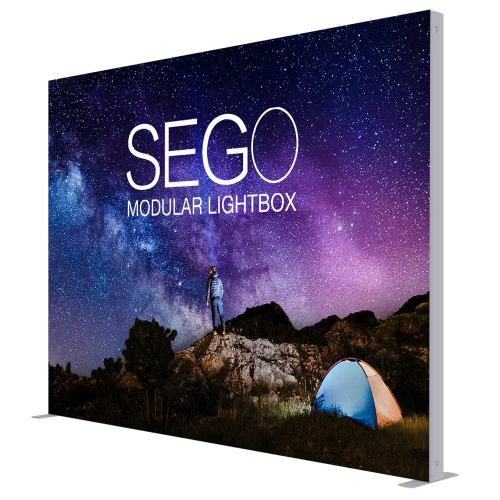
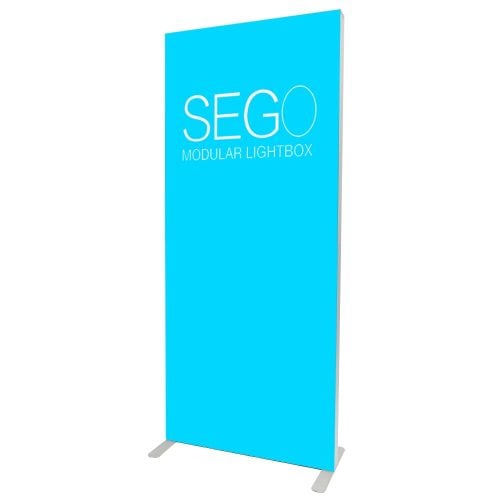
The Sego Lightbox is one of those displays that earns its place in a trade show kit by being genuinely versatile -- not just in size, but in how it fits into changing booth layouts from show to show. As a modular seg lightbox system, it is built around a sectional aluminum frame that lets exhibitors add panels, reconfigure dimensions, and swap printed fabric graphics without replacing the whole structure. If you are weighing your options across the broader category of backlit displays and want a format that grows with your program rather than locking you into a single footprint, the Sego line deserves a close look. The combination of tool-free assembly, edge-lit LED performance, and durable SEG fabric graphics makes this one of the more practical investments available at this price point.
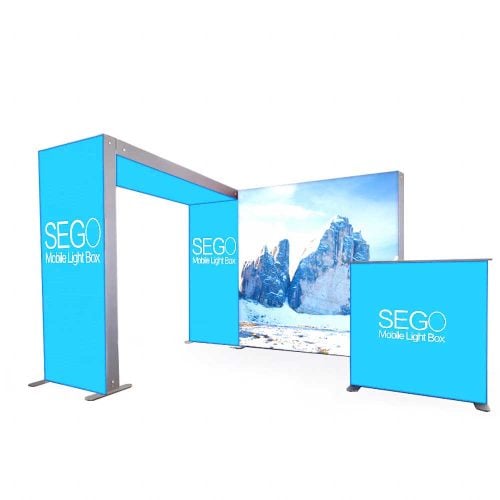
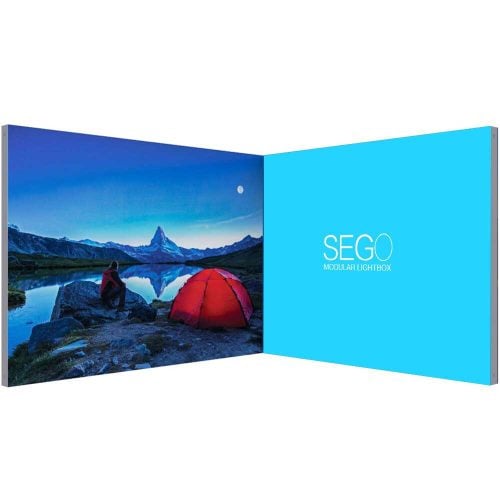
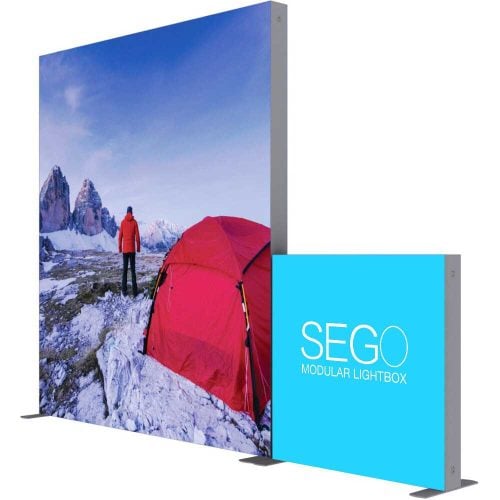
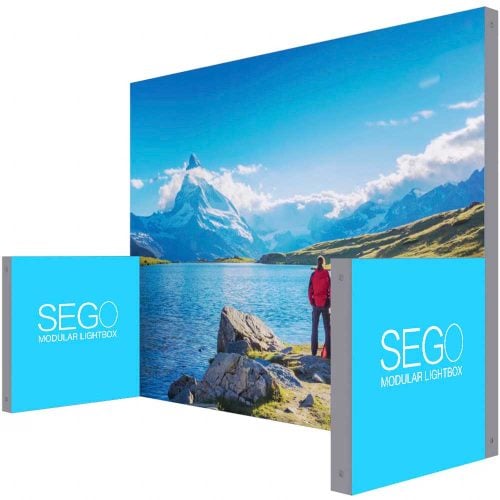
Most backlit display systems are designed for a single, fixed configuration. You buy a 10ft wall, and that is what you get -- every show, every time. The Sego Lightbox takes a different approach. Its frame system is composed of interlocking aluminum sections that can be arranged in multiple configurations: straight walls, L-shapes, U-shapes, freestanding islands, hanging structures, and hybrid layouts that combine several of those forms in one booth.
This modularity matters most to exhibitors who work multiple shows with different space allocations. A company that holds a 10 x 10 corner booth at one regional expo and a 20 x 20 island at a national show does not need two entirely separate display systems. With the right sego lightbox kit, both configurations can come from the same frame inventory -- just expanded or reduced based on what the floor plan requires.
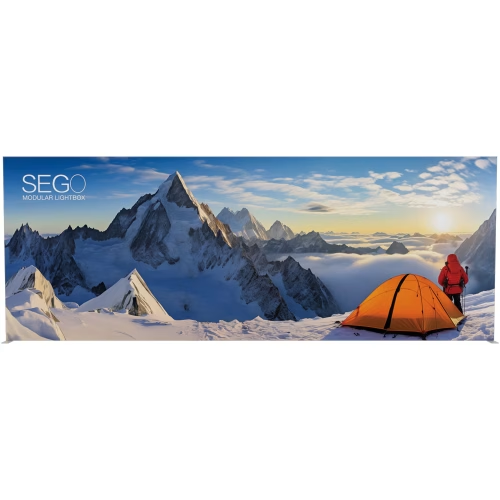
The SEG (silicone edge graphics) system is the other defining feature. Printed fabric graphics are finished with a thin silicone bead along the perimeter, which presses into a groove in the aluminum frame to create a perfectly taut, wrinkle-free surface. The result is a smooth, professional finish across the entire graphic face. Compared to vinyl banners or rigid panels, SEG fabric is lighter, packs smaller, and produces better-looking output when backlit.
The Sego Lightbox is not the right fit for everyone, but for the following categories of exhibitor, it consistently delivers strong value:
Brands with multi-show annual programs. The ability to reconfigure the same frame across different booth sizes means the hardware investment stretches further. Instead of purchasing separate displays for each show format, exhibitors buy a core sego lightbox kit and expand or rearrange it as needed.
Marketing teams that update messaging frequently. Because the SEG graphics are the only component that changes between campaigns, reorders are far less expensive than replacing a full display. New product launch, seasonal campaign, or rebrand -- the frame stays; the graphics swap out.
Companies exhibiting in 10 x 10, 10 x 20, and larger footprints. The Sego system scales effectively across these standard booth sizes. Narrower configurations work well in smaller spaces; full wall and island builds fill larger footprints without looking sparse.
Exhibitors who set up without dedicated labor. The tool-free frame assembly and snap-in fabric graphics mean a single person can set up a full display wall in a reasonable time window. This reduces or eliminates the cost of professional setup crews at each show.
Before you commit to any backlit format, it is worth reading through the SEG backlit display guide to understand the full landscape -- including how the modular seg lightbox category compares to fixed-wall, portable, and freestanding options.
The Sego system is available in both single-sided and double-sided configurations. Single-sided builds are the standard choice for booths positioned against a wall or along a perimeter -- the lit graphic faces outward toward foot traffic, and the back of the frame faces the booth interior or wall. Double-sided configurations place graphics on both faces of the frame and are best suited for freestanding island builds or aisle-facing structures where traffic approaches from multiple directions.
Double-sided builds require more fabric and a slightly deeper frame profile, which affects both sego lightbox price and total packed weight. For most exhibitors working perimeter booths, single-sided is the right choice. Island exhibitors should almost always consider double-sided.
The sego lightbox with led uses an edge-lit LED system mounted inside the aluminum frame perimeter. Light disperses across the internal panel and illuminates the fabric graphic from behind, creating a bright, even backlit effect. This differs from direct-lit systems, which use a grid of LEDs behind the graphic and tend to be thicker and heavier.
Edge-lit LED performance is well-suited to most trade show environments. Convention center lighting can be intense, and a properly calibrated edge-lit sego backlit display holds its visual impact even under fluorescent overhead lighting. For darker environments -- evening events, private showrooms, hospitality suites -- the LED output is especially striking.
| Configuration Type | Best Environment | Graphic Sides | Relative Portability |
|---|---|---|---|
| Single-Sided Wall | Perimeter booths | 1 | High |
| Double-Sided Wall | Aisle dividers | 2 | Moderate |
| L-Shape / U-Shape | Corner booths | 1-2 | Moderate |
| Island Build | Open floor space | 2 | Lower |
One of the more practical advantages of a custom sego lightbox is the separation between the hardware and the graphics. The aluminum frame is designed to last through many show cycles. The fabric graphics, printed on durable polyester, handle repeated setups and takedowns well -- but when it is time to update creative, only the fabric needs to be replaced.
High-resolution dye-sublimation printing on SEG fabric produces vivid color output with accurate brand color reproduction. Work with your graphic designer to prepare files at the correct bleed and resolution specifications for your specific frame size. Showfire Displays can provide graphic templates to simplify this process.
For exhibitors comparing the Sego format to other backlit structures, a few sibling formats are worth considering. The lumiere backlit display is a strong option for exhibitors who need a large-format backdrop with a clean, minimal frame profile. If speed of setup is the top priority, the backlit pop up display collapses into a compact rolling case and deploys faster than most alternatives. For exhibitors who want a freestanding structure that sits independently in open floor space without anchoring to a wall system, the igniter light box is worth a look -- it is purpose-built for freestanding presence in open areas.
The Sego frame sections are slim by design. Packed into their carry bags or cases, the components for a standard 10ft wall configuration fit into a manageable footprint for shipping or checked luggage. Larger island builds will require more cases, but the per-panel weight remains reasonable for a display at this quality level.
For exhibitors who frequently ship displays to shows rather than transporting them directly, the slim packed profile reduces shipping costs compared to bulkier rigid display systems. This is one of the practical financial arguments for the modular seg lightbox format -- the hardware economics improve over time as shipping savings accumulate across a multi-show year.
Several variables drive sego lightbox price: the number of frame sections in your configuration, whether you choose single or double-sided graphics, the size and complexity of the printed fabric, and any add-ons like carrying cases, feet, or hanging hardware. Larger, double-sided island configurations naturally sit at the higher end of the range; compact single-sided walls sit at the lower end.
Compared to a rigid modular exhibit system, the Sego format typically delivers a lower entry price alongside lower long-term graphic reorder costs. Compared to cheaper pop-up fabric display systems, it offers significantly more configuration flexibility and a more refined finished appearance.
For a broader look at how display costs break down across formats and price tiers, the complete trade show displays buyer's guide covers the landscape in useful detail.
The Sego product family covers a wide range of standard configurations, and the team at Showfire Displays can also work through custom arrangements for unusual booth shapes or specific dimension requirements. If you already know your booth size and have a layout in mind, reaching out with those details gets you a precise quote quickly. If you are still early in the planning process, browsing the full seg backlit display collection gives you a side-by-side look at what is available across every backlit format.
To buy sego lightbox hardware and matching graphics in one transaction, contact Showfire Displays directly -- the team handles both components and can confirm production timelines based on your show date. Get your quote today and put a properly lit, professionally finished display to work at your next event.