
Need Assitance?
Call us at 844-203-6588.
We Accept

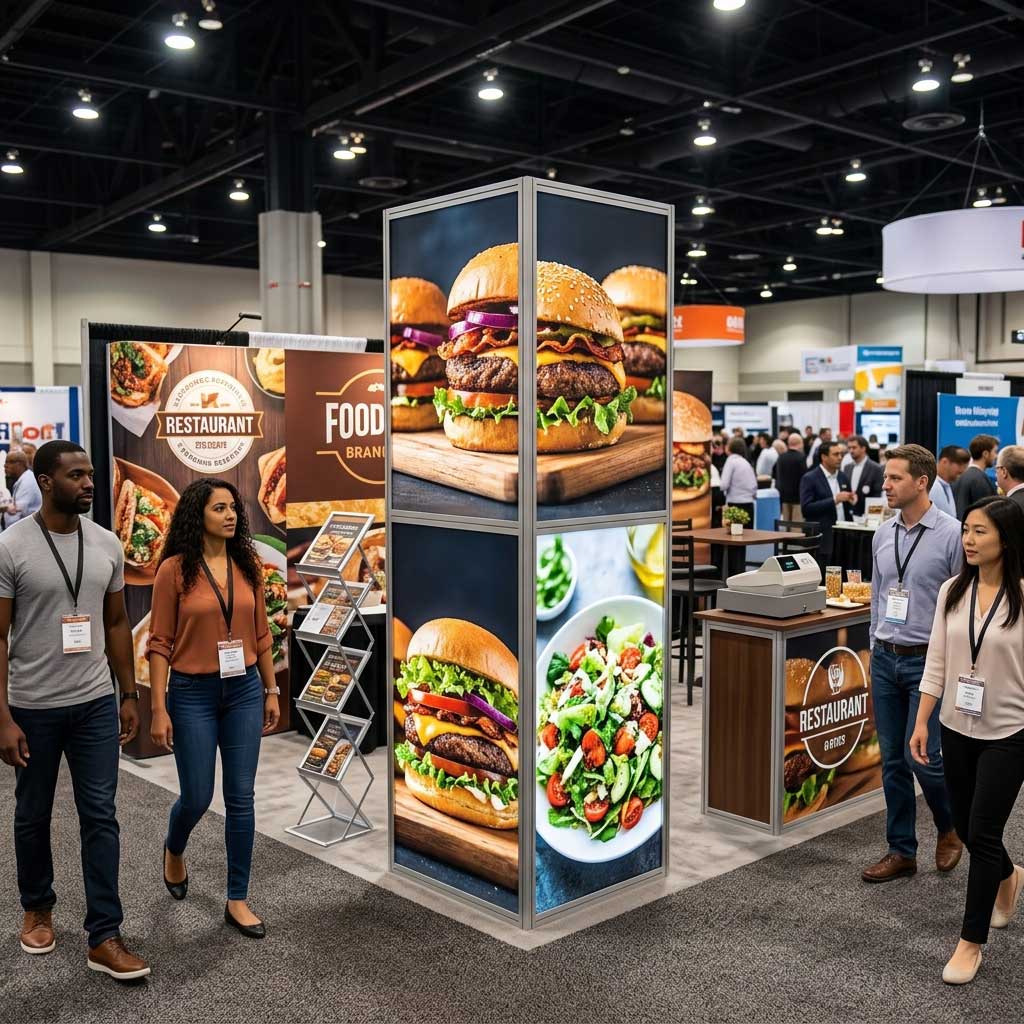
Every second counts on a crowded trade show floor. Attendees walk past hundreds of booths, scanning at eye level and above for something that stands out. That’s exactly where tower displays shine – they command vertical space, drawing eyes upward and creating a branded landmark that’s visible from across the hall.
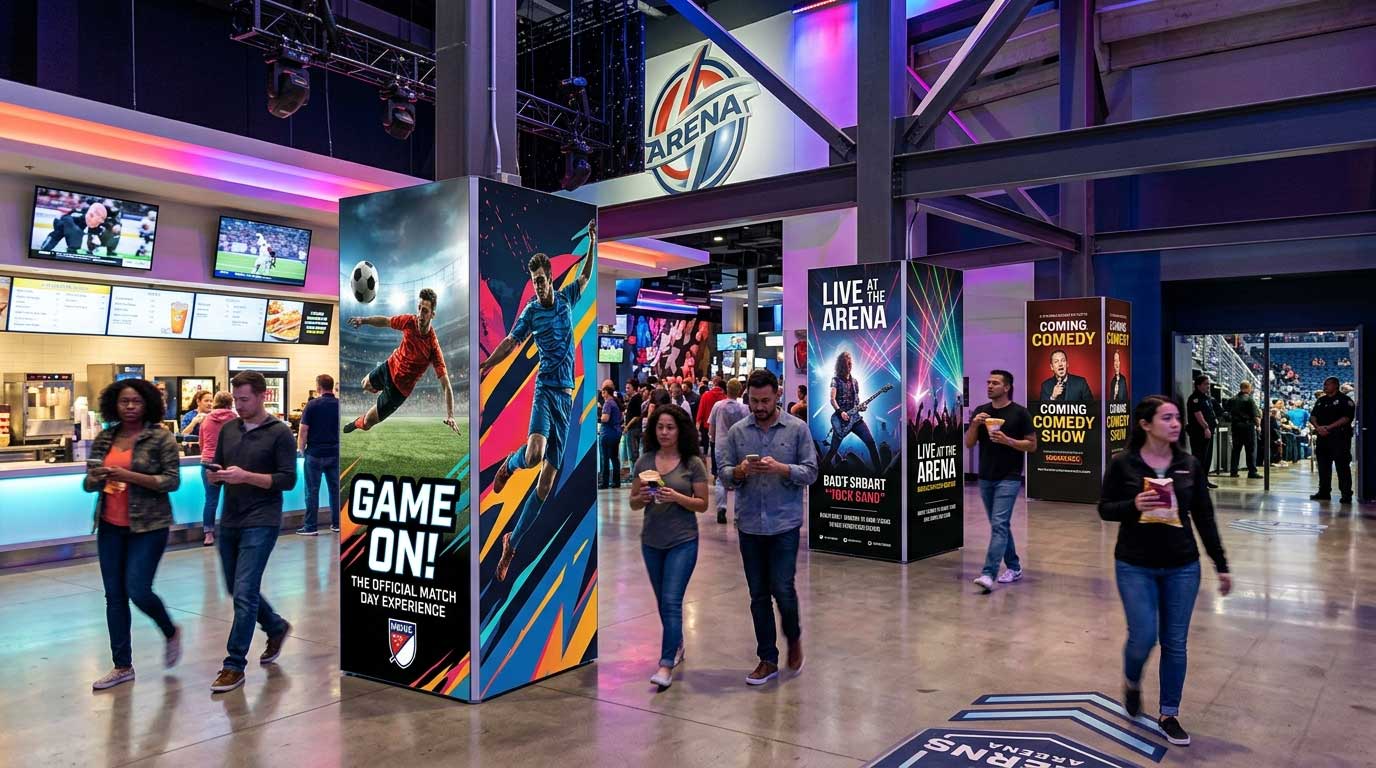
Whether you call them exhibit towers, branded pillar displays, or freestanding tower displays, these vertical structures serve a dual purpose: they amplify your brand visibility and provide practical functionality like storage, shelving, and product showcasing. In this guide, we’ll break down every type, size, and configuration so you can choose the perfect tower display for your next event.
If you’re still exploring the broader landscape of exhibit hardware, start with our complete trade show displays buyer’s guide for an overview of every display category. Otherwise, read on – this is your definitive resource for tower displays.
Above all, this guide answers one question: how to choose a trade show tower that fits your booth, your budget, and the way you exhibit. When you are ready to compare real products, Showfire’s tower displays come in two families: backlit tower display kits with internal LED lighting, and non backlit tower display kits with stretch fabric graphics.
A tower display is a freestanding, vertical display structure designed to maximize brand exposure in a compact footprint. Unlike horizontal backwalls or tabletop displays, tower displays build upward, turning unused airspace into high-impact advertising real estate.
Here’s why exhibitors increasingly rely on them:
Think of a trade show tower as the vertical anchor of your booth – the element that ties everything together and communicates your presence before a visitor ever reaches your space.
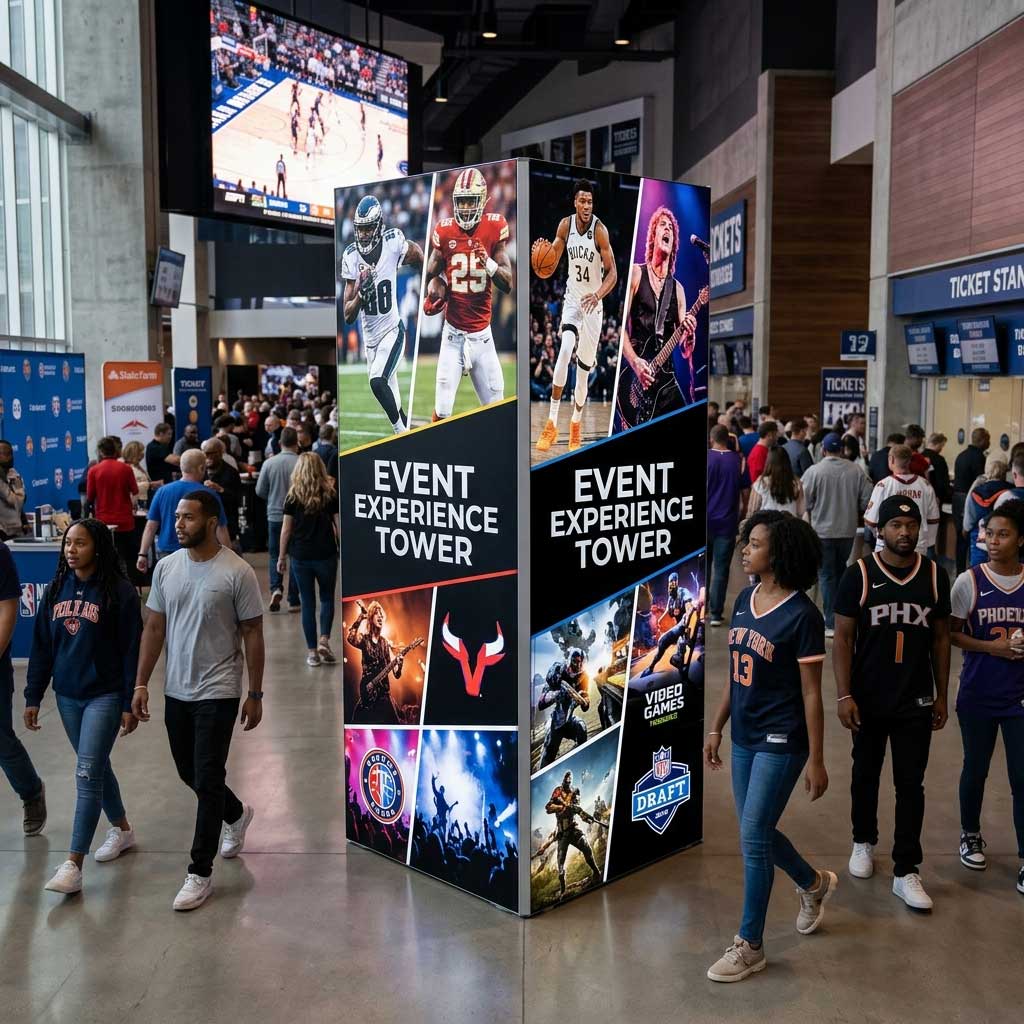
Not all exhibit towers are created equal. The right choice depends on your budget, your graphic requirements, transportation logistics, and the role the tower will play within your booth. Below are the primary categories you’ll encounter.
Fabric tension towers use dye-sublimated stretch fabric graphics that slide over a lightweight aluminum frame. The result is a clean, wrinkle-free, pillar-like structure with seamless graphics on every side.
Best for: Exhibitors who want lightweight portability, vibrant full-color graphics, and quick setup without tools.
Key features:
– Pillowcase-style fabric graphics that zip or pull over the frame
– Frames typically collapse into compact carry bags
– Available in round, square, triangular, and rectangular cross-sections
– Setup time of 10-15 minutes for most models
If you’re already familiar with fabric pop up displays, fabric tension towers use the same dye-sublimation printing technology – but in a vertical pillar format rather than a curved backwall.
SEG tower displays use fabric graphics with a thin silicone strip sewn along the edge. That strip presses into an aluminum channel on the frame, creating a perfectly taut, drum-tight graphic surface. The result is a high-end, seamless look that rivals backlit lightbox displays.
Best for: Premium brand presentations, product launches, and any exhibitor seeking a polished, modern aesthetic.
Key features:
– Flush, frameless graphic appearance
– Compatible with internal LED backlighting for stunning visual impact
– Easy graphic swap – just press the silicone edge into the channel
– Available in freestanding and hanging configurations
For exhibitors interested in illuminated options, our SEG backlit display guide covers everything about integrating LED lighting with silicone-edge graphics, including tower-format applications.
The biggest single decision after shape is whether your tower lights up. A backlit tower display uses an LED light box inside an SEG frame, so the graphic glows evenly and stays readable under dim hall lighting or from across an aisle. A non backlit tower display uses the same frame family with a stretch fabric graphic and no electronics: lighter to ship, faster to set up, and roughly half the price at the same size.
Choose backlit when the tower is your booth’s landmark, the hall is dark, or you sell a premium product. Choose non-backlit when you need several towers, ship often, or want the lowest cost per square foot of graphic.
These towers use rigid graphic panels – typically printed PVC, acrylic, or laminated substrates – mounted to a structural frame. They deliver a substantial, furniture-grade look and feel that fabric simply can’t replicate.
Best for: Permanent or semi-permanent installations, retail environments, and exhibitors who need shelving or product display surfaces integrated into the tower.
Key features:
– Durable, scratch-resistant surfaces
– Can include built-in shelving, locking doors, and countertops
– Heavier and bulkier to transport than fabric options
– Higher perceived value for luxury or tech brands
Truss tower displays use interlocking aluminum truss segments to build tall, architectural structures. They’re the workhorses of large-format exhibit design, offering immense structural strength and a distinctly industrial-modern look.
Best for: Large island booths (20×20 and above), overhead signage support, and exhibitors who need to mount monitors, lighting, or heavy accessories at height.
If you’re designing a large-scale booth, explore our trade show truss system pillar guide for detailed specifications on truss configurations, weight capacities, and custom build options.
A growing subcategory, these towers are purpose-built to hold one or more monitors, tablets, or interactive touchscreens. They function as a tower kiosk with storage, combining digital engagement with internal compartments for literature, product samples, or personal belongings.
Best for: Interactive demos, video presentations, lead-capture stations, and product information kiosks.
Key features:
– Integrated VESA monitor mounts (typically 32″-55″ screens)
– Cable management channels built into the frame
– Locking rear access doors for secure storage
– Optional charging stations and USB ports
Tower displays come in a wide range of heights, widths, and cross-sectional shapes. Choosing the right dimensions ensures your exhibit pillar display fits your booth layout, meets venue regulations, and delivers the visual impact you need.
| Height | Typical Use Case | Booth Size Compatibility |
|---|---|---|
| 4-6 ft | Countertop accent, product pedestal | 10×10 inline and smaller |
| 6-8 ft | Standard freestanding tower | 10×10 to 10×20 inline booths |
| 8-10 ft | Full-height branded pillar | 10×20, 20×20, and larger |
| 10-16 ft | Tall landmark tower, overhead visibility | 20×20+ island booths (check venue height limits) |
Important: Most convention centers enforce maximum display height based on booth size. Inline (linear) booths typically cap at 8 feet, while island booths may allow 12-16 feet or more. Always verify height restrictions with your show’s exhibitor manual before ordering.
The cross-sectional shape of your custom branded tower affects its visual presence, graphic layout, and stability.
| Shape | Visual Character | Graphic Panels | Stability |
|---|---|---|---|
| Square | Clean, modern, architectural | 4 flat panels | Very stable; widest footprint |
| Rectangular | Versatile, good for monitor mounting | 2 wide + 2 narrow panels | Very stable |
| Round (Cylinder) | Soft, organic, elegant | 1 continuous wrap | Moderate; may need weighted base |
| Triangular | Unique, eye-catching | 3 panels | Stable with proper base |
| Hexagonal | Multi-directional engagement | 6 panels | Excellent stability |
Square and rectangular towers are the most popular for trade shows because they pair easily with flat-screen monitors and shelving. Round towers offer a sleek, contemporary look that works beautifully with fabric graphics.
Every Showfire tower is a Big Sky aluminum frame sold as a complete kit with printed graphics. Pick the family, then the footprint and height.
| Tower family | Sizes (W x D x H) | Kit price | Example kit |
|---|---|---|---|
| Triangle tower, non-backlit | 2x2x8 to 5x5x8 ft | $1,045 – $1,610 | 2x2x8 big sky triangle tower display |
| Square tower, non-backlit | 3x3x8 to 5x5x8 ft | $1,414 – $2,013 | 4x4x8 non backlit big sky square tower display |
| Square tower, backlit | 3x3x8 to 5x5x8 ft | $2,518 – $3,979 | 3x3x8 backlit big sky square tower display |
| Tall square tower, non-backlit (silver or black frame) | 4×4 to 6×6 ft, 12/14/16 ft tall | $3,272 – $5,088 | 5x5x16 non backlit big sky square tower display |
| Tall square tower, backlit (silver or black frame) | 4×4 to 6×6 ft, 12/14/16 ft tall | $5,013 – $8,516 | 4x4x12 backlit big sky square tower display |
Browse all trade show tower displays, or go straight to backlit tower displays or non-backlit tower displays.
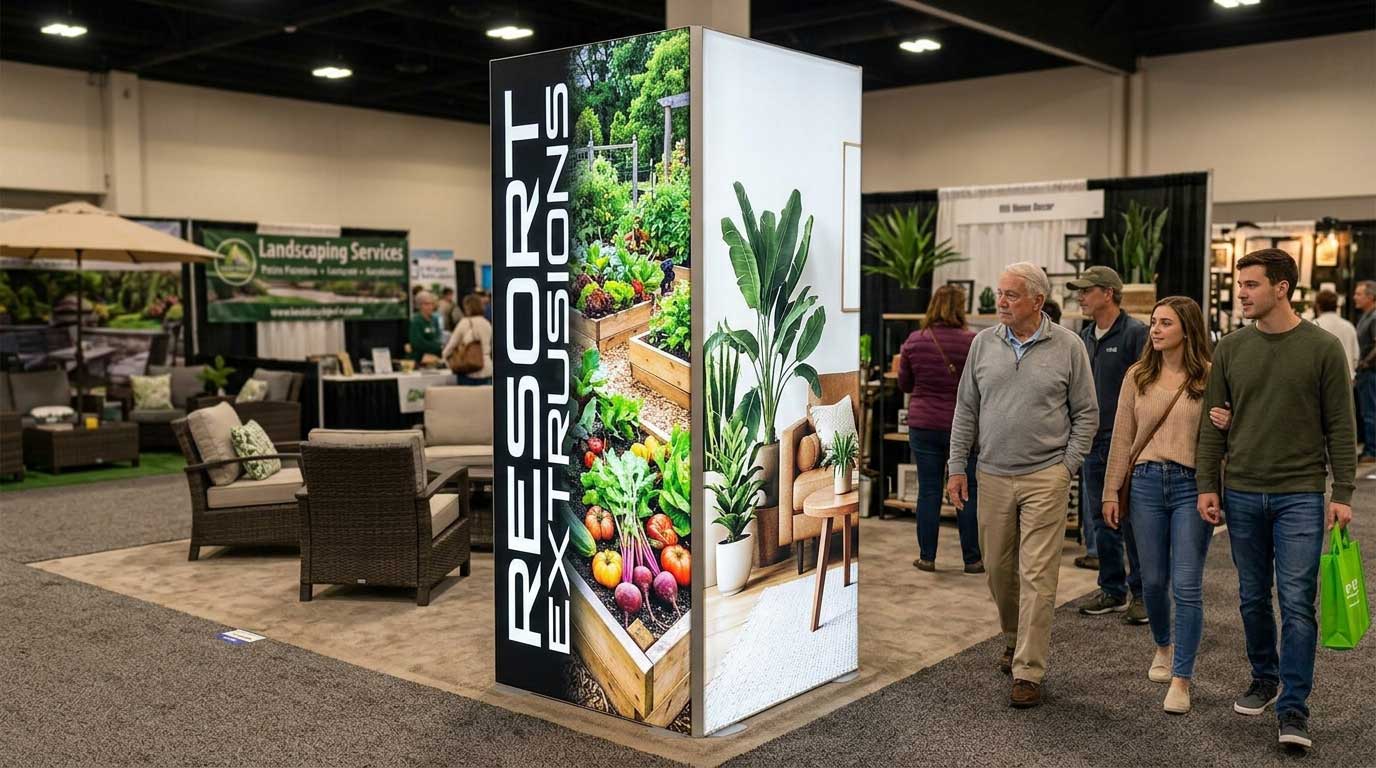
Selecting the ideal branded tower display requires balancing several factors. Use the decision framework below to narrow your options.
Start by asking: What job does this tower need to do?
If you’re designing a modular booth that needs to scale across different show sizes, a modular display system that includes tower components may offer the flexibility you need.
Your booth footprint directly influences the tower size, quantity, and placement.
| Booth Size | Recommended Tower Setup |
|---|---|
| 10×10 inline | 1 tower, 4-8 ft tall, placed at corner or center-back |
| 10×20 inline | 1-2 towers flanking a backwall or centered |
| 20×20 island | 2-4 towers at corners or as gateway markers |
| 30×30+ island | Multiple towers as pillars supporting overhead elements |
In smaller booths, a single freestanding pillar display can serve as your primary branding element, especially when paired with a custom table throw for a cohesive branded look. In larger island booths, multiple towers define zones and guide traffic flow.
How you transport and assemble your tower matters – especially if you’re exhibiting at multiple shows per year.
If portability is your top priority, fabric tension towers and retractable banner stands make excellent travel-friendly companions.
Consider how often you’ll need to update your tower graphics and what level of print quality you require.
Tower display pricing varies widely based on size, material, and features.
| Tower Type | Approximate Price Range | Replacement Graphics |
|---|---|---|
| Fabric tension (basic) | $300-$800 | $100-$250 |
| Fabric tension (premium/large) | $800-$2,000 | $200-$500 |
| SEG tower (non-backlit) | $600-$1,500 | $150-$400 |
| SEG tower (backlit) | $1,200-$3,500 | $200-$600 |
| Hard panel / laminate | $1,500-$5,000+ | $500-$1,500 |
| Truss tower | $2,000-$8,000+ | Varies by graphic method |
For reference, Showfire’s complete tower kits run $1,045 – $1,610 for an 8 ft triangle tower, $1,414 – $2,013 for an 8 ft non-backlit square tower and $2,518 – $3,979 backlit, and $3,272 – $5,088 (non-backlit) to $5,013 – $8,516 (backlit) for 12-16 ft island towers. Compare current pricing across all trade show tower displays.
Owning a great tower is only half the equation – designing effective graphics and integrating the tower into your booth layout is what drives ROI.
Go bold with contrast. Tower graphics are viewed from a distance, so high-contrast color combinations and large text ensure readability. Avoid fine details, small fonts, or busy backgrounds.
Prioritize your logo placement. Position your logo at or near the top of the tower where it’s visible above the crowd. Attendees standing in adjacent aisles should be able to identify your brand from 50+ feet away.
Design for all four sides. Even if one side faces a wall, design every panel intentionally. You never know how foot traffic will flow. Repeat your logo and core message on each face while varying supporting visuals or product imagery.
Use the lower panels for detail. Reserve the bottom third of the tower for information that attendees will read up close – QR codes, product specs, taglines, or calls to action.
A freestanding tower display works best when it’s part of a cohesive visual system. Coordinate your tower graphics with your backwall, table covers, and any overhead elements for maximum impact.
For instance, pairing a branded tower with hanging banners creates an unmistakable vertical presence that dominates sightlines from across the show floor. The tower anchors your space at ground level while the overhead hanging banner captures attention from afar.
If you’re exhibiting outdoors or at hybrid indoor-outdoor events, a custom canopy tent with matching tower displays creates a branded environment that stands out in open-air settings.
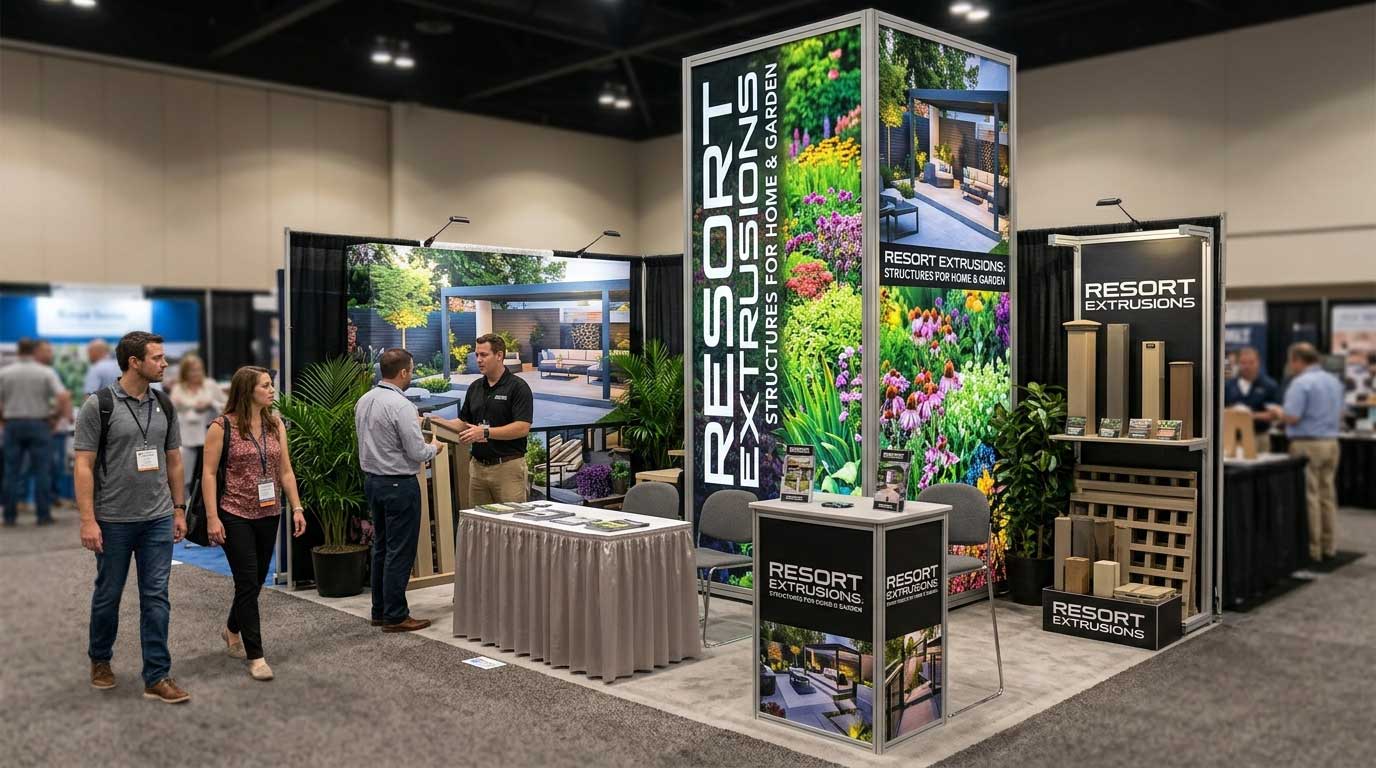
Exhibitors sometimes wonder whether they truly need a dedicated exhibit tower or whether another vertical display could serve the same purpose. Here’s how tower displays compare to common alternatives.
Banner stands are single-sided, lightweight, and ultra-portable – but they’re essentially flat signage. A trade show tower offers 360-degree branding, structural presence, and functional features like storage and monitor mounts. Banner stands make great supplementary displays; towers serve as primary booth anchors.
| Feature | Tower Display | Retractable Banner Stand |
|---|---|---|
| Branding coverage | 360-degree (all sides) | Single-sided |
| Storage / shelving | Available on many models | None |
| Monitor mounting | Yes (kiosk models) | No |
| Footprint | 2-4 sq ft | ~2 sq ft |
| Setup time | 10-30 minutes | 1-2 minutes |
| Price range | $300-$8,000+ | $80-$500 |
A fabric trade show display backwall provides a large, impactful graphic surface – but only on one side, and it typically sits against the back of your booth. Towers stand independently and provide visibility from every angle, making them ideal for island booths or as accent pieces within a larger exhibit.
Modular trade show displays can include tower components as part of a larger reconfigurable system. If you need a complete booth that adapts to different show sizes, a modular system with integrated towers may be more cost-effective than purchasing standalone towers separately.
Most fabric tension and SEG tower displays set up in 10-20 minutes without tools. Simply expand or connect the frame sections, slide the fabric graphic over the frame, and zip it closed. Hard panel and truss towers take longer – typically 30-60 minutes – and may require basic tools or professional labor.
Not all towers are designed for monitor mounting. If you need a display screen, look specifically for tower kiosk models that include integrated VESA mounts, cable management, and sufficient structural support. Attempting to mount a monitor on a tower not rated for it can create safety hazards.
Fabric tension towers typically ship in one or two padded nylon bags, each weighing 15-30 lbs. SEG and hard panel towers may require wheeled hard cases. Truss towers ship in multiple freight cases and are best handled by professional exhibit shippers. Many towers come with a custom carry case that doubles as a shipping container.
Absolutely. Tower display hardware is built for repeated use across dozens of shows. Fabric graphics can be swapped out for each event or campaign, keeping your tower looking fresh without replacing the frame. Most exhibitors update their graphics annually or seasonally while using the same hardware for 5-10 years.
For standard 10×10 inline booths, stay within the 8-foot height limit enforced by most show organizers. A tower in the 6-8 foot range provides excellent visibility without violating regulations. If you’re in a corner booth or island configuration, you may be allowed taller structures – always verify with the show decorator. Showfire’s 8 ft non backlit tower display and backlit kits are sized for exactly this inline limit; the 12-16 ft towers are for island booths.
Some tower displays are suitable for sheltered outdoor use, but most trade show towers are designed for indoor environments. For outdoor events, consider pairing a sturdy tower with an event tent to protect the display from wind, rain, and UV exposure.
Dye-sublimated fabric graphics are machine washable on a gentle cycle with cold water. Hang to dry or tumble dry on low heat. Avoid bleach and fabric softeners. This easy maintenance is one reason fabric towers are so popular with exhibitors who attend multiple shows per year.
A well-chosen tower display isn’t a one-event purchase – it’s a long-term brand asset. Here are strategies to get the most from your investment.
Order multiple graphic sets. Having two or three sets of tower graphics lets you rotate messaging between shows, highlight different products or services, and always have a backup if one set gets damaged.
Coordinate across display types. Match your tower graphics with your backwall, table covers, and banner stands for a unified visual identity. Consistent branding across all touchpoints signals professionalism and builds trust.
Integrate with your marketing strategy. Your tower display is a physical extension of your trade show marketing efforts. Design graphics that reinforce your campaign theme, include clear calls to action, and drive attendees to specific landing pages or lead-capture stations.
Repurpose beyond trade shows. Tower displays work equally well in corporate lobbies, retail showrooms, conference presentations, and recruiting events. Maximizing the number of uses per year dramatically improves your cost-per-impression.
Tower displays are one of the most versatile, impactful investments you can make for your trade show program. They transform dead vertical space into powerful brand messaging, provide practical functionality like storage and media integration, and create the kind of visual landmark that pulls foot traffic to your booth.
Whether you need a simple fabric pillar for a 10×10 booth or a towering backlit kiosk for a 30×30 island, the right tower display exists for your needs and budget.
Browse our full collection of tower displays at Showfire Displays to explore current options, compare specs, and find the perfect exhibit tower for your next event. Every tower ships with premium dye-sublimated graphics, easy-to-follow setup instructions, and the support of our expert team.
Need help choosing? Have questions about custom configurations? Contact us – our display specialists are ready to help you design a tower booth solution that turns heads and drives results.
For a broader look at all available display types and how they work together, revisit our trade show displays guide to explore every category and build a complete exhibit strategy.