



Need Assitance?
Call us at 844-203-6588.
We Accept

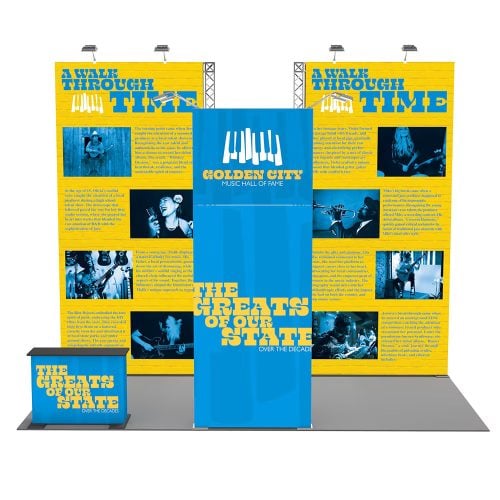
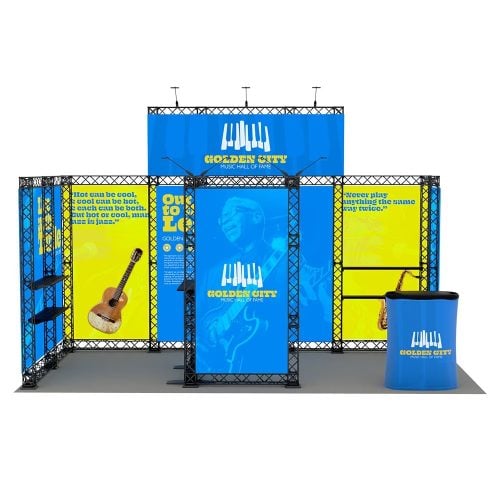
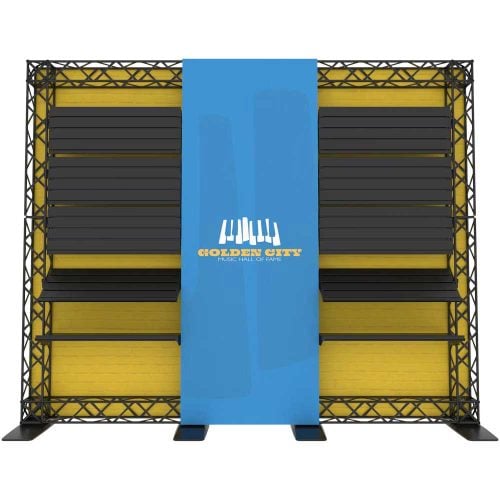
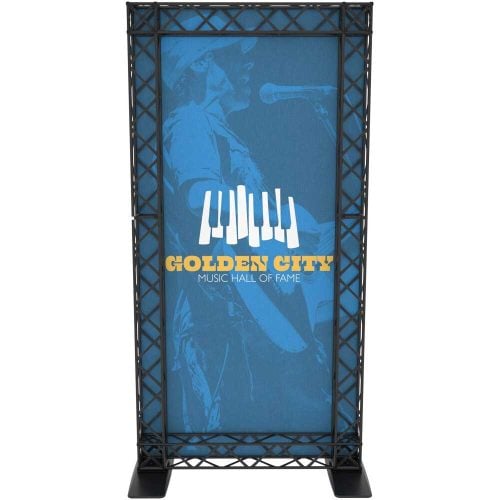
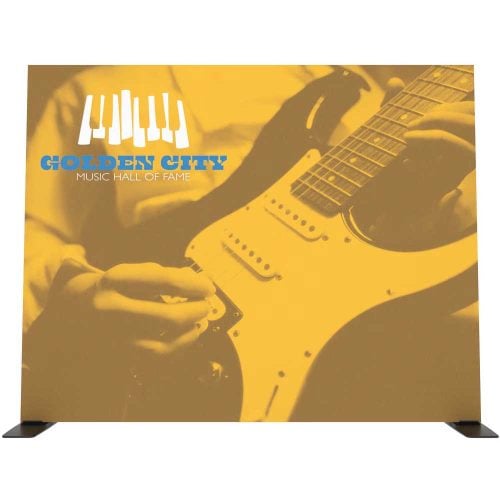
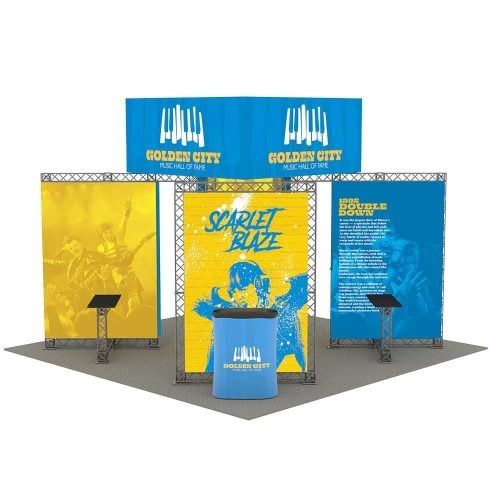

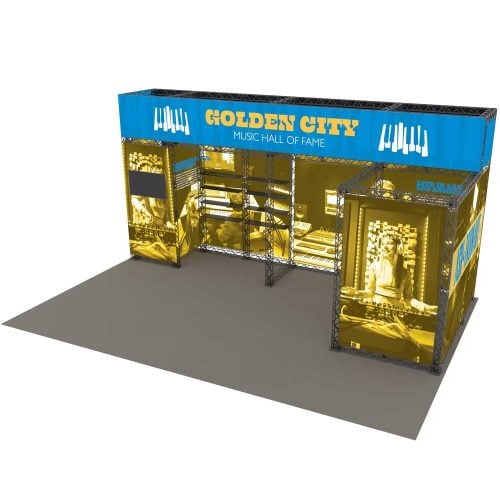
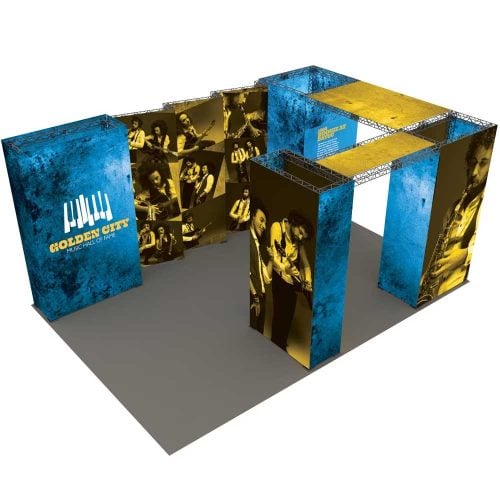
Folding a trade show structure into a compact carry bag sounds like a magic trick, but that's exactly the promise behind origami truss -- and it delivers. Unlike traditional rigid truss systems that require tools, crew, and significant setup time, this category is built on the principle that a high-impact display should not punish the people assembling it. If you're comparing your options across portable truss formats, this page will walk you through what makes the origami format distinct, who it's genuinely suited for, and what to consider before placing an order.
The core innovation is the folding joint. Each section of an origami truss collapses in on itself rather than breaking into separate pieces, which means the structure packs down faster, reassembles faster, and loses fewer components over time. You're not tracking a bag of bolts before every show. You open the truss, it locks into place, and your setup window shrinks from an hour to minutes.
This matters most for exhibitors who attend multiple shows per year. The faster a structure goes up and comes down, the more shows a single person can manage without hiring additional crew. For regional marketing teams, field sales reps, or event agencies managing a rotating calendar of events, that difference in setup time adds up to real savings across a season.
The folding truss display format also ships more efficiently than rigid alternatives. Because it compresses to a smaller packed volume, freight costs are lower and the risk of shipping damage is reduced -- the structure doesn't rattle around in oversized cases with multiple separate pieces.
The origami truss format is well matched to a specific kind of exhibitor. Not every booth needs it, and knowing whether you're in that group makes the buying decision much simpler. Here's a breakdown of the profiles that get the most value from this format:
| Exhibitor Profile | Why Origami Truss Fits |
|---|---|
| Solo exhibitors or small teams | Minimal crew required for full setup |
| High-frequency trade show attendees | Fast pack/unpack saves time across 10+ shows per year |
| Marketing teams without dedicated logistics | Self-contained, no specialized tools needed |
| Rental and event production companies | Faster turnaround between events |
| Brands with evolving messaging | Graphic panels swap out without replacing the frame |
If you're not attending more than two or three shows per year and have crew support available, a more conventional truss display might be the right fit instead -- the broader truss catalog covers formats at every level of portability and budget.
The origami format is especially popular as an origami truss for trade show booths running 10x10, 10x20, or inline configurations. The structure gives you real architectural presence without requiring a rigging crew or heavy cases.
The origami truss for trade show use comes in configurations that cover the most common booth footprints. The origami seg truss inline i -- an inline straight configuration -- is one of the most requested formats because it fits the standard inline booth (typically against a back wall) and packs down to a fraction of its assembled size. Island configurations are also available for exhibitors who want a freestanding presence visible from multiple aisles.
For anyone who needs a custom origami truss -- meaning a specific footprint that doesn't match a standard configuration -- Showfire can build to your booth specs. That's useful for exhibitors working in non-standard spaces or brands that want a unique structural shape to support their booth design.
Graphics for this format are typically SEG (silicone edge graphics) fabric panels. The fabric choice matters: it resists wrinkle, packs tightly, and produces vivid print quality at show distances. Because the panels attach independently of the frame, they're easy to update between shows without replacing the full structure.
If you're also considering a collapsible truss display that uses hard panel graphics rather than fabric, that's a different product category -- worth reviewing in the broader trade show truss system guide to understand which graphic format suits your display environment and budget.
Most origami truss configurations support integrated lighting, including LED bar lights or clip-on spotlights mounted to the truss chord. Lighting transforms the perceived quality of a booth, especially in convention hall environments where overhead ambient light is flat. If your booth is in a darker section of the floor, build lighting into your spec from the start.
Origami truss price varies based on the footprint, configuration complexity, and graphics package selected. A basic inline configuration with a single graphic panel will cost significantly less than a four-sided island with integrated lighting and multiple custom panels. The fastest way to get an accurate number is to request a quote with your specific booth dimensions and configuration in mind -- guessing from a range without a spec rarely results in a useful budget figure.
The frame and graphic panels are almost always priced separately, which is intentional: it means you can update your graphics each year without replacing the structural investment. Over multiple show cycles, a quality portable folding truss pays for itself in savings on labor, drayage, and freight compared to heavier conventional alternatives.
Origami truss frames are typically aluminum -- light enough to travel efficiently, strong enough to support graphics, lighting, and branded elements across dozens of shows. The folding joint mechanism is the most wear-sensitive part of the structure, so it's worth asking about joint quality and warranty coverage when you're comparing suppliers.
A well-maintained origami truss frame should last well beyond the standard three-year marketing cycle. If your branding changes faster than your frame wears out, you'll simply be ordering new fabric panels -- not a new frame.
One reason exhibitors choose a folding truss display over other formats is the logistics simplicity. Most configurations ship in one or two cases, set up without tools, and break down in under 15 minutes with a single person. If you're coordinating at a show where drayage fees are charged by the case or by weight, a lighter, more compact structure makes a direct financial difference.
If you're still in the early stages of figuring out which display type fits your program, the complete trade show displays buyer's guide is a solid starting point -- it covers the full spectrum of display formats with guidance on when to use each.
If you're evaluating multiple truss formats before committing, it's worth looking at the orbital truss display alongside this category. The orbital format uses a tool-free pop-and-lock assembly that's also fast, but has a distinctly different structural profile -- more suited to curved or arched configurations where the origami format typically works best in straight or geometric layouts. Neither is universally better; the right choice depends on your booth shape and the visual language your brand is working with.
You can also explore the modular truss display collection in full to see where these categories sit relative to each other and what accessories or add-ons are available across the lineup.
If the origami format matches your show calendar, your team size, and the kind of visual presence you're trying to build, the next step is getting a quote tailored to your exact booth spec. The Showfire team can walk you through configuration options, graphic formats, and lighting to put together a complete package that's ready to perform from show one.
For background on how to compare exhibit structures before you buy, the exhibit display truss pillar guide covers what to evaluate across material, setup method, and graphic type. And if you're still building your broader display strategy from scratch, the trade show displays buyer guide is where to start.
Contact Showfire today to request a quote on a custom origami truss package for your next show.