Need Assitance?
Call us at 844-203-6588.
We Accept

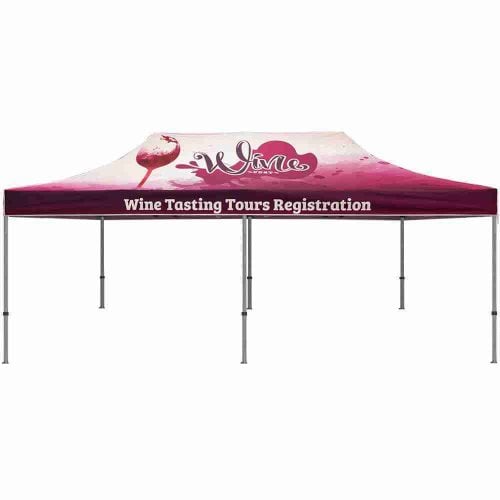
A 200 square foot branded footprint changes what you can do at an outdoor event -- not just how much product you can display, but how your brand reads from a distance. If you have been comparing tent sizes and keep coming back to the idea that a 10x10 feels tight but a full 20x20 would be overkill, the custom canopy tent 10x20 is almost certainly the configuration you are looking for. It gives you enough interior space to host a small staff, run a product demo, and still maintain a clean presentation at the entrance -- all under a single, fully branded canopy roof. This page covers exactly who gets the most from this size, what decisions to think through before ordering, and how it compares to the other sizes in the Showfire canopy tent lineup.
Some tent sizes are compromise sizes -- you settle into them because you can not get more space. The 10x20 custom canopy tent is not that kind of tent. It is a deliberate choice made by exhibitors who have run smaller setups and outgrown them, or by organizers who know from the start that a 10x10 will not accommodate their workflow.
The extra depth of a 20ft canopy tent with logo printed across the roofline creates a brand impression that smaller tents simply cannot match. At peak hours, when adjacent booths are crowded and visibility is contested, that additional horizontal span means your branded graphic is visible earlier, from farther away, and from more angles.
It is also worth noting that the 10x20 does not require twice the setup effort of a 10x10. A two-person setup is still realistic with a quality aluminum frame, and the packed size is manageable enough to fit standard cargo vehicles.
The 10x20 custom canopy tent draws a consistent profile of buyers across very different industries. Here is who consistently gets strong return on investment from this configuration:
If your events require anything more than a single table and a banner, the 10x20 footprint tends to justify itself quickly. For teams that are still choosing between this size and a smaller option, the 10x10 custom canopy tent is worth reviewing as a direct comparison -- it covers a wide range of standard booth spaces and is a practical reference point for understanding what doubling the depth actually changes.
Ordering a canopy tent at this size involves more decisions than buying a generic shelter at a hardware store. The choices you make during configuration -- frame material, print coverage, wall options, and hardware -- directly determine how the tent performs over dozens of events. Here is how to think through each one.
The 10x20 aluminum frame custom canopy tent uses an anodized aluminum extrusion frame rather than steel. Aluminum at this scale means the structure stays lighter than a comparable steel frame without sacrificing the rigidity needed to hold shape in outdoor conditions. For teams that transport their tent to multiple events each season, weight savings compound quickly across a year's worth of load-ins and breakdowns.
Look for frames with reinforced corner hubs and cross-bracing rated for sustained outdoor use. A well-built aluminum frame at this size should assemble in under 30 minutes for an experienced two-person crew.
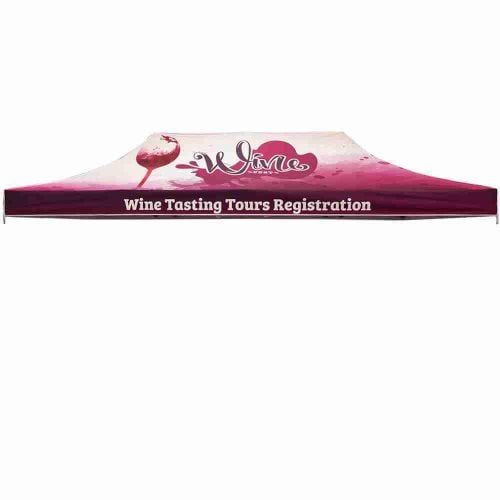
The roof canopy is your highest-visibility real estate. On a custom pop up canopy 10x20, a full-bleed dye-sublimation print across the entire roofline produces sharp color reproduction and clean brand presentation even in direct sunlight, which bleaches out lower-quality inkjet prints quickly.
Beyond the roof, you have meaningful decisions to make about walls:
| Wall Configuration | Best For |
|---|---|
| No walls | Maximum airflow, open and inviting booth feel |
| Full walls (one or more sides) | Privacy for back-of-booth storage, wind blocking |
| Half walls | Staff protection with open customer-facing access |
| Rail skirt | Clean perimeter finish, branding at eye level |
Printing on walls adds brand exposure at eye level, which can matter more than roof graphics in dense event environments. The custom canopy tents page in the Showfire canopy tent lineup covers wall and roof print options across all sizes if you want to see the full configuration range before committing.
A 10x20 branded tent with no ballast is a liability in outdoor conditions. Most event organizers require exhibitors to weight or stake their canopy, and some venues specify minimum ballast weights per leg. Plan to use either ground stakes (for grass or soft terrain) or dedicated weight bags (for pavement or concrete) -- ideally both at events where weather is unpredictable.
Canopy weight requirements at this size are non-trivial. At 200 square feet of canopy surface, even moderate winds generate significant lateral force. The custom canopy tent buying guide covers wind load principles, ballast recommendations, and stake selection in detail -- it is a practical reference before you finalize hardware decisions.
At this footprint, the tent will typically pack into two bags: one for the frame and one for the canopy and walls. Confirm the packed dimensions before ordering if your transport vehicle has specific load limitations. For exhibitors who frequently fly to events, the 10x10 is a more practical choice -- but for teams driving to regional shows, the 10x20 packs efficiently enough to transport in a midsize SUV or cargo van.
The Showfire canopy tent collection covers four footprints. Here is a quick reference to help you understand where the 10x20 sits relative to the rest of the family.
| Size | Interior Space | Ideal Use Case |
|---|---|---|
| 5x5 | 25 sq ft | Single-person vendor, small product display |
| 10x10 | 100 sq ft | Standard single booth, compact activations |
| 10x15 | 150 sq ft | Slightly more room, staffed demos |
| 10x20 | 200 sq ft | Multi-zone booths, large product setups, high-traffic events |
If you are deciding between adjacent sizes, the 10x15 custom canopy tent is worth a look before committing to the 10x20 -- it closes some of the gap in interior space while keeping the footprint smaller for venues that restrict booth sizing to 15 feet. At the compact end, the 5x5 canopy tent is a useful companion unit for brands that want a secondary presence -- a sampling station or information kiosk -- alongside a larger primary booth.
For exhibitors newer to the format, the trade show displays buyer guide covers how canopy tents integrate with other display types, which is useful context if you plan to combine a tent with banner stands, table throws, or backdrop displays at the same event.
One of the underappreciated advantages of the custom pop up tents 10 x 20 format is repeatability. Once you have a configuration dialed in -- the right walls, the right ballast, the right print coverage -- the setup process becomes reliable and fast. Staff turnover does not disrupt the process because a well-designed setup routine for this size can be documented and handed off cleanly.
Graphic reprints are also straightforward. Dye-sublimated canopy fabric can be reprinted independently from the frame, so when your branding updates or your canopy fades after a few seasons of heavy outdoor use, you replace the fabric without replacing the hardware.
If the 10x20 footprint matches your event setup requirements, the next step is straightforward: configure your roof print, select your wall options, and specify your hardware requirements. The custom canopy tent 10x20 is one of the most versatile sizes in the Showfire canopy tent line -- capable enough for serious trade show work, manageable enough for smaller community events, and branded prominently enough to do real marketing work every time it goes up.
Contact the Showfire Displays team to discuss your configuration, request a quote, or get file preparation guidance before you submit your print-ready artwork. Every custom canopy tent 10x20 order is reviewed by a production specialist before it goes to press -- so you can be confident the finished tent matches your expectations before it ships.