Need Assitance?
Call us at 844-203-6588.
We Accept

Picking the right modular trade show display is less about finding the flashiest option and more about finding the system that fits how your business actually operates -- how often you exhibit, how many people are setting up, how much booth space you typically buy, and whether you need the same structure to work as a 10x10 one month and a 10x20 the next. Showfire Displays carries six distinct modular display systems, each built around a different structural approach, so this page exists to put them in context side by side. If you want a deeper research foundation before committing, the modular trade show display guide walks through every major buying variable in full detail. For now, here's what you need to know to navigate this collection and land on the right system.
The word "modular" gets used loosely in the exhibit industry, so it's worth being precise. A true modular display is built from discrete, interchangeable components -- frames, panels, connectors, and graphic inserts -- that can be rearranged into different configurations without ordering a completely new structure. That distinction matters for buyers who exhibit more than a few times a year.
Modular display systems give you a path to scaling your footprint without starting over from scratch. Buy a 10x10 configuration today. Add components next year to run it as a 10x20. That is the core value proposition of the category, and it is what separates modular booths from pop-up displays, banner stands, and other portable formats that ship as a fixed unit.
The practical payoff shows up in three places: logistics, budget, and brand consistency. Because modular components nest and pack efficiently, shipping costs stay manageable even for larger footprints. Because the hardware is reusable, your per-show amortized cost drops with every event. And because the same graphic panels carry across configurations, your brand presentation stays coherent whether you're in a small corner booth or anchoring an inline row.
No single system is the right answer for every exhibitor. The six collections in this hub are each engineered around a specific structural logic -- fabric SEG tension, tube-and-connector geometry, hard panel construction, or hybrid builds. Understanding the design philosophy behind each one helps you filter quickly.
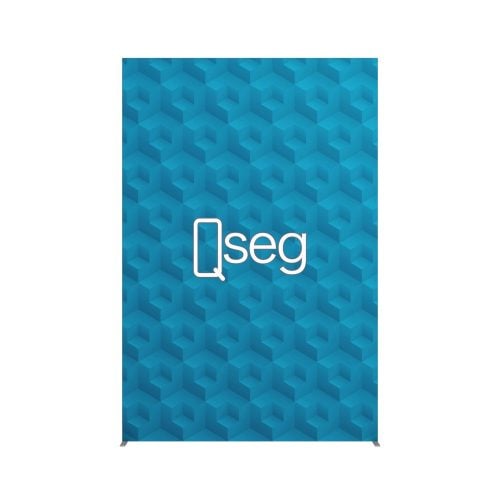
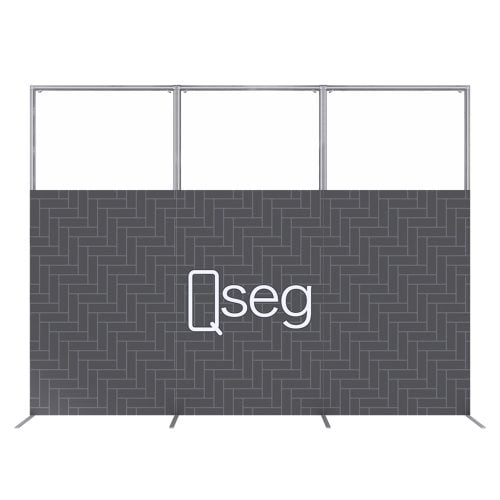
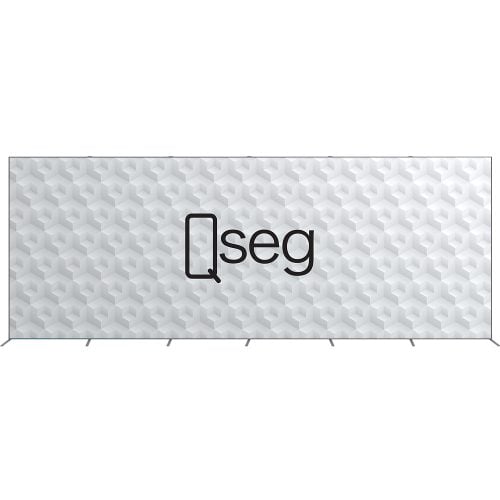
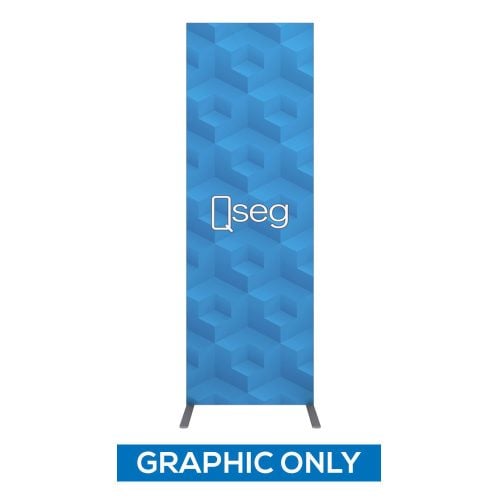
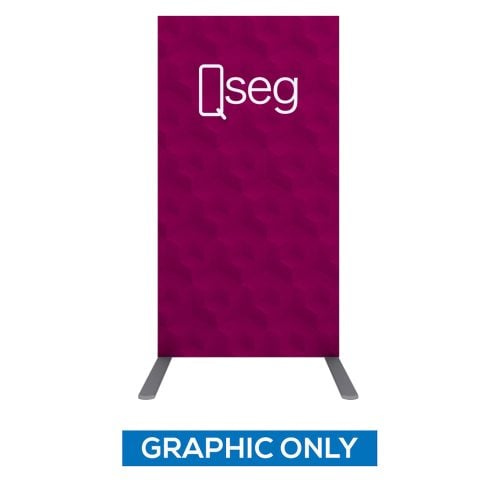
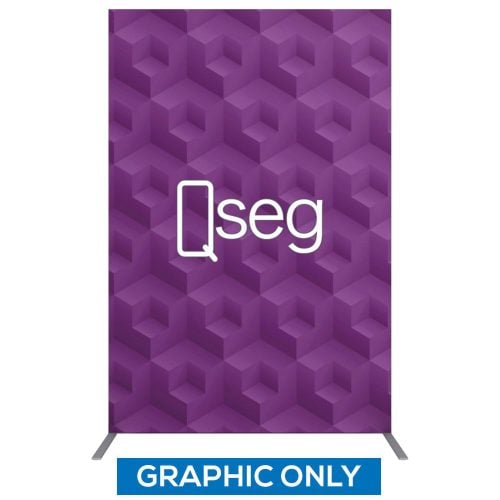
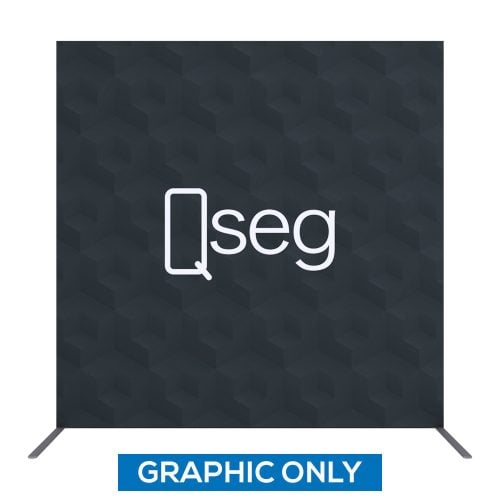
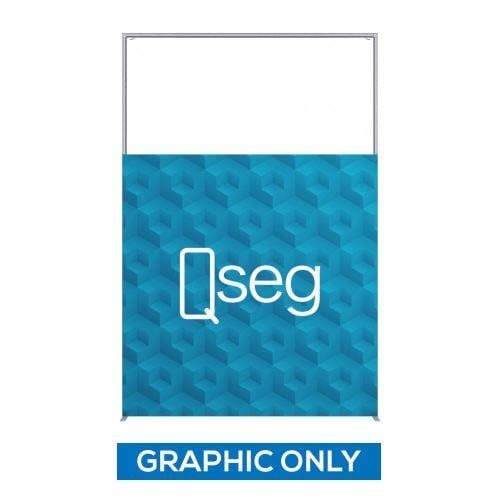
The Qseg modular display uses a silicone edge graphic (SEG) system built on an aluminum extrusion frame. Fabric graphics lock into the frame channel with a silicone gasket strip, creating a flat, wrinkle-resistant surface that photographs cleanly and holds up through repeated installations. The Qseg system is available in a wide range of panel widths and heights, making it one of the more flexible options for exhibitors who need to adapt their footprint from show to show.
If your priority is graphic quality and you want a clean, backlit-ready wall, Qseg is a strong starting point. The system also supports accessory integration -- monitor mounts, shelving brackets, and counter attachments -- so it can grow into a full booth environment rather than functioning as a backdrop only.
The EZ Connect modular is designed around a snap-together tube frame that assembles without tools. Fabric graphics slide over the completed frame in a pillowcase-style or SEG configuration depending on the kit. The system is lightweight, packs into carry bags or rolling cases, and is among the fastest to set up in the modular display category.
For exhibitors who are one or two people setting up without a labor team, the EZ Connect system removes a lot of the friction that comes with larger modular formats. It's a particularly good fit for regional show circuits where you're shipping your own display rather than sending it to an I&D crew. An ez connect with monitor mount configuration adds AV integration without requiring a separate stand or pedestal.
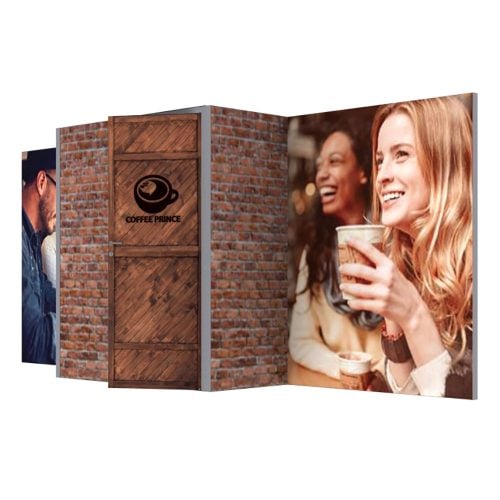
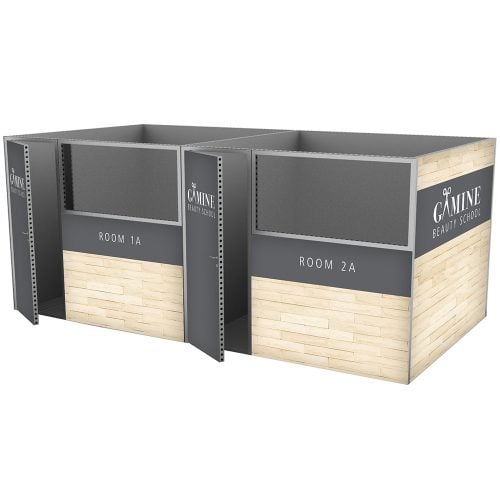
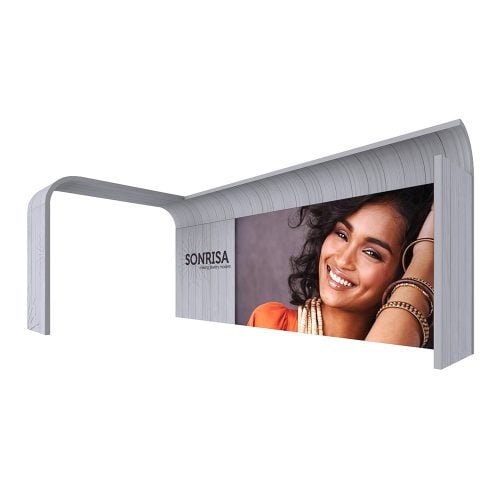
The Timberline modular display uses a heavier-gauge aluminum frame system that is engineered for more complex configurations -- curved sections, angled walls, integrated storage, and multi-level designs. If your booth layout requires more architectural complexity than a straight inline wall, the Timberline system provides the structural vocabulary to get there.
The tradeoff is that Timberline setups take longer and typically benefit from two people during installation. The upside is a booth presence that looks closer to a custom exhibit than a portable display. For companies that exhibit at major industry shows where booth aesthetics are a competitive factor, a timberline with storage configuration delivers display and function in the same footprint.
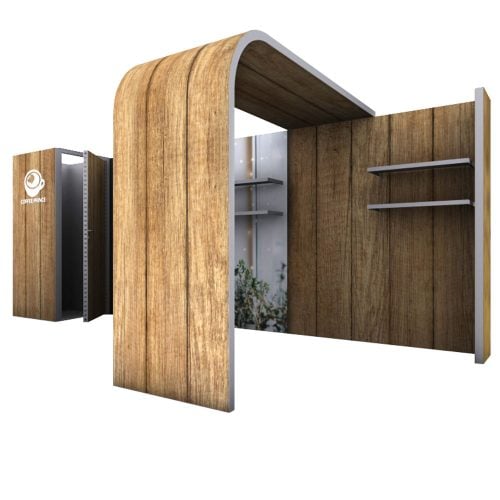
The Wave Tube modular display is built for exhibitors who want a curved or arc-shaped presentation rather than a flat wall. Tube connectors link at prescribed angles to create smooth curves, and the fabric graphic wraps the finished frame for a seamless look from the front. Curved formats naturally draw attention from angles that straight walls cannot, which makes this system well-suited for corner booths and island setups.
The Wave Tube is one of the lighter systems in the collection. The wave tube modular kit ships in a compact rolling case, and the graphic replacement process is straightforward -- making it a practical option for exhibitors who update their messaging frequently.
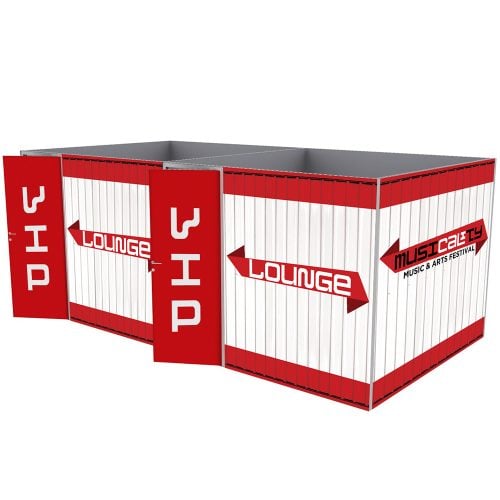
The Modco modular display takes a different structural approach from the fabric-forward systems above. Modco uses rigid hard panels that interlock to form walls, counters, and display surfaces. The result is a display that feels more like a built exhibit than a portable format -- solid surfaces, crisp edges, and a finish that reads as premium in person.
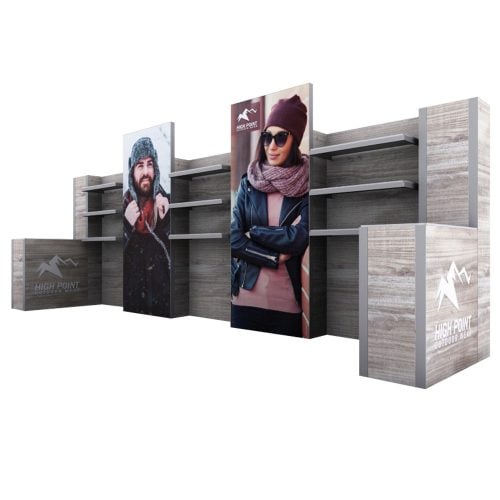
Hard panel systems are heavier and require more careful packing, but they also withstand more handling cycles without showing wear. A modco with shelves configuration is a practical choice for product-focused exhibitors who need to display physical goods at eye level rather than relying entirely on graphic storytelling.
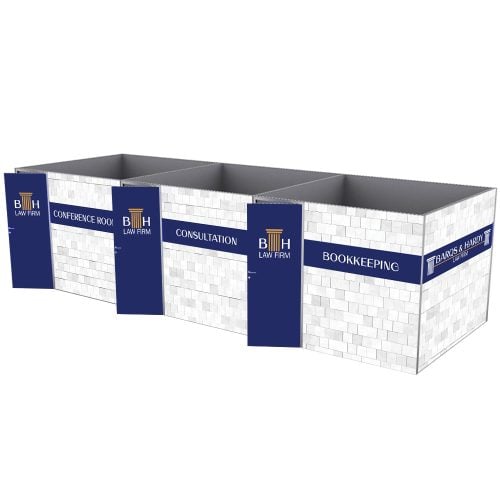
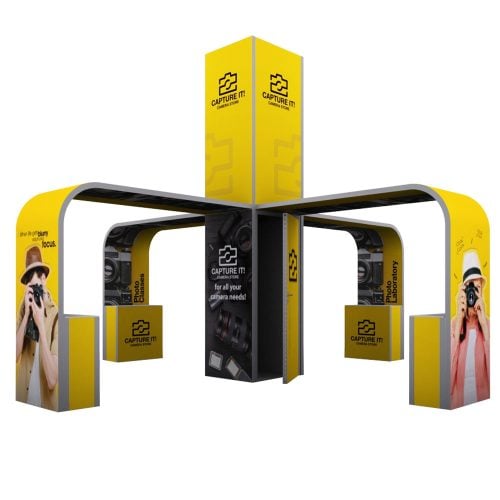
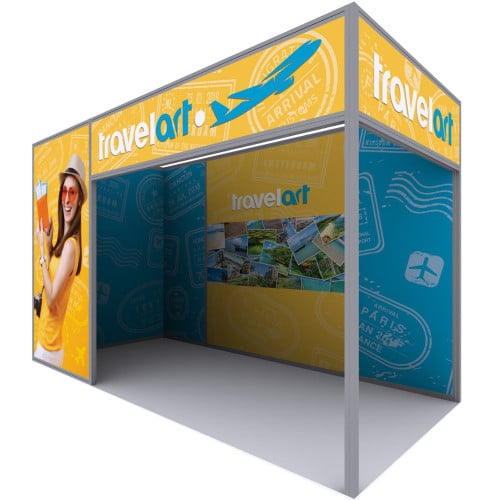
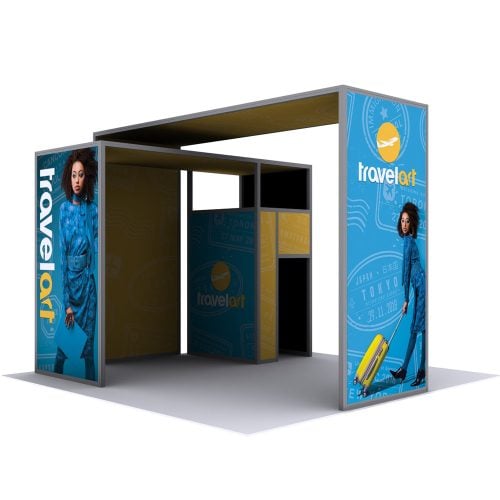
The Cabo island booth is the most expansive system in the collection. It's designed for 20x20 and larger island configurations where you need four-sided visibility, ceiling-height brand presence, and the flexibility to incorporate multiple functional zones -- demo areas, meeting spaces, storage, and reception. This is not a beginner system; it's built for companies that exhibit at the national level and need a display that competes with custom-built exhibits.
A cabo hybrid display configuration can combine fabric panels, hard surfaces, and LED lighting in a single structure, giving you the visual range of a custom build with the reconfigurability of a modular system. If your budget and event calendar justify a major investment in exhibit infrastructure, Cabo is where that conversation starts.
Use this table as a quick-reference filter. It summarizes the structural approach, ideal footprint range, setup complexity, and primary use case for each system. Detailed specs and configuration options are on the individual product pages linked throughout this article.
| System | Structure Type | Ideal Footprint | Setup Complexity | Best For |
|---|---|---|---|---|
| Qseg | SEG aluminum extrusion | 10x10 to 20x20 | Low to medium | Graphic-forward inline walls |
| EZ Connect | Tube frame, fabric skin | 10x10 to 10x20 | Low | Fast self-setup, regional shows |
| Timberline | Heavy aluminum frame | 10x10 to 20x20 | Medium to high | Complex layouts, storage integration |
| Wave Tube | Curved tube-and-connector | 10x10 to 10x20 | Low to medium | Corner booths, curved presentations |
| Modco | Hard panel interlock | 10x10 to 20x20 | Medium | Premium durability, product display |
| Cabo | Island hybrid structure | 20x20 and larger | High | National shows, island footprints |
The comparison table above narrows the field, but three practical questions should drive your final decision.
How many people are setting up your booth? Systems like EZ Connect and Wave Tube are genuinely solo-setup-capable at 10x10. Timberline and Modco benefit from two people. Cabo configurations typically require a crew or professional I&D labor. If you're a small team without dedicated logistics staff, weight that factor heavily.
How often do you change your graphics? Fabric SEG systems -- Qseg, EZ Connect, Wave Tube -- make graphic replacement fast and inexpensive. Hard panel systems like Modco use applied graphics that are more durable but take more effort to swap. If your messaging changes seasonally or by campaign, fabric systems give you more flexibility per dollar spent on updates.
Do you need the same system to scale? If you currently book 10x10 spaces but expect to move into 10x20 or 20x20 as your show schedule grows, prioritize systems with a proven modular expansion path. The scalable modular exhibit system breakdown in the pillar guide covers which systems expand most cleanly and what that upgrade path actually costs.
The modular display price you pay upfront is only part of the calculation. Factor in shipping weight (heavier systems cost more to freight), graphic replacement frequency (how many times per year you'll reprint), and labor costs (time-on-floor for setup and teardown). A system that looks more expensive at purchase can easily be the cheaper option over a three-year exhibit schedule.
Several systems in this collection support integrated LED lighting -- either as a built-in backlit panel option or as an add-on lighting kit. An led modular display configuration makes a meaningful difference in low-light hall conditions and in high-traffic aisles where you're competing with dozens of neighboring booths. Ask about LED upgrade paths when you configure your kit if lighting is part of your brand presentation strategy.
Every system in this collection is paired with dye-sublimation fabric printing or direct print on rigid surfaces, depending on the configuration. Resolution, color accuracy, and bleed setup requirements vary by system. If you're working with an outside agency on your booth graphics, have them coordinate directly with Showfire Displays on file specs before finalizing artwork -- it avoids the most common graphic alignment issues.
Modular displays serve a wide range of exhibitors, but they're not the right answer for every situation. They're a strong fit if you:
If you're newer to exhibiting or still deciding between display formats, the trade show displays buyer guide covers the full range of display types -- from banner stands to full custom builds -- with framework for matching your exhibit goals to the right format category.
Modular booths occupy a specific tier in that spectrum: more investment than pop-ups, less than custom fabrication, but significantly more flexibility than either. For companies that exhibit regularly and need their display to work across variable show conditions, that middle position is often exactly right.
You can order modular display online directly through Showfire Displays, with configuration options for size, graphic package, accessory additions, and shipping. Each product page walks through the available configurations in detail -- dimensions, what's included in the kit, add-on options, and estimated production timelines.
For island systems like Cabo, and for more complex Timberline configurations, it's worth contacting the Showfire team before placing your order. Complex builds often benefit from a brief conversation about your specific booth space, show requirements, and setup crew before locking in a configuration. That conversation is free and it prevents the most common spec mismatches.
The modular display wall options across this collection range from compact 10' inline headers to full island structures over 12' tall. Whatever your footprint, there's a configuration in this collection designed to fill it effectively.
Every system described on this page has its own dedicated product page with full specifications, configuration options, graphic templates, and pricing. Start with the system that fits your setup criteria from the comparison table, then dig into the detailed options on the product page.
If you're still weighing your options across the full modular display systems category, the modular vs custom trade show booth section of the pillar guide is a useful next step -- it lays out the cost and logistics comparison between system types with specific numbers, not generalizations.
When you're ready to configure, the product pages for each system have everything you need. The modular trade show display collection at Showfire is built to give you a professional exhibit infrastructure that works across your full show schedule -- not just your next event. Browse the full collection above and build the kit that fits how you actually exhibit.