




Trade Show Marketing Strategies
Trade Show Booth Ideas: 25 Ways to Stand Out on the Show Floor
Walking a busy convention hall, it takes about three seconds for an attendee to decide whether your booth is worth stopping at — or worth skipping. If you are preparing for an upcoming event and wondering how to make those three seconds count, the right trade show booth ideas can mean the difference between a packed aisle and an empty space. This guide breaks down 25 actionable ideas across five key areas, so you can walk in with a plan and walk out with a list of qualified leads.
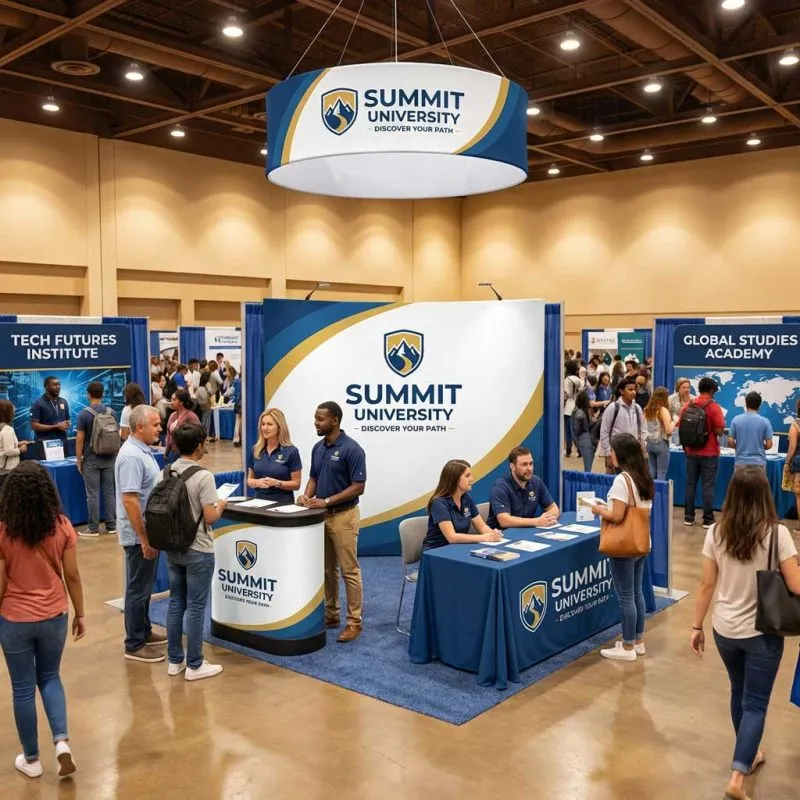
First, Know What You Are Working With
Before diving into tactics, take stock of your booth size, budget, and brand identity. A 10′ x 10′ inline space calls for different strategies than a 20′ x 20′ island exhibit. Inline booths are visible from one direction only, so your back wall graphic has to carry most of the visual weight. Island exhibits, on the other hand, allow 360-degree branding and give you far more flexibility in layout, height, and traffic flow. Understanding that distinction upfront saves you from designing a booth that fights its own footprint.
If you are early in the planning process, the complete trade show displays buyer’s guide is a solid starting point for understanding structure types, materials, and cost ranges before you commit to a display system. It covers everything from tabletop formats to full custom builds, so you can match your investment to your show goals.
Once you know your constraints, you can match ideas to your situation rather than chasing tactics that will not fit your floor plan or budget.
Display and Visual Design Ideas (1–9)
Great trade show booth ideas almost always start with visuals. Your display is the first thing attendees see, and it has to do a lot of work fast — communicating who you are, what you do, and why you are worth stopping at, all before a single word is spoken.
1. Go full bleed with your graphics. Edge-to-edge imagery with no visible frame creates a bold, immersive wall that draws the eye from a distance. Fabric tension displays are especially effective here because seams nearly disappear, giving you a clean, uninterrupted visual surface.
2. Use a single hero image. Resist the urge to show everything. One powerful photograph or render with a short headline outperforms a collage of five images every time. Attendees process bold simplicity faster than visual clutter, especially when they are moving through a crowded hall.
3. Elevate your headline. Your tagline should answer “what do you do and why should I care?” in under seven words. If it takes longer than that, trim it. A headline like “Software That Closes More Deals” tells a story in five words; “Innovative Cloud-Based CRM Solutions for Modern Enterprise Teams” tells very little in nine.
4. Add a hanging overhead sign. Overhead visibility is one of the fastest ways to get seen across a crowded hall. A well-designed banner visible from 50 feet away pulls traffic before attendees even reach your aisle. The trade show hanging banner guide covers shapes, sizes, rigging requirements, and how to work within venue weight limits — essential reading before you order anything that needs to come off the ceiling.
5. Choose fabric over vinyl for your main display. Fabric graphics look premium, ship lighter, and wrinkle less than vinyl panels. Dye-sublimated fabric also reproduces color with impressive depth and consistency, which matters when your brand palette is precise. If you are sorting through display formats, the pop up display buying guide compares fabric and vinyl options with honest pros and cons on each, including portability, setup time, and print longevity.
6. Keep brand colors consistent. Your booth, literature, staff shirts, and digital screens should share the same palette. Inconsistency reads as amateur and dilutes recall. Pull your exact hex codes or Pantone values into every vendor’s brief, not just your printer’s.
7. Light your display. Backlit fabric frames, LED spotlights, and accent strips all increase perceived quality and make your booth feel intentional rather than assembled. Lighting is one of the highest-ROI upgrades available at almost any budget — a $300 LED kit on a fabric back wall can transform the entire look of a 10′ x 10′ space.
8. Use contrast strategically. Dark backgrounds with light text — or vice versa — read faster at a distance than busy mid-tone designs. If your brand colors are all mid-range, add a high-contrast accent to your headline zone specifically.
9. Consider a double-decker structure for large booths. If regulations allow and your budget supports it, a second level creates a private meeting space and a dramatic visual presence that commands attention from across the hall. Many venues require structural engineering certification for elevated structures, so confirm requirements with show management well in advance.
Layout and Traffic Flow Ideas (10–15)

Trade show booth display ideas that ignore floor layout often fail even when the graphics are great. How you arrange space determines how visitors move through your booth — and how long they stay.
10. Open the front. Remove tables from the aisle edge. A physical barrier at the entrance discourages entry; an open walkway invites it. Even a waist-height counter positioned sideways rather than perpendicular to the aisle feels more welcoming.
11. Place your demo station center-back. Draw visitors through your space to reach the most interesting activity. It keeps them in your booth longer and gives your team a natural walk-and-talk opportunity along the way.
12. Create distinct zones. A welcome area, a demo zone, and a quiet consultation space signal professionalism and give your team clear roles. Zones also prevent the awkward situation of a sales conversation competing with a loud video loop at the same volume, in the same square footage.
13. Use flooring to define your footprint. Carpet tiles, foam flooring, or interlocking platforms set your space apart from the bare concrete of the aisle and signal that this booth is worth stepping into. Contrasting flooring also creates a psychological threshold — attendees who step over it are mentally “in” your space.
14. Design for dwell time. Comfortable seating, a charging station, or a live product demo that runs on a loop all give people a reason to stay an extra two to three minutes — long enough for your team to start a real conversation and move a stranger to a warm lead.
15. Make your literature station easy to find but not the centerpiece. Brochures left out front get grabbed and discarded. Placed near the demo area, they get picked up with context and are far more likely to be kept, read, and passed along.
Engagement and Experience Ideas (16–20)
Knowing how to attract visitors to trade show booth is really about giving people a reason to stop that goes beyond your products. Experience drives foot traffic more reliably than signage alone.
16. Run a hands-on product demo. Let attendees touch, test, or try. Physical interaction creates memory and shortens the sales cycle. If your product is digital, build a demo environment that mirrors real-world use rather than a sanitized feature tour.
17. Host a contest or spin-to-win. Gamification drives foot traffic quickly. Keep the prize on-brand — a gift card to a competitor is a missed opportunity, while a prize tied to your product category reinforces the message you want attendees to carry away.
18. Use a large-format touchscreen or interactive kiosk. Digital interactives pull curious attendees in and can qualify leads through a simple quiz or product configurator. A well-built interactive also collects data automatically, reducing reliance on manual badge scans.
19. Stream a short-loop video. A 60–90 second branded video running on a mounted monitor adds movement and audio to your booth — two things that attract peripheral attention in a sea of static displays. Keep the audio at a conversational level; booming sound annoys neighbors and rarely improves engagement.
20. Offer a live demonstration on a schedule. Announce demo times on a small sign and on your social media channels before the show. Scheduled events create anticipation, give attendees a specific reason to return at a specific time, and let your team build a small crowd rather than pitching one person at a time.
Staffing and On-Floor Behavior Ideas (21–23)

Even the best trade show display ideas fall flat if your team is not prepared to engage. Staff behavior is the variable most companies underinvest in, and it consistently has the highest impact on lead quality.
21. Brief your team on the one-sentence hook. Every staff member should be able to open a conversation with a single relevant question — “Are you currently dealing with X?” — rather than launching into a product pitch. A question invites dialogue; a pitch invites a polite nod and a fast exit.
22. Stand, do not sit. Seated staff looks disengaged. Standing, forward-facing staff looks approachable and ready. Ban phones at the booth rail — nothing signals disinterest faster than a rep scrolling while attendees walk by.
23. Staff to your footprint. A 10′ x 10′ booth typically needs two people. A 20′ x 20′ island needs four to six. Understaffed booths lose leads in the first hour; overstaffed ones feel claustrophobic and create uncomfortable pressure on visitors who just want to look around.
Pre-Show and Post-Show Ideas (24–25)
The best trade show booth ideas attract visitors both on the floor and before they ever set foot in the hall. Your show ROI is largely determined by what you do in the two weeks before and the 48 hours after the event.
24. Promote your booth number before the show. Email your list, post on LinkedIn, and include your booth number and hall location in every piece of pre-show communication. Attendees who plan to visit your booth in advance are dramatically more likely to convert than cold floor traffic — they already know who you are and why they are coming.
25. Follow up within 24 hours. The show ends and most leads go cold within 48 hours. A personal email or phone call the next business day puts you ahead of roughly 80 percent of your competitors, most of whom wait a week or more to reach out, by which time the attendee has forgotten the conversation entirely.
Putting It All Together
Knowing how to stand out at a trade show comes down to combining strong visuals, smart layout, active engagement, and a prepared team — then reinforcing everything with pre- and post-show communication. None of these elements works as well in isolation as they do together. A stunning display staffed by an unprepared team underperforms. A well-rehearsed team standing in a visually weak booth loses foot traffic before the conversation ever starts.
You do not need to execute all 25 trade show booth ideas at once. Pick five that align with your current show goals, budget, and booth size, and execute them with intention. One well-designed hanging banner plus a scheduled live demo plus a tight follow-up cadence will outperform a booth that tried everything halfway.
For a broader look at the strategic framework behind everything covered here — from display planning and staff training to lead capture and ROI measurement — the ultimate guide to trade show marketing connects all of these pieces into a single cohesive roadmap. It is the right next read once you have a clear picture of which ideas you want to prioritize.
When you are ready to translate these ideas into an actual floor plan and visual concept, design a trade show booth with a step-by-step walkthrough that takes you from raw concept to finished layout. It is a practical next step once you have decided which trade show booth ideas are the right fit for your next event.