




Trade Show Marketing Strategies
How to Design a Trade Show Booth: A Step-by-Step Guide
Walking into a trade show without a plan is like showing up to a job interview in pajamas — you might get noticed, but not for the right reasons. When you design a trade show booth with intention, you transform a 10′ x 10′ patch of carpet into a lead-generating machine that works hard for your brand all day long. Whether you’re exhibiting for the first time or refreshing a tired setup, this guide walks you through the process step by step so you can show up with confidence and leave with contacts.
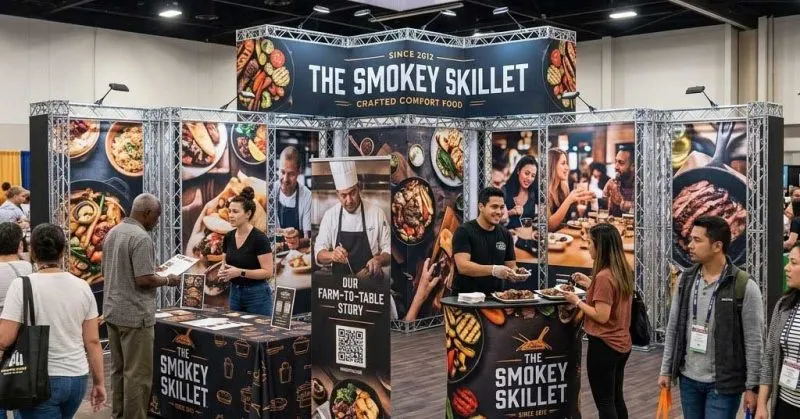
Step 1: Define Your Goals Before You Design a Trade Show Booth
The single biggest mistake exhibitors make is jumping straight to visuals before answering a more fundamental question: what does success look like for this show?
Your booth design should be reverse-engineered from a clear objective. The goal shapes everything — from layout to lighting to the call to action on your back wall graphic.
Common booth objectives include:
- Lead generation — capture contact info from qualified prospects
- Product launches — create buzz and put new products in people’s hands
- Brand awareness — make your company name and identity stick
- Partnership development — attract distributors, resellers, or collaborators
Once you have a primary goal, every design decision becomes easier to evaluate. Ask yourself: “Does this choice move visitors closer to our goal, or is it just decoration?”
Step 2: Know Your Space, Budget, and Constraints
Trade show booth design ideas often fail in execution because designers didn’t account for the physical realities of the show floor.
Start with these core parameters:
| Parameter | Key Questions to Answer |
|---|---|
| Booth size | 10′ x 10′, 10′ x 20′, or larger island format? |
| Height restrictions | Many shows cap inline booths at 8′ or 10′ |
| Hanging structures | Are overhead signs permitted? (Varies by venue) |
| Budget | What’s your all-in number including setup and shipping? |
| Access | Single aisle, corner, or peninsula? |
Inline 10′ x 10′ and 10′ x 20′ booths are the most common starting points, and if you are working with a smaller footprint, exploring 10×10 trade show booth ideas: layouts that make a small space work can help you maximize every square foot. Corner and island formats give you more traffic exposure but demand stronger multi-directional design. Always download the show’s exhibitor manual before finalizing any display.
Step 3: Plan Your Layout and Traffic Flow
Great booth design is really hospitality design. You want visitors to flow in naturally, find what they’re looking for quickly, and stay long enough to have a real conversation.
The three-zone model is a practical framework for any booth size:
- Attract zone (front) — bold graphics, a clear headline, and motion or light to pull people in from the aisle
- Engage zone (middle) — product displays, demos, screens, or interactive elements that reward closer inspection
- Convert zone (back or side) — seating, a meeting counter, or a kiosk where a rep closes the conversation
For a 10′ x 10′ booth, these zones compress dramatically, but the principle still holds. Keep your attract element front and center, and make sure a staff member can easily position themselves to greet aisle traffic without blocking the booth entrance.
Step 4: Choose the Right Display Hardware

Your display hardware is the backbone of the booth, so choosing the right format for your size and budget matters more than most exhibitors realize. The trade show displays buyer guide on Showfire Displays covers this in depth — it’s worth reading before you commit to any hardware format.
Here’s a quick comparison of the most common options:
| Display Type | Best For | Typical Size Range | Pros |
|---|---|---|---|
| Fabric pop up display | 10′ x 10′ inline booths | 8′ – 10′ wide | Lightweight, fast setup, vibrant print |
| Tension fabric display | Any size, branded look | Custom | Seamless graphics, premium appearance |
| Modular display | 10′ x 20′ and larger | Varies | Reconfigurable, scalable |
| Tabletop display | Small footprints, countertop use | 2′ – 6′ wide | Portable, budget-friendly |
| Hanging banner structure | Island or large inline | 5′ – 20′ wide | Overhead visibility above crowd |
Fabric displays in particular have become the dominant choice for exhibitors who travel frequently and set up without help. If you’re deciding between portable formats, the fabric pop up display guide breaks down every major option so you can compare them side by side.
For large island booths where you need to be visible from across the hall, overhead signage is a game-changer. Check the trade show hanging banner guide to understand height requirements, rigging options, and shape choices — it covers everything from simple hanging banner for exhibit booth use to complex custom structures.
Step 5: Design Your Graphics with the 3-Second Rule
Trade show graphics have to do a job in a fraction of the time a billboard gets. A visitor walking the aisle at normal pace gives your booth roughly three seconds of attention before they decide to stop or keep moving.
Design for that window:
- Your headline should be readable from 20 feet away. Test it by zooming out on your design file until the booth thumbnail is about 2″ wide — can you still read the main message?
- Use no more than three main text elements. Company name, core value proposition, and one call to action.
- Let images do the heavy lifting. People process visuals far faster than text. Use high-resolution lifestyle or product photography.
- Contrast is your best friend. Dark text on a light background (or vice versa) performs better at distance than trendy low-contrast color combinations.
The best trade show booth design examples follow a consistent brand palette and make one bold, singular promise. For even more inspiration, see these trade show booth ideas: 25 ways to stand out on the show floor — avoid the common trap of listing every feature and service, pick your strongest message and commit to it.
Step 6: Layer in Engagement Elements

A striking booth draws people in. Engagement elements keep them there long enough to have a real conversation.
Consider what’s appropriate for your product category and budget:
- Product demos — live or video, running on a loop
- Interactive touchscreens — product configurators, quizzes, or catalogs
- Branded giveaways — useful items that leave with your contact info attached
- Seating and charging stations — these turn casual passersby into captive audiences
- Contests or lead capture — a raffle draws a crowd and fills your CRM
One note on giveaways: quality beats quantity. A single well-chosen item that ties to your brand story will generate more conversations than a bowl of generic pens.
Step 7: Build in Lighting
Lighting is the most under-budgeted element in most booth designs, and the most immediately noticeable when it’s done right — or skipped entirely.
Trade show venues have notoriously flat, unflattering overhead lighting. Adding your own fixtures does two things: it makes your graphics look dramatically better, and it signals to attendees that your booth is a quality experience worth entering.
Practical lighting options:
- LED spotlights mounted on a backwall frame to highlight graphics
- Backlighting for tension fabric displays (creates a glowing effect)
- Accent lighting inside product cases or shelving
- Color-wash fixtures for island booths where atmosphere matters
Even a modest set of clip-on LED spotlights from a rental supplier can make a 10′ x 10′ pop-up look twice as polished.
Step 8: Rehearse the Booth Before You Leave Home
The best-designed booth still fails if the team isn’t ready to execute. Schedule a dry run at your office or warehouse before the show.
Build and strike the booth at least once so you know where every piece goes and how long setup actually takes. Walk through your staff roles — who greets, who demos, who captures leads. Make sure everyone can deliver a clean 30-second elevator pitch for the brand.
Trade show booth examples from top-performing companies almost always share one common trait: a well-trained staff that engages proactively rather than waiting behind a table. Your display is the environment; your team is the experience.
Ready to Design a Trade Show Booth That Wins?
Designing a booth that works is equal parts strategy, creativity, and logistics. Start with your goal, match your hardware to your space, and build every graphic and engagement element around a single clear message. The companies that consistently generate strong ROI at trade shows are the ones that treat booth design as a discipline — not an afterthought.
For a broader look at how booth design fits into your overall exhibiting strategy, the ultimate guide to trade show marketing covers everything from pre-show promotion to post-show follow-up in one place.
When you’re ready to move from planning to purchasing, browse the trade show exhibits available at Showfire Displays — the team is ready to help you find the right format, size, and graphics package for your next show.