Need Assitance?
Call us at 844-203-6588.
We Accept




$3,246.00

Production Time: 2 Business Days After Proof Approval
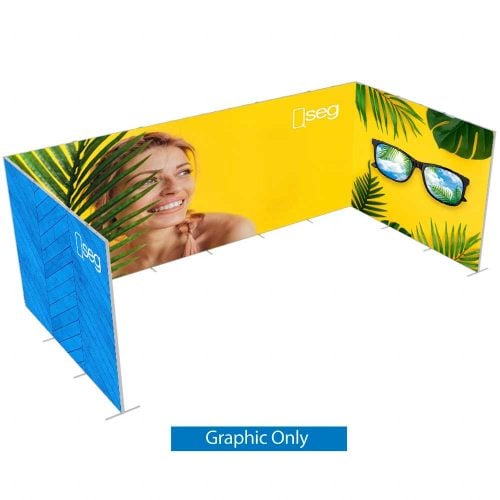
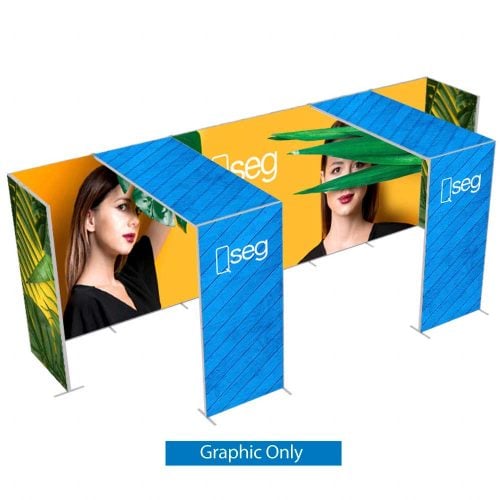
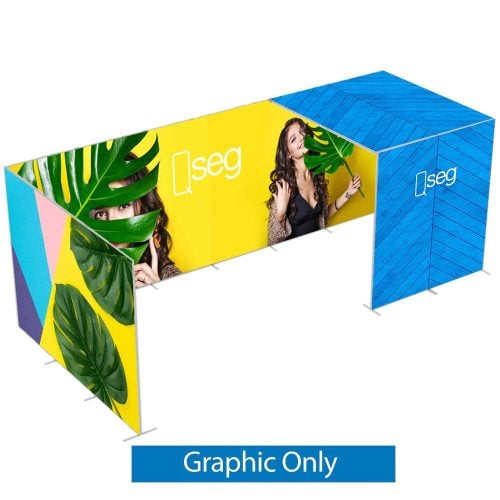
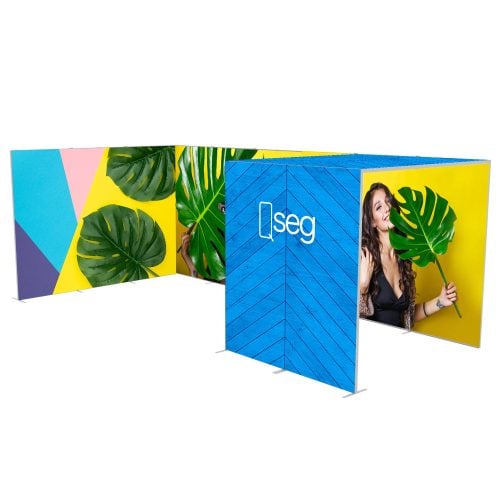
The qseg trade show booth configuration j is built for exhibitors who need substantial wall coverage without the complexity of a custom-built island exhibit. This kit assembles a multi-panel SEG fabric display using the Qseg snap-together frame system, so your crew can get the booth up and looking polished in a fraction of the time a traditional hard-panel build would demand. Every panel accepts a vibrant dye-sublimated fabric graphic that slides into the silicone edge groove, producing clean, seamless imagery across the full display face. The configuration is engineered with repeat use in mind — the aluminum frame breaks down into compact sections, packs into a manageable carry case, and reassembles just as quickly at the next venue. If you are already familiar with the qseg tradeshow display line, Configuration J represents one of the more expansive layout options in that family, ideal for 10 ft to 20 ft booth spaces where a commanding backwall presence matters. The graphic panels are replaceable independently of the frame, meaning a rebrand or seasonal campaign refresh is a hardware-free swap. For any exhibitor balancing budget discipline against the need for a professional, large-format display, this kit is a well-matched answer.
Display Size: 236″W x 88.5″H x 118″D
Graphic Size: 121.5“W x 91“H (QSEG-300×225), 41.5“W x 91“H (QSEG-100×225)
Graphic Material: Dye Sub Stretch Fabric
Package Includes
Not every show calls for the same footprint. Configuration J shines when your exhibit space is wide enough to justify a multi-section run of connected panels but you still want the whole thing handled by a small setup crew. Industry trade shows, association conferences, and regional expos with 10 ft or larger linear booth allocations are natural fits. The format is also popular with organizations that rotate through several events per year — the reusability of the Qseg frame means you are not buying new hardware each season, just refreshing the fabric as campaigns change.
The qseg modular tradeshow approach at the heart of this configuration also accommodates corner and angled arrangements, so you are not locked into a strictly flat backwall if your floor plan calls for something more dynamic. Exhibitors who have outgrown a single-panel backdrop but are not ready to invest in a full island exhibit consistently find that Configuration J hits the performance target without overshooting the budget.
The table below summarizes what defines this kit from a materials and build standpoint. Dimensions are not listed here — contact the Showfire team for a quote tailored to your exact floor plan.
| Attribute | Detail |
|---|---|
| Frame material | Lightweight aluminum extrusion |
| Connection method | Tool-free Qseg snap-lock joints |
| Graphic substrate | Dye-sublimated stretch fabric |
| Graphic attachment | Silicone edge (SEG) channel |
| Intended use | Multi-panel trade show backwall / inline booth display |
| Finish | Matte silver aluminum frame; full-color fabric print |
| Hardware included | Full frame kit, carry case(s) |
| Graphic panels | Sold with frame or as replacement sets |
The aluminum extrusion used throughout the Qseg modular display system is chosen specifically for the ratio of rigidity to weight — it stays true under show-floor handling without adding freight cost. The SEG channel holds the fabric taut and wrinkle-free across the full panel face, a detail that makes a visible difference in photography and from a distance on a crowded show floor.
Surrounding the table above, it is worth noting that the custom qseg tradeshow format allows you to order graphics in any brand color profile, including spot-color-accurate dye-sublimation for logos that must stay consistent across materials. That fidelity matters when Configuration J is displayed alongside other branded assets like banner stands, counters, or monitor mounts.
The qseg trade show booth configuration j is not a single-use purchase. The aluminum frame is rated for repeated assembly and breakdown cycles without joint degradation, which is the main reason growing exhibitors treat it as a capital investment rather than an event expense. When a campaign ends, you pull the fabric panels off, store them flat, and slot in new graphics for the next show — the hardware cost is already behind you.
For teams that attend multiple shows across different verticals, having a second set of graphic panels ready to swap is a common strategy. One set might carry a product-launch message for a spring industry conference while a second set carries a general brand story for fall consumer events. Both sets run on the same frame, and the swap takes minutes. If your exhibit program also uses freestanding or accent pieces, the Qseg single frame display is worth examining as a supplemental piece — it uses the same panel and fabric system, so graphics ordered for Configuration J and graphics ordered for a single-frame accent piece come from the same production spec.
Some exhibitors also incorporate the Qseg partitions line alongside their tradeshow configuration to create semi-enclosed meeting areas or to divide a larger booth footprint — the shared Qseg frame language keeps the assembled exhibit visually consistent.
If you are still weighing the broader decision between modular and custom hard-panel construction, the modular trade show booth design pillar guide on the Showfire site covers that comparison thoroughly and is worth reading before you finalize a budget.
Ordering is straightforward: choose your layout, submit your artwork files in the specified bleed and resolution format, and Showfire handles production and fulfillment. The qseg trade show booth configuration j can be ordered with or without graphics if you are replacing an existing frame or need the hardware alone, though most buyers take the full kit to ensure panel fit and color calibration are matched at the source.
Questions about sizing, graphic file prep, or lead times are handled directly by the Showfire team. Reach out through the product page or start a live chat to confirm which qseg trade show wall dimensions map best to your upcoming booth space. Your next event is already on the calendar — get the display locked in now so production and shipping work in your favor.
| Weight | 158 lbs |
|---|---|
| Dimensions | 7 × 7 × 45 in |
Products You May Also Like

Clogo 144 Airsquirrels

Clogo 231 Baytek

Clogo 232 Treemendous

Clogo 239 Freightwaves

Clogo 234 Hardyproair

Clogo 237 Redbull

Clogo 241 Animeusa

Clogo 230 Edgefactory

Clogo 236 Fujifilm

Clogo 63 Sclhealth

Clogo 251 Ivanzi

Clogo 242 Wescom

Clogo 250 Snapcab

Clogo 225 United Teleports

Clogo 219 Ecp

Clogo 218 Baylor

Clogo 243 Lord

Clogo 175 Tamucc

Clogo 224 Becker

Clogo 212 Bankofmarin

Clogo 199 Carpetsplus

Clogo 202 Arbor

Clogo 188 Jbhunt

Clogo 197 Meteor

Clogo 193 Randc

Clogo 183 Intuit

Clogo 184 K2 Spas

Clogo 185 Unl

Clogo 187 Cirquedesoleil

Clogo 178 Petra

Clogo 173 Freedom

Clogo 161 Universalorlando

Clogo 159 Paynewest
Clogo 158 Tyson

Clogo 167 Vantage

Clogo 180 Nlp
Clogo 155 Wrs

Clogo 152 Mir

Clogo 151 Vegalab

Clogo 146 Goldfishcons

Clogo 145 Arrowavi

Clogo 156 Frg

Clogo 120 Pga

Clogo 110 Ozark
Clogo 108 Main Even

Clogo 104 Waco

Clogo 91 Seattlepump
Clogo 111 Thechapel

Clogo 134 Bakenjoy

Clogo 133 Act

Clogo 142 Cfn

Clogo 140 Hydrofarm

Clogo 126 Aerofarms

Clogo 135 Scbc

Clogo 137 Ferrumcity

Clogo 94 Miyokos

Clogo 93 Landaw

Clogo 98 Renttruck

Clogo 100 Cpmontana

Clogo 85 Hulu

Clogo 87 Schomp
Clogo 88 Beefjerky

Clogo 103 Amature

Clogo 81 Gartner
Clogo 80 Betson

Clogo 75 Blades

Clogo 73 Roseland

Clogo 72 Vacumax

Clogo 65 Nationwide

Clogo 45 Holanamericaline

Clogo 44 Livenation

Clogo 37 Mobilefleet

Clogo 56 Corporater
Clogo 55 Nextstar
Clogo 36 Oro

Clogo 34 Corecontractors

Clogo 54 Tazikis

Clogo 46 Kbellaspa
Clogo 204 Congoleum

Clogo 32 Veoride

Clogo 33 Bigiron

Clogo 30 Nutrabolt
Clogo 17 Foodmaven

Clogo 24 Comcast

Clogo 21 Radiantcurch

Clogo 05 Nikaochurch
Clogo 28 Bindlecoffee

Clogo 83

Clogo 246 Cstechnologies

Clogo 247 Gainesville

Clogo 52 Godlan

Clogo 08 Theheightschurch

Clogo 12 Go By Greenshield Oragnic

Clogo 14 Backbeat Creative