Need Assitance?
Call us at 844-203-6588.
We Accept

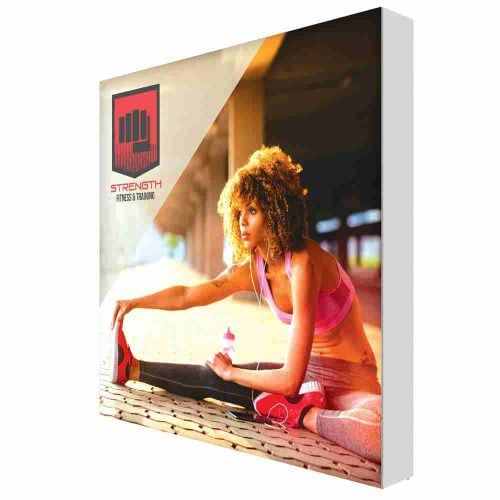
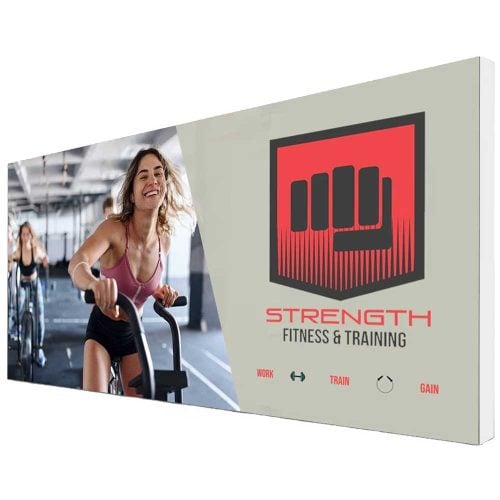
The Lumiere Backlit is a seg fabric lightbox built for exhibitors who need serious visual presence without the serious setup headaches. This display family pairs a rigid aluminum SEG frame with a silicone-edge fabric graphic that stretches taut for a perfectly smooth, wrinkle-free finish -- and then fills that graphic with even LED backlighting from behind. If you have ever stood in a trade show hall and noticed a booth wall glowing with edge-to-edge color while everything around it looked flat and dim, there is a good chance that was a seg fabric lightbox doing exactly what this one does. This page covers the full Lumiere Backlit line: every available size, who each one suits best, and the practical questions worth thinking through before you order.
Most exhibitors first look at illuminated displays because they want something brighter -- but brightness alone is not the real benefit. What backlighting actually does is give your graphic consistent luminosity across the entire panel surface, so the image reads clearly even in dim expo halls with dark carpet and low ceiling rigs. A backlit tension fabric display achieves this by placing LEDs inside the frame and diffusing the light forward through the fabric print, eliminating the hotspots you get from front-lit or spotlit alternatives.
The Lumiere Backlit is also modular enough to work solo or alongside other displays. If you are already researching the broader category, the SEG backlit display guide at Showfire covers key spec decisions -- single-sided vs. double-sided, graphic turnaround, and how to budget for multi-show use -- and is worth reading before you finalize a size.
One practical detail buyers often overlook: the silicone edge (SEG) on the fabric graphic is what creates the taut, frameless look. The graphic is printed on a fabric substrate, a silicone bead is sewn around the perimeter, and that bead presses into a channel along the inner edge of the aluminum frame. No visible borders, no hardware showing through the graphic -- just the image, lit.
This family earns its place across a wide range of buyers and show types. Here is an honest breakdown of the profiles that match best:
This line runs seven sizes, from a slim banner-proportion format all the way up to a large-format 20ft wide display. The table below maps the options to typical use cases so you can identify your range quickly.
| Size | Best Use Case |
|---|---|
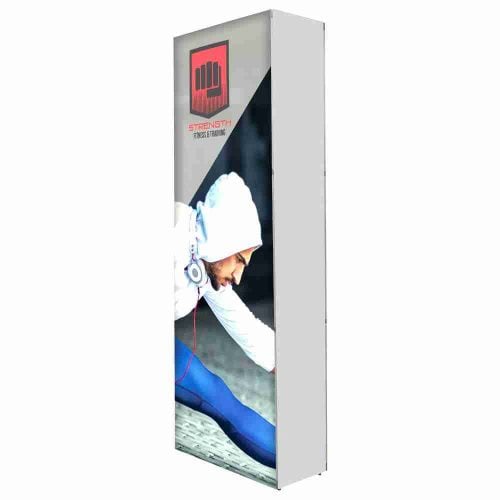
| 2.5ft x 7.5ft lumiere backlit | Narrow accent column, doorframe flanking, tight inline booths |
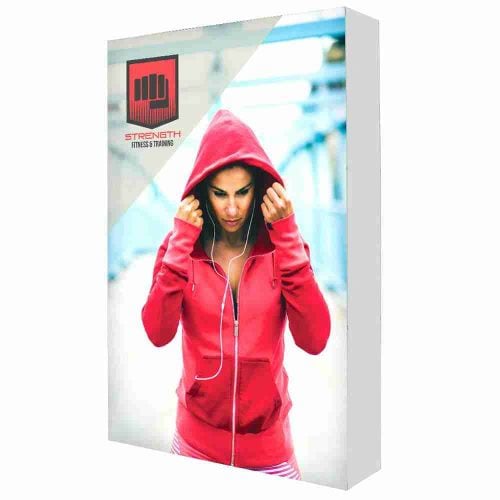
| 5ft x 7.5ft lumiere backlit display | Half-width back wall in a 10ft booth, entry-level full-height panel |
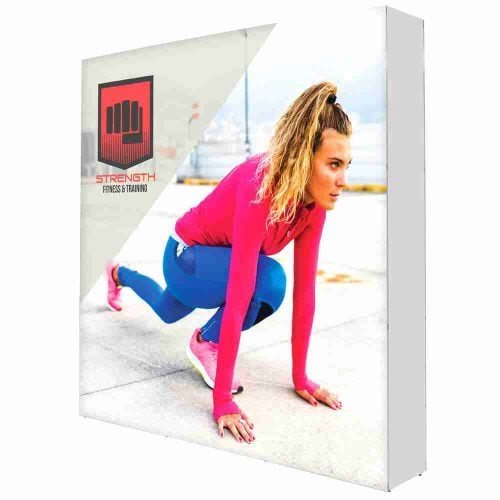
| 7ft x 7ft lumiere backlit | Square-format booths, island display corners, retail wall panels |
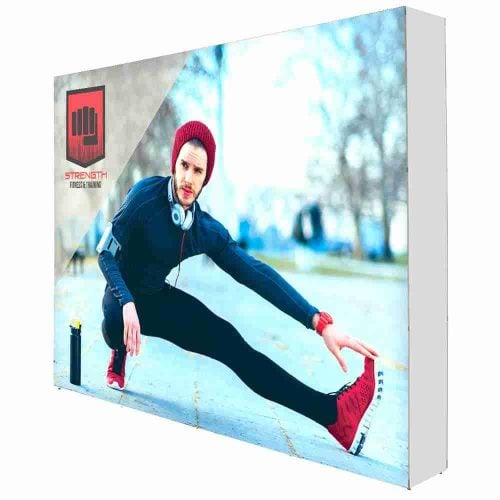
| 10ft x 7.5ft lumiere backlit | Standard 10ft back wall, most common trade show footprint |
| 10ft x 10ft seg lumiere | Taller 10ft booth, extra visual height for aisle visibility |
| 20ft x 7.5ft lumiere backlit | Full 20ft inline back wall, double-wide coverage at standard height |
| 20ft x 10ft lumiere backlit | Maximum-impact 20ft booth with added vertical height |
The sizing decision usually comes down to your booth footprint first, then available ceiling height. Most trade show venues have rigging or ceiling rules that cap usable display height, so confirm your venue specs before ordering a taller configuration.
Each size in this line is available as a single-sided or double-sided configuration. Single-sided suits back-wall placements where only one face is visible. Double-sided makes sense in freestanding or island positions where attendees walk around the display -- both faces are printed and lit, so no side looks unfinished. Think through your floor plan before choosing, because swapping configurations later means a new graphic order.
The aluminum frame hardware is built for repeated use. When you need a new look -- new campaign, new event theme, seasonal update -- you order a replacement fabric graphic and re-load it into the same frame. This approach makes the seg lumiere display one of the lower lifetime-cost formats among large illuminated options, especially for brands with more than two or three events per year.
Frames in this line break down into manageable sections and pack into a carry case. Assembly is tool-free -- the frame snaps or clips together, the graphic loads into the channel, and the LED power is connected before the display stands upright. Most configurations can be assembled by one or two people without prior experience. If a multi-panel or modular format is something you are also weighing, the modular SEG lightbox line offers reconfigurable panel systems that suit exhibitors who run different footprint shapes from show to show.
The backlighting system on the seg lumiere with led uses energy-efficient LED strips or panels mounted inside the frame cavity. The diffusion layer in front of the LEDs spreads light evenly before it reaches the printed graphic, preventing visible bright spots or dark zones at the panel edges. What you see on the fabric surface is consistent luminosity across the entire print area.
The Lumiere Backlit occupies a specific niche inside the broader backlit displays category. If quick assembly at the expense of size flexibility is your priority, a backlit pop up display is faster to set up and packs even more compactly. If you need a freestanding illuminated format that works without a back wall or support structure, the igniter light box is worth comparing -- it stands independently on any flat floor surface.
The Lumiere Backlit sits in the middle of those two extremes: larger than a pop-up, more structured than a freestanding panel, and purpose-built to serve as a complete back-wall or large-format display solution. For most exhibitors running a 10ft to 20ft inline booth, this format is the straightforward choice because it fills that footprint cleanly without requiring additional rigging or support.
When you order through Showfire Displays, the kit arrives with the aluminum frame sections, the printed SEG fabric graphic, the LED lighting system, and a carry case sized for the configuration. Everything you need to have the display assembled and lit at your first event is included -- there are no separately invoiced components for the standard configuration.
The Lumiere Backlit line covers a substantial range, and the right choice almost always comes down to your booth footprint and graphic height preference. Start with the size that matches your standard show footprint, confirm whether single-sided or double-sided suits your floor placement, and then use the child pages linked throughout this article to see full product details, pricing, and ordering options for each specific configuration.
If you are still comparing formats across the full illuminated display category, the how to choose a backlit trade show display guide covers decision criteria in detail and will help you confirm whether a tension fabric light box is the right call over non-illuminated alternatives. And if your booth strategy involves more than one display format, exploring the full range of trade show displays available at Showfire will help you build a cohesive kit rather than buying formats that overlap or conflict.
Browse the individual sizes below, request a custom quote, or reach out to the Showfire team with your booth dimensions -- and get your next seg fabric lightbox ordered before your event date locks in.