Need Assitance?
Call us at 844-203-6588.
We Accept

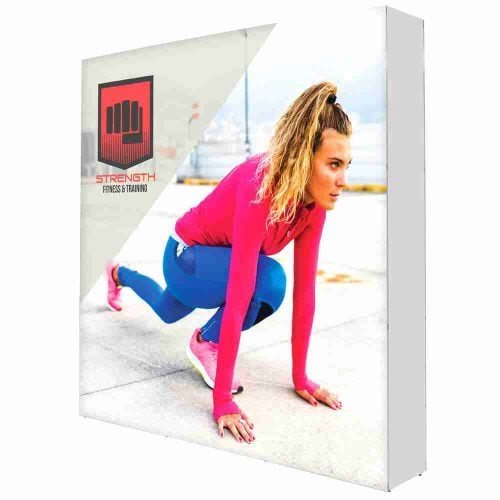
The 7ft x 7ft Lumiere Backlit lands at an interesting crossroads in the SEG lightbox category -- it is large enough to anchor a full booth backdrop yet proportioned as a true square, which opens up display strategies that rectangular formats simply cannot match. Shoppers who arrive at this page are usually deciding between this size and something slightly narrower or taller, and the square geometry is the decisive factor more often than not. If your graphic concept is built around a centered logo, a symmetrical product image, or a layout that depends on equal visual weight on all four sides, the square frame stops the guesswork. And because the 7.5ft x 7.5ft seg backlit display is one of the most popular inline and island configurations in the Lumiere family, Showfire keeps it stocked and ready to move quickly.
Most trade show lightboxes are wider than they are tall -- a 10ft x 7.5ft or a 20ft x 7.5ft runs along the back wall of a standard inline booth and fills horizontal space. That works beautifully for wide layouts, but it means your graphic has to stretch horizontally, and centered compositions often feel cramped or lopsided. The 7ft x 7ft lumiere backlit display breaks that pattern entirely.
With equal width and height, a square lightbox lets a designer treat all four quadrants of the graphic with the same visual priority. A product shot placed dead-center reads with natural balance. A four-panel grid layout fits without any cropping gymnastics. Brand marks with circular or symmetrical badge elements fill the frame without awkward letterboxing.
For exhibitors who rotate the same display between trade shows and in-store environments -- retail endcaps, showroom walls, lobby installations -- the square format also adapts more readily than a wide rectangle. It does not read as "trade show hardware" in a retail context the way a 20ft wide light wall might.
The 7ft x 7ft Lumiere is not a universal fit, and knowing who it suits best helps you confirm the purchase with confidence.
Beauty and personal care brands frequently choose this size because their product photography is often portrait or square by nature -- a hero shot of a product bottle or a close face crop fills the square frame without any white-space penalty.
Technology companies running 10ft x 10ft island booths often center a 7ft x 7ft backlit unit as the visual focal point and surround it with shelving or demo tables. The square sits cleanly inside the footprint without dominating every sightline from all four directions.
Event marketers on mid-cycle budgets appreciate that the 7.5ft x 7.5ft seg backlit display delivers a large, bright visual presence at a price point that sits well below the 10ft x 10ft tier. It is a meaningful upgrade over smaller 5ft x 7.5ft seg backlit options while remaining manageable in terms of packing and setup labor.
Photo and video studios also use this format for branded backdrops at corporate headshot events, product launch activations, and influencer gifting suites -- environments where a square illuminated graphic reads cleanly in social media crops without any extra editing.
If you are still building your overall strategy for a trade show investment, the SEG backlit display guide covers configuration choices, graphic specs, and cost breakdowns across the entire backlit category in one place.
The Lumiere 7ft x 7ft ships in both single-sided and double-sided configurations. Single-sided is the right call for nearly every wall or back-drop application -- the illuminated face points toward your audience, and the back of the frame sits against a wall or pipe-and-drape system.
Double-sided makes sense when the display sits freestanding in an open floor space where attendees will walk around all four sides, or when you want both the interior and exterior of an island booth to carry branded graphics. If you are placing this display in a location where the back face will always be against a solid surface, the single-sided unit is the better value -- it keeps the hardware simpler and saves on graphic printing costs.
Not sure which sided format fits your floor plan? The broader lumiere backlit display category page walks through the full configuration range across all sizes so you can compare before you commit.
One of the practical challenges of a true square format is ensuring the light output reaches all four corners without dimming at the edges. The Lumiere frame uses an internal LED system designed to distribute light evenly across the full graphic face, including the corners. This matters because in a square composition, corner content carries as much visual weight as center content -- a poorly lit corner is more noticeable here than in a wide rectangular format where the corners are often used for bleed or negative space.
Power requirements are standard and compatible with most convention center floor outlets, so you will not face unusual electrical planning challenges at most venues.
The Lumiere uses dye-sublimation printed stretch fabric with a silicone edge gasket (SEG). This printing method produces vivid, continuous-tone color with no visible banding or pixelation at typical viewing distances. The silicone edge is pressed into a perimeter channel on the aluminum frame, pulling the fabric taut without any visible fasteners or wrinkles.
Reprinting for a new show, a brand refresh, or a seasonal campaign is straightforward -- the fabric is ordered separately from the hardware, which means your frame becomes a long-term asset. When you are ready to update the look, you order a new graphic print, press the new silicone edge into the same frame, and the display looks factory-fresh again.
When preparing your file, use the print-ready template provided at order to ensure bleed, safe zone, and edge-pocket dimensions are all correct. Submitting a properly prepared file is the single biggest factor in graphic turnaround time.
The Lumiere frame is built from aluminum extrusion, which keeps the overall carry weight manageable despite the 7ft x 7ft footprint. The system ships in a carry bag or case appropriate to the configuration, and assembly requires no tools -- the frame clicks together at the corners, and the graphic stretches over it without clamps or tape.
For exhibitors who set up and break down their own displays without labor support, this is a meaningful advantage. A 7.5ft x 7.5ft seg backlit display that can be assembled by one person in under 30 minutes removes a real logistical pain point.
If you are weighing the 7ft x 7ft against adjacent options, here is a quick reference for how the nearest sizes compare:
| Size | Format | Best Use Case |
|---|---|---|
| 2.5ft x 7.5ft | Narrow vertical | Accent panel, pillar wrap, narrow gap fill |
| 5ft x 7.5ft | Portrait rectangle | Half-booth backdrop, flanking panel |
| 7ft x 7ft | True square | Centered focal point, island anchor, square graphic layouts |
| 10ft x 7.5ft | Wide landscape | Full inline backdrop, wide banner replacement |
The 2.5ft x 7.5ft lumiere backlit display is a popular companion piece -- many exhibitors pair one or two narrow panels alongside a square or wide unit to build a custom-width configuration without purchasing a single oversized frame.
If your needs run in the other direction -- a wider field of illuminated graphic -- the 10ft x 7.5ft lumiere backlit covers a full inline booth back wall and is one of the most frequently ordered sizes in the Lumiere range.
For exhibitors deciding between a square and a portrait rectangle, the 5ft x 7.5ft SEG backlit display is the closest alternative -- it gives you a taller-than-wide format that can feel more dramatic in certain graphic treatments.
The 7ft x 7ft lumiere backlit display price reflects the hardware configuration (single- or double-sided), graphic printing, and any accessory components included at order. Because the frame and the graphic are priced separately, you have real flexibility -- you can order the complete kit or the frame alone if you already have print assets from a previous campaign. Pricing is listed on the product page, and Showfire's team is available to help you build the right package for your budget. If you are doing early-stage budget research, the backlit display buying guide includes realistic cost ranges across the entire SEG backlit category to help you plan.
The 7.5ft x 7.5ft seg backlit display is ready to configure on the Showfire product page with your choice of sided option, graphic printing, and accessories. If you are still early in your overall exhibit planning and want to understand the full landscape of display formats, the complete trade show displays buyer's guide is the best starting point -- it covers everything from portable banners to large-format island structures in one reference.
Ready to move forward? The buy 7ft x 7ft lumiere backlit display process is straightforward: select your configuration on the product page, upload or submit your artwork, and Showfire handles production and shipping. Questions before you order? Reach out to the Showfire team directly -- they are accustomed to helping exhibitors match the right size and configuration to their specific booth plan and graphic concept. Your next show is closer than it feels, and the sooner your display is in production, the more comfortable that timeline gets.