Need Assitance?
Call us at 844-203-6588.
We Accept

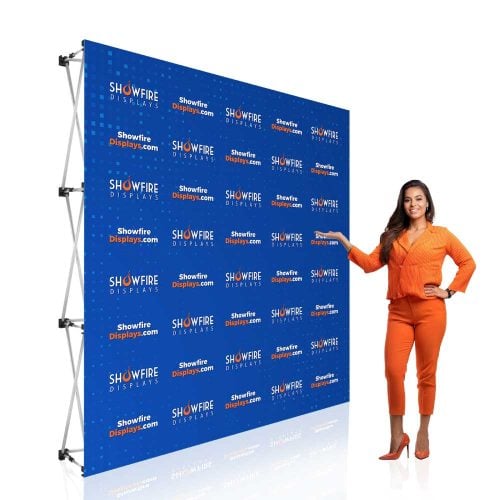
Getting a photo backdrop ready for an event sounds simple until you realize the banner and the hardware are sold separately -- and the stand you ordered does not fit the graphic you had printed. A step and repeat banner with stand solves that coordination problem at the source: banner and hardware are spec'd together, shipped together, and designed to assemble in minutes without tools, cable ties, or guesswork. For anyone running a corporate photo op, a charity gala, a product launch, or a sponsorship wall at a sporting event, this format removes a layer of friction that catches first-time buyers off guard. This page covers what the complete kit includes, who benefits most from buying banner and stand as a unit, and what to think through before you place your order.
Most display headaches start with a mismatch -- a graphic sized for one hardware standard and a stand built for another. When you order a step and repeat banner with stand as a bundled package, the graphic dimensions are calculated to work with the specific upright and crossbar widths included in the kit. Tension, fit, and finish are predictable from the first setup rather than something you troubleshoot in a hotel ballroom at 7 a.m.
The other advantage is consolidation. One SKU, one shipment, one carrying bag. For in-house event teams managing multiple setups across a season, that simplicity has real operational value -- less time tracking down components, fewer opportunities for a piece to get left behind.
If you are still deciding whether a banner-and-stand package is the right format for your situation, the step and repeat buying guide walks through every format and size option in detail, including how to choose between fabric and vinyl and how to proportion your logo tile layout.
This format earns its keep across a surprisingly wide range of events. The combination of portability, quick setup, and a clean branded surface makes it a go-to for:
The step and repeat stand for banner applications is especially practical for teams without dedicated event staff. A single person can carry the bag, assemble the frame, and hang the graphic in under ten minutes once they have done it once.
For buyers who want more context on how different types of events use these displays, the full step and repeat displays hub covers the complete product family.
Ordering a step and repeat complete kit involves a few decisions that are worth thinking through before you configure. None of them are complicated, but getting them right up front saves a reprint.
The width of your display determines how many people can stand in front of it comfortably for a group shot. A narrower display works well for individual photos or two-person shots. Wider formats accommodate groups of four or more and give sponsors more visual real estate. Think about the tightest space you will use this in -- hallway width, doorframe clearance, and ceiling height all matter for a display that has an upright frame.
| Material | Best For | Key Benefit | Watch Out For |
|---|---|---|---|
| Dye-sublimated fabric | Indoor events, frequent travel | Wrinkle-resistant, lightweight | Not ideal for outdoor/humid setups |
| Gloss vinyl | High-color-accuracy needs, outdoor events | Bright color pop, durable surface | Heavier, can show glare in flash photos |
| Matte vinyl | Photo-heavy events | Reduces glare, clean look | Less vibrant than gloss under low light |
Fabric is the more popular choice for event photo ops specifically because it packs down, does not crease permanently, and photographs without the hot spots that vinyl can produce under a direct flash.
The stand itself ranges from lightweight aluminum pop-up frames to heavier telescoping uprights designed for outdoor wind resistance. If your team travels frequently, aluminum hardware with a padded carry bag is worth prioritizing. If the display lives in one venue -- a hotel ballroom, a permanent retail installation -- a heavier-duty frame is a better long-term investment.
The repeating logo tile layout that defines this format requires clean vector files for every logo in the layout. If your brand file package includes sponsor logos at varying sizes and formats, budget time for a design pass before you submit art. Most production partners can handle layout, but supplying organized files shortens turnaround considerably.
If you need a fully custom layout built around a specific brand system, the custom step and repeat option lets you specify tile spacing, background color, and mixed logo formats rather than working from a standard template.
Some buyers already own hardware from a previous event and want to order only a replacement graphic. That is a legitimate path -- see the step and repeat banner page if you need a graphic only, sized to a specific hardware width you already have on hand.
But for buyers starting from scratch, the bundled step and repeat banner with stand consistently comes out ahead on total cost and setup reliability. Sourcing compatible hardware separately introduces size variables that are easy to get wrong, and the price difference between a bundle and individual components is usually marginal once you factor in separate shipping.
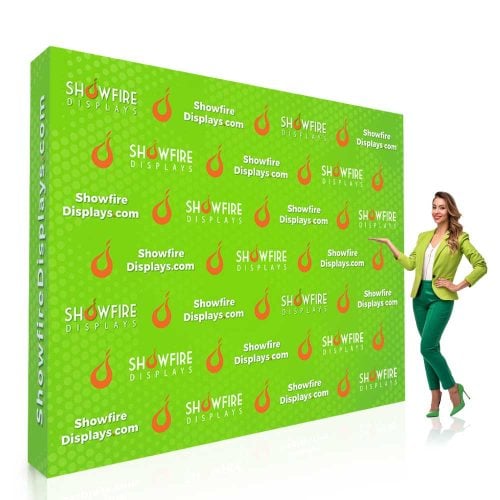
A step and repeat backdrop with stand serves a slightly different role -- that format typically uses a full-coverage graphic rather than a tiled logo repeat, and the hardware is often wider and taller to fill a larger visual field. If your application is more focused on scenic or branded full-bleed imagery than a sponsor logo wall, the step and repeat backdrop page is worth reviewing before you decide on format.
The step & repeat banner stand itself is also the piece of hardware that determines your setup speed and portability profile. Retractable or pop-up frames assemble faster; telescoping frames are more configurable but take longer. Know which priority matters more for your event calendar.
A step and repeat display with stand has become a standard element inside trade show booths, particularly at the back of a 10 ft. x 10 ft. inline space. It functions as both a branded photo op and a visual anchor that keeps traffic engaged at the booth. For exhibitors building out a complete booth program, it pairs naturally with table throws, hanging signs, and pop-up displays.
If you are building out a full exhibit strategy and want to understand how individual display types fit into a larger booth design, the complete trade show displays buyer's guide is a practical reference for comparing formats and budgeting across a program.
If you know your size and have brand files ready, configuring your display takes a few minutes. If you are still working out the details -- size, material, hardware type -- the product pages at Showfire Displays let you compare options before committing.
Every step and repeat banner with stand ships with the frame, carrying bag, and printed graphic as a complete unit. No extra hardware to source, no sizing surprises on setup day. Browse the full selection, get a quote, or reach out to the team at Showfire Displays to work through the configuration that fits your event.