




Custom Table Throws
Fitted vs. Stretch vs. Convertible Table Covers: Which One Should You Buy?
Fitted vs. Stretch vs. Convertible Table Covers: Which One Should You Buy?
You’ve decided your trade show table needs a professional upgrade — no more bare folding tables or wrinkled bed-sheet tablecloths. Smart move. But the moment you start shopping for custom table covers, you hit a fork in the road: fitted, stretch, or convertible? Each style drapes differently, communicates a different brand vibe, and solves different logistical problems.

This guide breaks down all three types of table covers so you can pick the right one for your next event without second-guessing yourself. Whether you’re exhibiting at a national conference, staffing a campus recruiting booth, or running a weekend farmers’ market, the right tablecloth style makes your branding look intentional — not improvised.
Why Your Table Cover Style Actually Matters
A table throw is one of the most visible branding surfaces in any booth. It sits at eye level for seated attendees, anchors your display, and often carries your logo front and center. Choosing the wrong style can mean a sloppy fit that bunches at the corners, a look that clashes with the rest of your exhibit, or a cover that simply won’t work with the table you’re assigned on-site.
Before diving into specifics, it helps to understand that the “best tablecloth” isn’t a single product — it’s the one that matches your table dimensions, your brand aesthetic, and the way you actually use your booth. If you want a broader overview of how table throws fit into a full exhibit setup, our custom table throw guide walks through everything from fabric choices to artwork preparation.
The Three Main Types of Table Covers
Fitted Table Covers
A fitted table cover is tailored to hug the top and sides of a specific table size. Think of it like a well-made slipcover: crisp corners, clean lines, and a polished silhouette. The fabric falls straight from the table edge to the floor (or to a shorter length, depending on the style) without excess material pooling at the base.
Best for: Exhibitors who know their exact table dimensions ahead of time and want a sharp, corporate-looking presentation. Fitted covers work beautifully for registration desks, product demo stations, and any setting where you want a structured, wrinkle-resistant look.
Key advantages:
- Tailored appearance with no bunching or sagging
- Easy to put on and take off — the cover simply drops over the table
- Corners stay neat without clips, pins, or tucking
- Available in virtually any custom size
Trade-offs: Because a fitted tablecloth is cut for a specific table, it won’t adapt if the venue hands you a table that’s a different size or shape. Sizing accuracy is essential — if you’re unsure how to measure, it’s worth reviewing our table cover sizes complete guide for 6ft and 8ft tables to avoid ordering the wrong dimensions.
Stretch Table Covers
Stretch table covers are made from a spandex-blend fabric that wraps tightly around the table, creating a sleek, modern, skin-tight appearance. The material stretches over the corners and legs, eliminating any loose draping entirely.
Best for: Brands that want a contemporary, high-energy look. Stretch covers are extremely popular at tech expos, product launches, and any event where the booth aesthetic skews modern. They’re also great when you need to accommodate slight variations in table size — the elastic fabric has some forgiveness built in.
Key advantages:
- Sleek, wrinkle-free surface that photographs well
- Accommodates minor size variations between standard tables
- Lightweight and compact — rolls into a small bag for transport
- Four-way stretch keeps the fabric taut throughout the event
Trade-offs: Stretch covers show every bump, box, or storage bin hidden underneath the table. If you’re stashing product cases and backpacks under your display, all that clutter will telegraph through the fabric. They can also be a bit trickier to apply — you’ll need to hook the fabric under each leg.
Convertible (Adjustable) Table Covers
Convertible table covers — sometimes called “adjustable” or “multi-fit” covers — are designed to work on more than one table size. A common configuration is a single throw that fits both 6-foot and 8-foot tables through strategically placed Velcro panels, tuck-and-fold flaps, or adjustable side hems.
Best for: Exhibitors who attend multiple events where table sizes aren’t guaranteed, or organizations that use different table sizes across departments and want one cover to rule them all.
Key advantages:
- Works across multiple table sizes, reducing the number of covers you need to purchase
- Ideal for teams that share table throws across events
- Reduces the risk of arriving on-site with the wrong size
Trade-offs: The adjustable mechanisms (Velcro, snaps, tuck panels) can sometimes be visible if they aren’t carefully designed. The fit is generally a compromise — good on both sizes, but not as precise as a single-size fitted cover on its native table. Another consideration worth exploring is whether an open-back or closed table cover is better for your booth, since convertible styles are available in both configurations.
Side-by-Side Comparison

The table below summarizes the key differences so you can scan the options at a glance:
| Feature | Fitted | Stretch | Convertible |
|---|---|---|---|
| Silhouette | Tailored, structured | Sleek, skin-tight | Varies — structured with adjustments |
| Best tablecloth fabric | Polyester, poly-twill | Spandex, poly-spandex blend | Polyester with Velcro/snap panels |
| Wrinkle resistance | Good — shakes out easily | Excellent — stretch eliminates creases | Good — depends on base fabric |
| Size flexibility | Single size only | Slight flex (±2? typical) | Designed for 2+ sizes |
| Under-table storage visibility | Hidden — fabric drapes to floor | Visible — fabric clings to objects | Hidden — drapes to floor like fitted |
| Ease of setup | Very easy — drop over table | Moderate — hook under legs | Easy to moderate |
| Packing size | Medium | Small — highly compressible | Medium to large |
| Ideal use case | Corporate events, registration | Tech expos, modern brands | Multi-event teams, shared inventory |
How to Choose: A Simple Decision Framework
Still on the fence? Walk through these three questions:
1. Do you always use the same table size?
If yes, a fitted or stretch cover gives you the cleanest result. If no — or if you’re often at the mercy of whatever the venue provides — a convertible cover eliminates the guesswork.
2. What’s your brand aesthetic?
A fitted cover reads “professional and polished.” A stretch cover says “modern and dynamic.” A convertible cover prioritizes practicality over style perfection. Match the cover to the brand personality you want to project in your booth. If you’re building a full exhibit and coordinating multiple display elements — pairing your table throw with a retractable banner stand or a fabric pop up display, for example — consistency of style matters more than you’d think.
3. Do you need to hide storage under the table?
This is the stretch cover’s Achilles’ heel. If your team stashes bags, boxes, and supplies under the table during an event, a fitted or convertible cover with full-length draping keeps things looking tidy. Stretch fabric, on the other hand, will outline every object like shrink wrap on a pallet.
Tips for Getting the Most Out of Any Table Cover Style
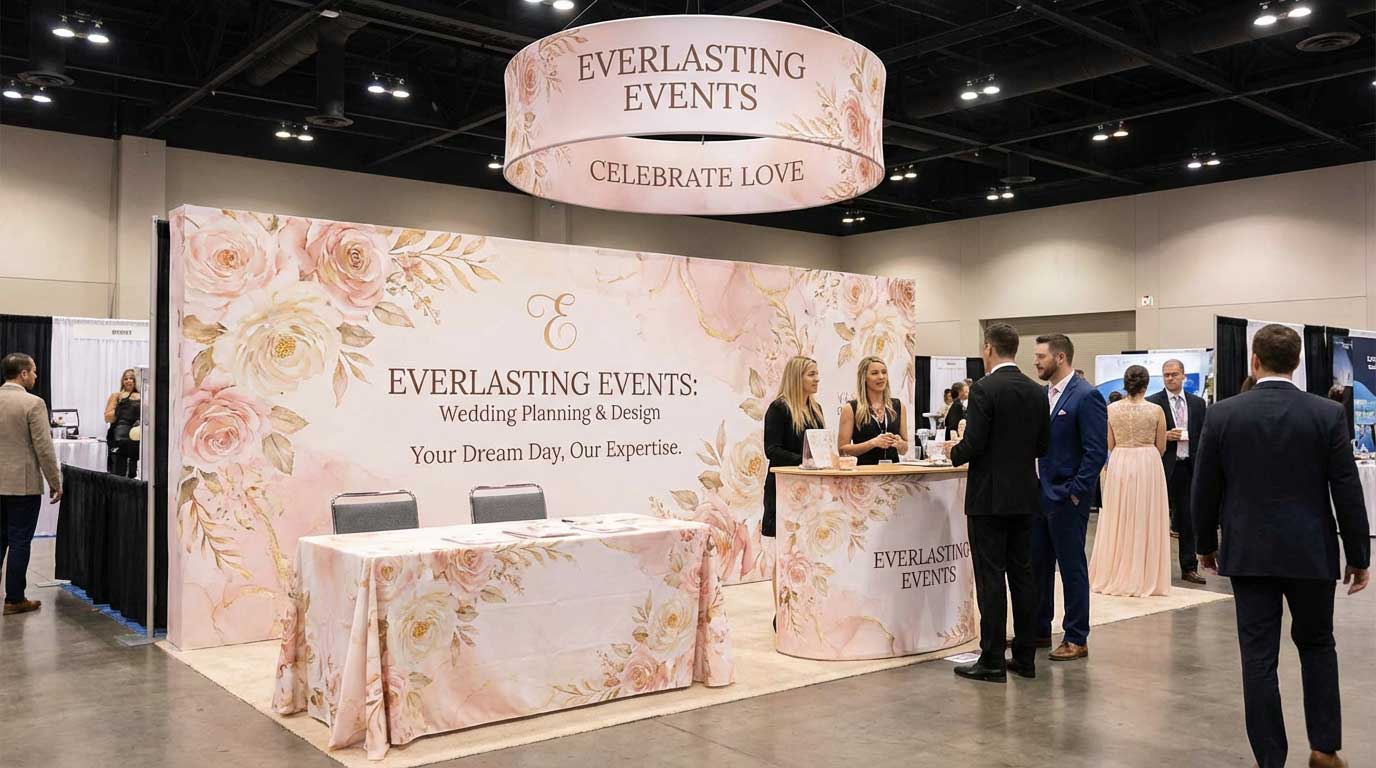
Invest in custom tablecloth printing. A plain-color throw is fine for internal meetings, but for trade shows and public-facing events, a printed logo transforms your table into a branded billboard. Full-color dye-sublimation printing is the current industry standard — it produces vibrant, wash-safe graphics on polyester-based fabrics. If you want to dig deeper into your material options before ordering, our guide to table throw fabric and print options explained: polyester, dye-sublimation, and wrinkle resistance covers everything you need to know.
Order the right size the first time. Whether you go fitted, stretch, or convertible, the single biggest source of buyer frustration is ordering the wrong dimensions. Measure your table’s length, width, and height, and double-check those numbers against the product specs before you order.
Coordinate with the rest of your booth. Your table cover doesn’t exist in isolation. It’s one piece of a larger branded environment that might include overhead signage, a backdrop wall, and freestanding displays. Our complete trade show displays buyer’s guide can help you see how all these components fit together and where a table throw sits in the priority list for your budget.
Bring a backup plan. Experienced exhibitors often travel with a small steamer to remove packing wrinkles and a set of binder clips for emergency adjustments. Even the best tablecloth material benefits from a quick steam before doors open. For a full walkthrough on keeping your cover in top shape between events, see our guide on how to clean, fold, and store a custom table cover.
Which Style Do Most Trade Show Exhibitors Choose?
Fitted table covers remain the most popular option for trade show custom tablecloth orders — they’re versatile, easy to use, and look great in photos. Stretch covers are the fastest-growing category, especially among startups and tech brands that want a modern edge. Convertible covers are a niche favorite for organizations with lean budgets and unpredictable event schedules.
There’s no universally “wrong” answer. The best choice depends on how you exhibit, how often you exhibit, and how important visual precision is relative to flexibility.
Ready to Pick Your Table Cover?
Now that you know the differences between fitted, stretch, and convertible styles, the next step is straightforward: decide which features matter most for your events and shop table throws that match your needs. If you want to explore the full landscape of custom table throw options — from fabric types and printing methods to sizing and care — head over to our custom table throw guide for the complete rundown.
Your table is often the first thing an attendee touches, leans on, or sets their coffee beside. Make sure it’s telling the right story about your brand.
