




Step and Repeat Displays
What Is a Step and Repeat? Meaning, Origin and How It Is Used
If you have ever watched a celebrity walk a red carpet in front of a wall covered in repeating logos, you have already seen the answer to what is step and repeat, even if you did not know the term. A step and repeat is a printed backdrop or banner display featuring a logo, pattern, or graphic that tiles across the surface in a uniform, repeating grid. It is one of the most recognized tools in event marketing, and understanding how it works, where it came from, and how to use it well can make a real difference in how your brand shows up at any event.
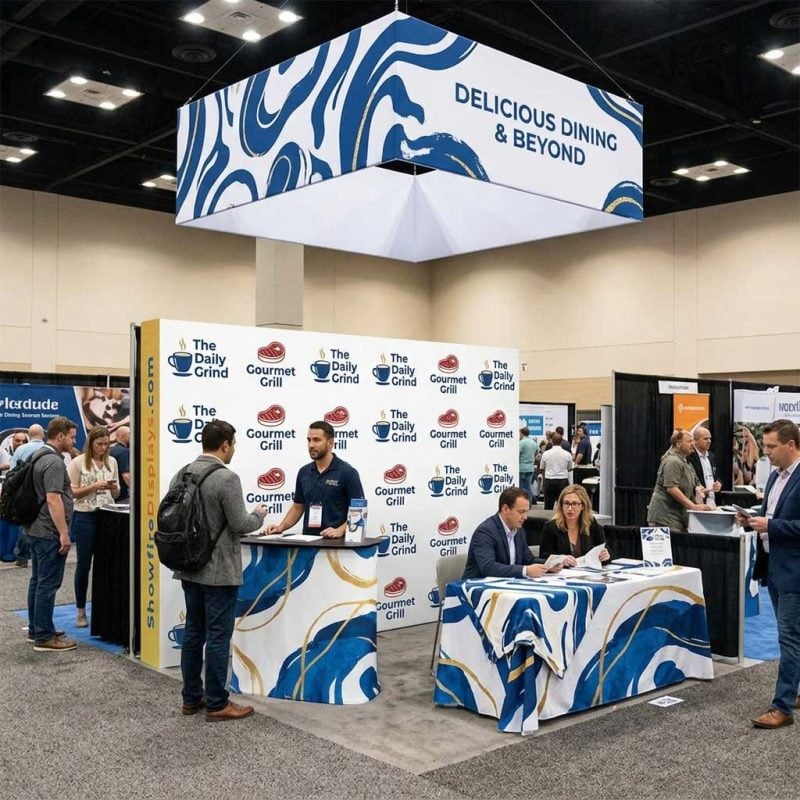
What Is Step and Repeat, Exactly?
To define step and repeat in plain terms: it is a large-format printed backdrop on which a sponsor logo, company mark, or other graphic unit is duplicated across the surface in a consistent, evenly spaced pattern. The result is a wall of repeating imagery that looks polished whether a photographer captures it from two feet away or twenty. When someone stands in front of it for a photo, every angle of the shot includes the brand.
The most common formats range from 6′ x 8′ for tight indoor spaces to 8′ x 10′ or larger for red-carpet-style setups where multiple people stand side by side. If you want to explore options by size, our step and repeat displays product page breaks down the most popular dimensions and configurations.
Why Is It Called a Step and Repeat?
The name comes from the physical behavior of people posing in front of the backdrop at media events. Celebrities, athletes, or VIP guests “step” into position, face the cameras, and then the next person “repeats” the same action in the same spot. The phrase “step and repeat” originally described that ritual, and it eventually became shorthand for the backdrop itself. Today, most event and marketing professionals use the terms interchangeably.
What Is a Step and Repeat Backdrop vs. a Standard Banner?
People frequently ask what is a step and repeat backdrop compared to other display types, and the distinction matters for practical planning. A step and repeat backdrop is specifically designed to serve as a photo background, so it prioritizes visual coverage, clean printing, and a wrinkle-resistant surface. A standard banner may be one-sided, narrower, or designed to deliver a single message rather than a tiled brand grid.
Here is a quick comparison of the two most common use cases:
| Feature | Step and Repeat Backdrop | Standard Event Banner |
|---|---|---|
| Primary purpose | Photo background, brand visibility | Directional signage, single message |
| Graphic layout | Repeating logo/pattern grid | Single graphic or headline |
| Typical width | 8′ to 20′ | 2′ to 5′ |
| Fabric vs. vinyl | Both available | Both available |
| Freestanding hardware | Yes, often included | Yes, various options |
| Best placement | Photo op zone, stage backdrop | Entrance, aisle, wayfinding |
If you are asking what is step and repeat banner, the short answer is that “step and repeat banner” is simply another common name for the same product, used interchangeably with “step and repeat backdrop” in the event industry.
The Origin of Step and Repeat Displays
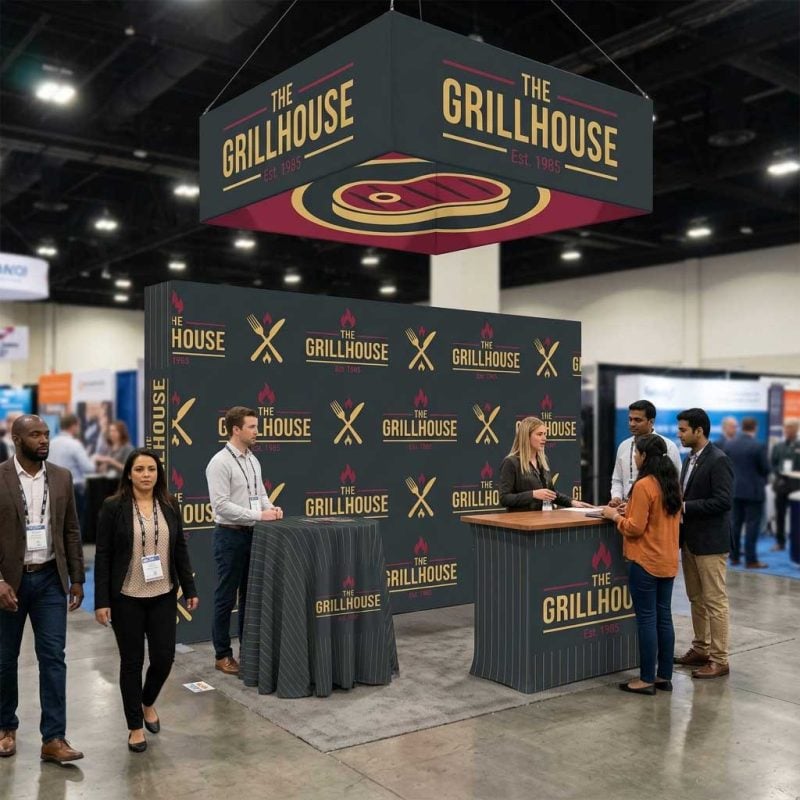
Step and repeat backdrops became a fixture of Hollywood premieres and sports award shows in the 1990s. Publicists needed a reliable way to ensure sponsor logos appeared in every press photo from a media event, without requiring photographers to position themselves around branded signage scattered around a room. By placing a single tiled backdrop at a fixed photo location, every image taken at that spot automatically included every sponsor in the rotation.
The format crossed over into corporate events, trade shows, nonprofit galas, and sports sponsorship activations through the 2000s. As large-format digital printing became more accessible, the cost of producing a step and repeat dropped enough that small businesses and local organizations could afford them, and if you are weighing your options, our guide on how much does a step and repeat cost, buy vs. rent explained breaks down the numbers in detail. Today they appear at everything from product launches and grand openings to wedding photo booths and graduation parties.
How a Step and Repeat Is Used in Practice
Understanding what is step and repeat is easier with a concrete example. Imagine a software company exhibiting at a 10′ x 10′ trade show booth. They place an 8′ x 10′ fabric step and repeat behind their demo table. Throughout the day, visitors stop for photos with the product team. Every image that makes its way onto social media or into a press recap shows the company logo prominently in the background, delivering earned media impressions with zero additional effort.
The same principle scales up dramatically. A national retailer running a pop-up activation might set a 12′ x 20′ step and repeat at the entrance of a venue, inviting shoppers to take photos before they even walk inside. A charity gala might print sponsor logos in a grid pattern so every table, every award photo, and every candid shot from the event includes donor recognition.
Common Event Types That Use Step and Repeat Displays
- Corporate conferences and product launches
- Trade show booths and exhibition halls
- Red carpet award shows and media events
- Sports sponsorship activations and fan experiences
- Brand pop-up activations and retail events
- Weddings, galas, and nonprofit fundraisers
- Film and television premieres
Choosing the Right Step and Repeat for Your Event

Once you understand what is step and repeat and how it functions, the next decision is which configuration fits your situation. A few practical guidelines:
Size: Match the backdrop width to the number of people who will stand in front of it at once. For solo or pair photos, 8′ wide is usually sufficient. For group shots or celebrity-style media walls, 10′ to 20′ wide is more appropriate.
Material: Fabric backdrops print with richer color and resist wrinkles better than vinyl in most indoor environments. Vinyl holds up better outdoors or in high-humidity settings. If you are weighing material types in a broader display purchase, our complete trade show displays buyer’s guide walks through fabric versus vinyl across multiple display categories.
Hardware: Most step and repeat systems use a straight tension bar frame or a pop-up frame. Pop-up frames set up in minutes without tools and are worth considering if your team handles their own installs, and our step and repeat setup: a step-by-step booth checklist covers exactly what that process looks like in practice. For related guidance on pop-up display systems generally, the fabric pop up display guide covers frame types, fabric options, and setup tips that apply to backdrop hardware as well.
Lighting: A step and repeat only delivers its value when photographers can capture it clearly. Plan for even, front-facing lighting at the photo op zone.
Graphic layout: The standard approach is a uniform diagonal or straight grid of logos. Work with your designer to ensure logo sizes are large enough to read in photos but spaced so the pattern does not look cluttered.
At ShowFire Displays, our design team creates a free digital mockup on your actual artwork before anything goes to print, so you can see exactly how your logo grid will look at scale and make adjustments before committing.
Step and Repeat vs. Other Large-Format Backdrops
If you are comparing display options for a larger event footprint, it helps to know where step and repeat fits alongside other formats. For events where you need overhead brand visibility across a large hall rather than a fixed photo backdrop, a hanging overhead display adds a vertical dimension to your presence. Our trade show hanging banner guide covers ceiling-suspended options that complement a step and repeat on the floor level, particularly for 20′ x 20′ island booths where every sightline matters.
A step and repeat works best when it anchors a specific photo moment. It is not a substitute for general signage or directional displays, and it is not designed for overhead installation. Used in its proper context, though, it is one of the highest-return display investments in event marketing because every photo taken in front of it effectively becomes branded content.
Ready to Order a Step and Repeat?
If you now have a clear picture of what is step and repeat and how it can work at your next event, the logical next step is choosing the right size and material for your specific setup. Our step and repeat printing product page includes size options, fabric and vinyl specifications, and hardware configurations you can customize with your brand. For anyone still in the early stages of planning a broader event or exhibit presence, our trade show displays guide is a good starting point for understanding how a step and repeat fits into a complete display strategy. Reach out to the ShowFire team when you are ready, and we will get your mockup in front of you before a single panel goes to press.
For the full picture on types, sizes, graphics and pricing, read our complete what is a step and repeat.


