Need Assitance?
Call us at 844-203-6588.
We Accept

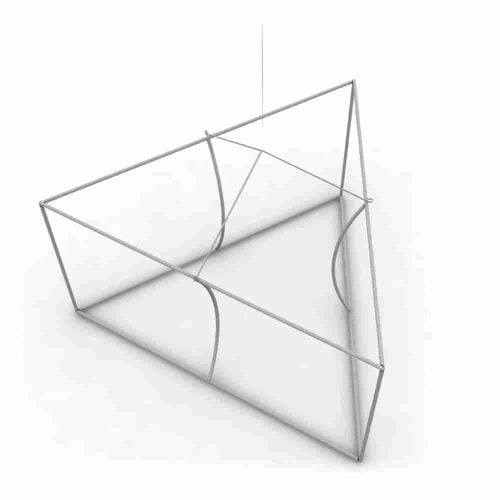
Overhead signage earns its keep by doing something floor-level displays simply cannot -- pulling attention from across a crowded venue floor before a visitor even reaches your aisle. The 12ft triangle hanging banner sits at a practical crossroads in the triangle family: large enough to carry bold brand graphics at real distance, yet compact enough to clear typical convention center rigging limits without complicated structural approvals. For exhibitors who have tried smaller sizes and found them underwhelming at scale, or who have been intimidated by the logistics of a 15ft format, this size consistently delivers. It is the format most brands reach for when they want serious overhead presence without the overhead headaches.
The triangle silhouette does something round and square shapes cannot replicate -- it creates a strong directional pull from every viewing angle. Each face of the structure presents a flat, uninterrupted print surface, which means your logo, headline, or brand color reads cleanly whether someone approaches from the front, side, or diagonal. At 12 feet, those faces are large enough to hold a full-bleed graphic with room for hierarchy -- a primary logo, a supporting tagline, and still breathing space around the edges.
The shape also resists the visual "spinning" effect that sometimes makes round hanging banners harder to read when they rotate slowly in air-conditioned hall airflow. Triangle faces remain consistently legible as the display rotates, which matters in high-traffic environments where visitors are moving rather than standing still. That consistent legibility is one reason the 12ft triangle hanging banner is a particularly popular choice for brands that rely on a single dominant mark or wordmark rather than complex illustrated graphics.
The 12ft triangle hanging banner suits a specific kind of buyer, and being honest about that helps you make a confident decision.
Trade show exhibitors in 20x20 or larger inline booths -- At this booth footprint, a smaller triangle can feel proportionally lost overhead. The 12ft version fills the vertical zone properly and signals that the booth below is worth a closer look. It functions effectively as a trade show hanging banner visible from the entrance of a large exhibition hall.
Event organizers and experiential marketers -- Corporate events, product launches, and brand activations often need overhead markers that work as both wayfinding and brand expression. A hanging banner from ceiling rigging points attendees to a specific zone without requiring staff to direct foot traffic manually.
Retailers and pop-up operators -- Permanent retail installations and pop-up events in large-format retail or warehouse spaces benefit from the triangle's clean geometry against industrial ceilings.
Recurring exhibitors who prioritize portability -- The hardware packs into a carry bag that travels as checked luggage or in a small cargo vehicle. Exhibitors who set up and tear down multiple times per year find this size manageable compared to larger formats.
If you are just starting to evaluate overhead signage as part of a broader exhibit strategy, the trade show hanging banner guide covers shape selection, rigging approvals, and graphic file preparation in a format that makes the research process much faster.
Fabric quality is where trade show ceiling banners tend to separate into tiers that are genuinely worth understanding before you order.
The 12ft triangle hanging banner uses dye-sublimation printing on a lightweight stretch fabric. Dye-sub pushes pigment into the fabric fibers rather than sitting on top of the surface, which means colors stay vibrant through repeated setups and the graphic does not crack or peel when the fabric is folded for transport. The result is a print that looks as good at show number ten as it did at show number one.
Configuration options to consider:
Your artwork will need to be provided as high-resolution vector or raster files at the correct bleed dimensions. The print team reviews files before production, so any sizing issues are flagged before ink hits fabric.
Choosing the right size is easier when you can see the full range at a glance. The triangle family runs from compact to large-format, and each size occupies a different niche in the lineup.
| Size | Best Booth Footprint | Typical Venue Fit | Portability |
|---|---|---|---|
| 5ft | 10x10 inline | Low-clearance venues | Very easy |
| 8ft | 10x20 or smaller island | Standard halls | Easy |
| 10ft | 20x20 or medium island | Standard halls | Moderate |
| 12ft | 20x20 to 30x30 | Large exhibition halls | Moderate |
| 15ft | 30x30 and above | Convention centers | Requires planning |
For exhibitors considering a smaller footprint, the 5ft triangle hanging banner is a straightforward option for 10x10 booths and venues with lower ceiling clearance. The 8ft triangle hanging banner steps up to mid-size island booths and remains one of the easiest formats to transport solo. If you are weighing whether 10 or 12 feet better matches your floor plan, the 10ft triangle hanging sign page walks through that specific comparison in detail. At the far end of the range, the 15ft triangle hanging banner is built for large island booth situations where maximum overhead volume is the priority.
A few practical factors make a meaningful difference between a smooth show experience and an avoidable problem.
Venue rigging approval -- Most convention centers require advance rigging permits for suspended signage. Submit your banner dimensions and weight specs to the venue's official rigging contractor early. The 12ft format falls within the weight range most venues accommodate without structural engineering review, but the paperwork still needs to be filed.
Hanging point configuration -- The triangle frame suspends from a central rigging point, which keeps the structure level and stable. Confirm your venue provides a motor or hook at the correct ceiling height for your booth.
Setup time -- One or two people can assemble the frame and attach the fabric graphic in under an hour with no special tools. Many exhibitors build in an extra hour at first setup to get familiar with the assembly sequence, then find subsequent setups go faster.
Double-sided vs. single-sided for your specific layout -- If your booth sits against a back wall with traffic approaching from one direction only, single-sided printing saves cost without sacrificing visibility. Open island positions almost always benefit from double-sided coverage.
For anyone still in early research mode across multiple display types, the complete trade show displays buyer's guide is worth bookmarking -- it covers booth structures, fabric formats, and overhead signage alongside each other so you can make integrated decisions rather than evaluating each display category in isolation.
Overhead signage works best as part of a coordinated exhibit plan rather than as a standalone purchase. The 12ft triangle hanging banner pairs naturally with fabric backwall displays, tension fabric counters, and banner stands at floor level. The triangle shape overhead and geometric structures below create visual coherence without looking overdesigned.
If your exhibit program also involves hanging banner for exhibit booth situations where shape variety is useful, it is worth exploring whether a triangle format complements or duplicates what you are already running. For example, some brands use a triangle overhead to mark a specific zone within a large booth while using round hanging banners at other zones to distinguish sections visually. The contrast between shapes actually helps attendees navigate a complex floor plan more intuitively than repeating the same shape throughout.
The full triangle hanging banner category page covers every size from 5ft to 15ft alongside hardware options, so you can compare specifications across the range in one place before committing.
If you have landed on this page with a clear booth size in mind and a show date on the calendar, the next step is straightforward: upload your artwork, select your configuration, and let the production team handle the rest. The 12ft triangle hanging banner ships with the full hardware kit included, so there are no separate frame orders or compatibility questions to navigate.
Custom print turnaround is fast, but lead times do tighten as major trade show seasons approach. If your show is within four to six weeks, ordering sooner keeps your options open. For questions about file specifications, rigging weight, or configuration choices, the Showfire Displays team is available to help before you place your order. Get started at Showfire Displays and have your 12ft triangle hanging banner ready well before show day.